About this artwork
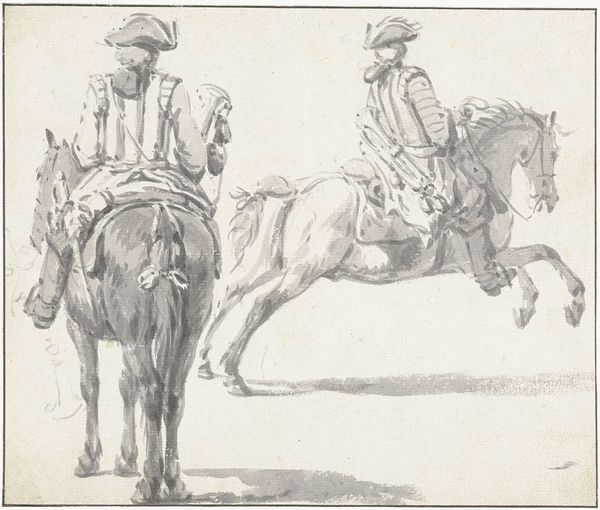
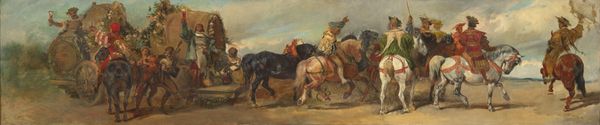
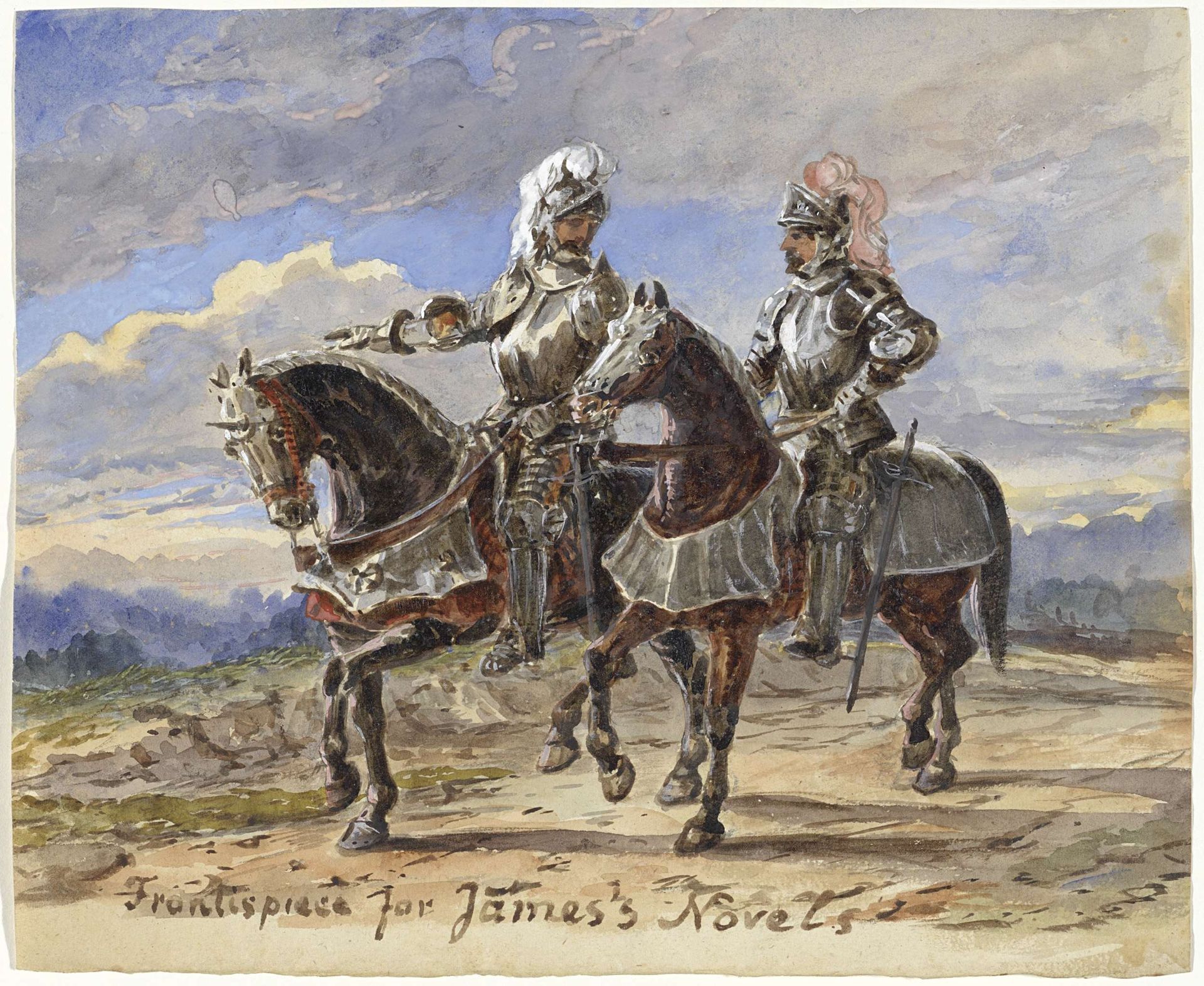
Pieter van Loon made this watercolor of two knights around the mid-19th century. Watercolor is a particularly interesting medium because it is so fundamentally dependent on the artist's skill. Unlike oil paint, it is very difficult to correct mistakes. Each brushstroke is a commitment. In this work, it gives a fluid, almost dreamlike quality, softened by the moisture it contains. Consider also the subject depicted: Knights in armor. By the time Van Loon created this piece, the age of knights was long gone. What's left is a romantic idea of heroism, an appeal to a supposedly simpler, more courageous past. It's interesting to think about why Van Loon, and indeed society more broadly, was so drawn to this imagery. Was it a kind of escapism? A nostalgic yearning for a time that never really existed? This is a question we can ask of many works in the decorative arts.
Twee ridders te paard in een landschap
1811 - 1873

Pieter van Loon
1801 - 1873Location
RijksmuseumArtwork details
- Medium
- painting, watercolor
- Dimensions
- height 233 mm, width 284 mm
- Location
- Rijksmuseum
- Copyright
- Rijks Museum: Open Domain
Tags
Comments
Share your thoughts
About this artwork
Pieter van Loon made this watercolor of two knights around the mid-19th century. Watercolor is a particularly interesting medium because it is so fundamentally dependent on the artist's skill. Unlike oil paint, it is very difficult to correct mistakes. Each brushstroke is a commitment. In this work, it gives a fluid, almost dreamlike quality, softened by the moisture it contains. Consider also the subject depicted: Knights in armor. By the time Van Loon created this piece, the age of knights was long gone. What's left is a romantic idea of heroism, an appeal to a supposedly simpler, more courageous past. It's interesting to think about why Van Loon, and indeed society more broadly, was so drawn to this imagery. Was it a kind of escapism? A nostalgic yearning for a time that never really existed? This is a question we can ask of many works in the decorative arts.
Comments
Share your thoughts