About this artwork
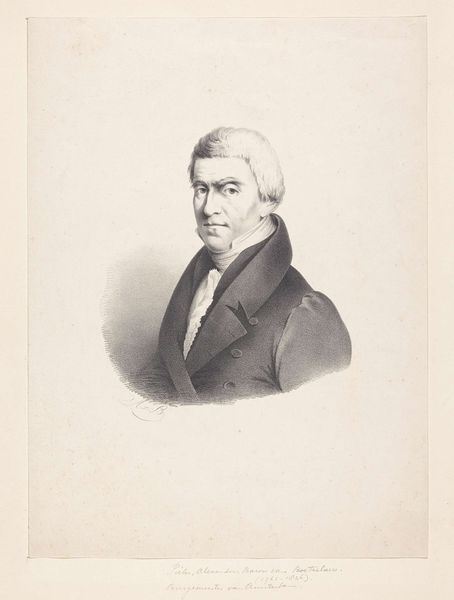
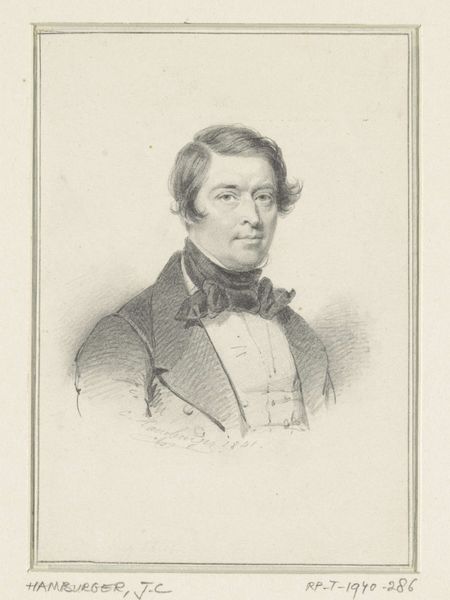
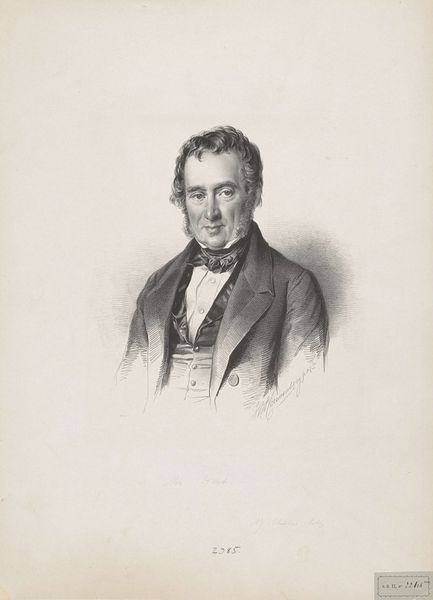
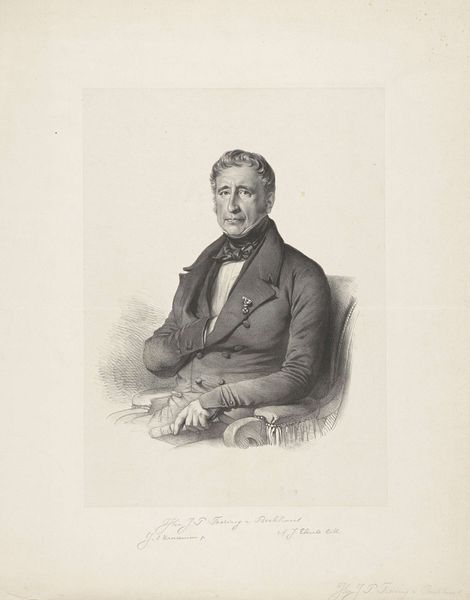
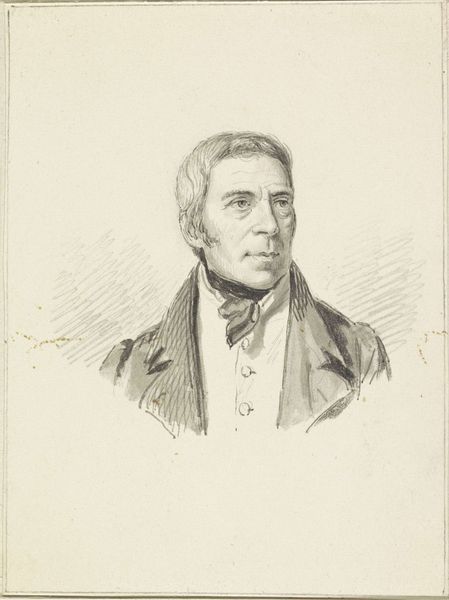
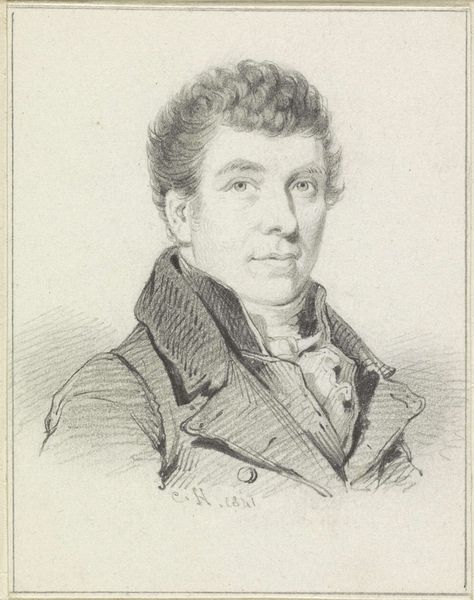
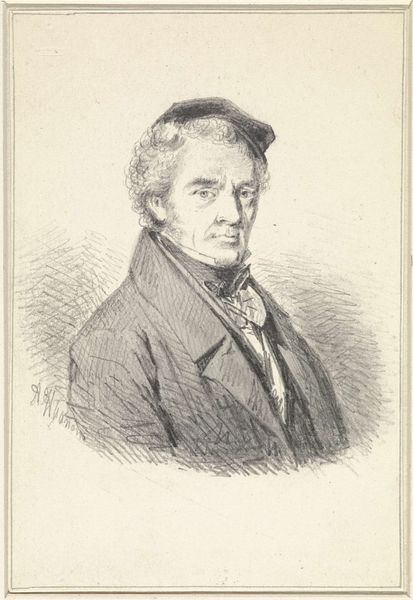
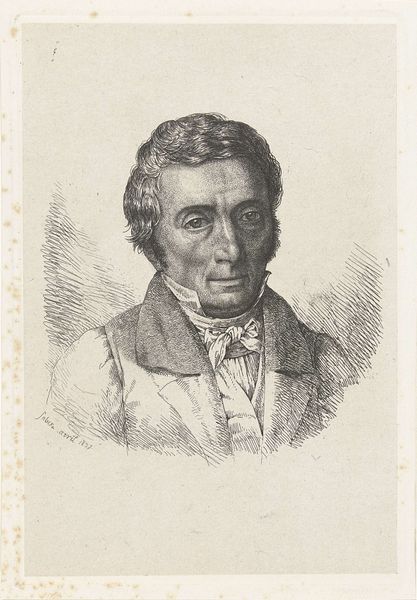
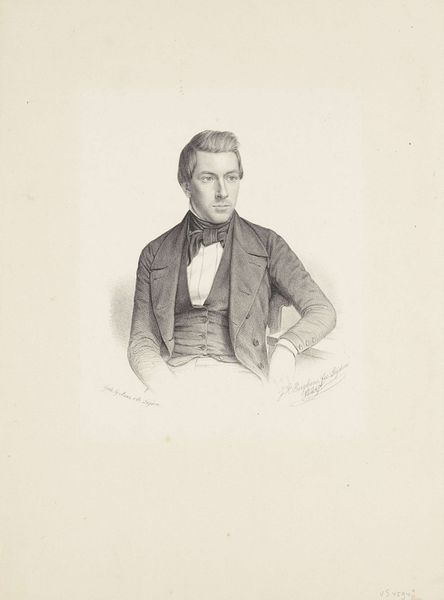
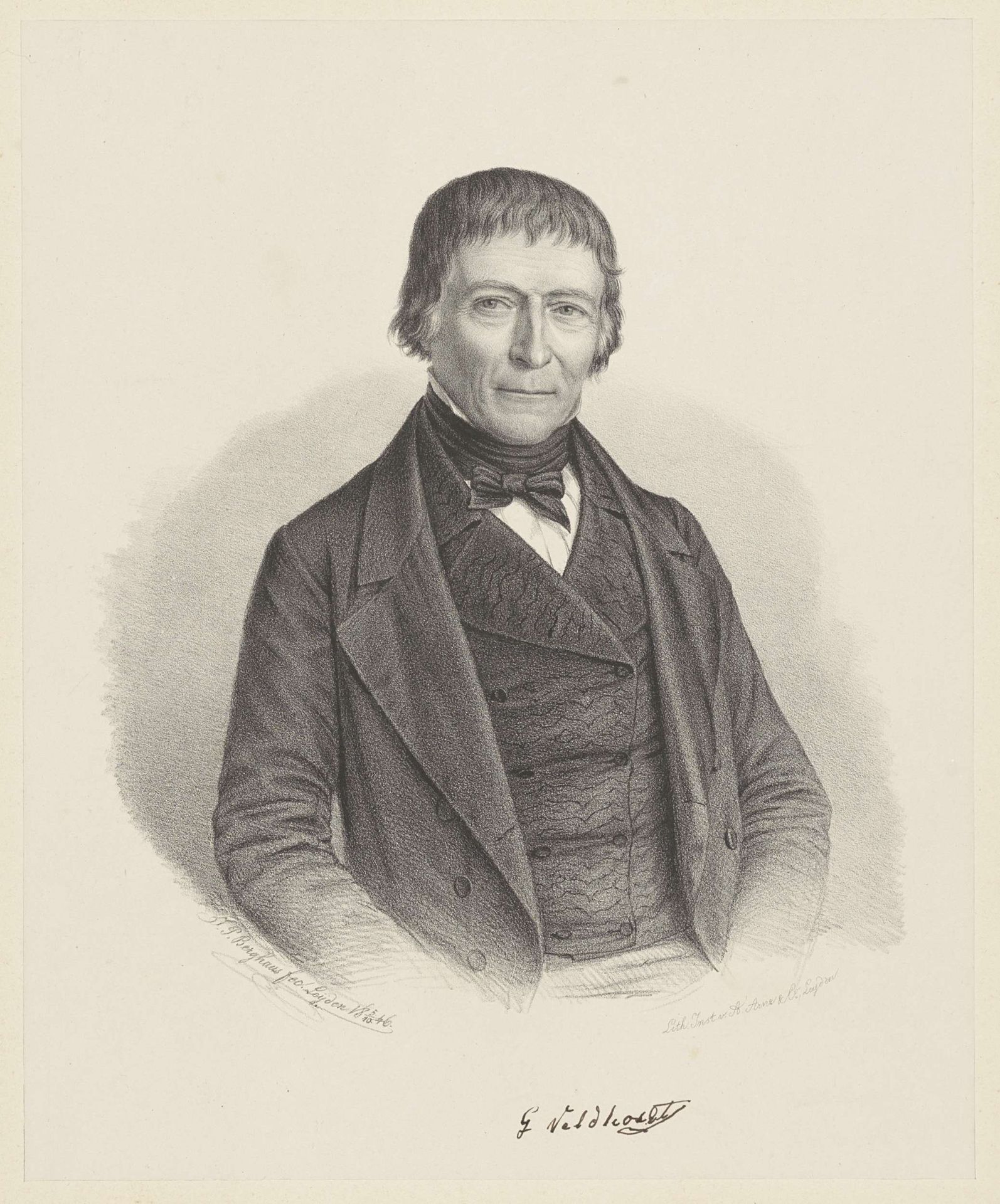
Editor: Here we have a piece called "Portret van een onbekende man", thought to be from 1846, made with engraving. The unknown man's direct gaze creates such a stoic mood. What jumps out to you when you see this piece? Curator: The unwavering gaze indeed commands attention. Engravings, like this one, served a critical function in disseminating images and ideals across society. Consider what an engraving meant in 1846 - photography was still nascent. This portrait, then, performs as a carefully constructed public image. Notice the details of his clothing. What do they signify? Editor: The high collar and layered garments certainly indicate status and respectability. Perhaps the symmetry adds to that feeling as well. Curator: Precisely. The deliberate choice of attire speaks volumes. The print functions almost as a symbol itself – reproducible and capable of circulating specific messages about social standing. Think of the implications for cultural memory. Images like these are how generations understand those before them. Does this shift your perspective at all? Editor: It does. I was so focused on the individual face that I hadn't fully considered the portrait as a symbol itself, and how that symbol would travel and be interpreted across time. Thanks! Curator: My pleasure. Every portrait holds within it the seeds of larger cultural narratives and understandings, which we must interpret with intention.
Portret van een onbekende man
Possibly 1846

Johann Peter Berghaus
1810 - 1870Location
RijksmuseumArtwork details
- Medium
- print, engraving
- Dimensions
- height 488 mm, width 355 mm
- Location
- Rijksmuseum
- Copyright
- Rijks Museum: Open Domain
Tags
Comments
Share your thoughts
About this artwork
Editor: Here we have a piece called "Portret van een onbekende man", thought to be from 1846, made with engraving. The unknown man's direct gaze creates such a stoic mood. What jumps out to you when you see this piece? Curator: The unwavering gaze indeed commands attention. Engravings, like this one, served a critical function in disseminating images and ideals across society. Consider what an engraving meant in 1846 - photography was still nascent. This portrait, then, performs as a carefully constructed public image. Notice the details of his clothing. What do they signify? Editor: The high collar and layered garments certainly indicate status and respectability. Perhaps the symmetry adds to that feeling as well. Curator: Precisely. The deliberate choice of attire speaks volumes. The print functions almost as a symbol itself – reproducible and capable of circulating specific messages about social standing. Think of the implications for cultural memory. Images like these are how generations understand those before them. Does this shift your perspective at all? Editor: It does. I was so focused on the individual face that I hadn't fully considered the portrait as a symbol itself, and how that symbol would travel and be interpreted across time. Thanks! Curator: My pleasure. Every portrait holds within it the seeds of larger cultural narratives and understandings, which we must interpret with intention.
Comments
Share your thoughts