About this artwork
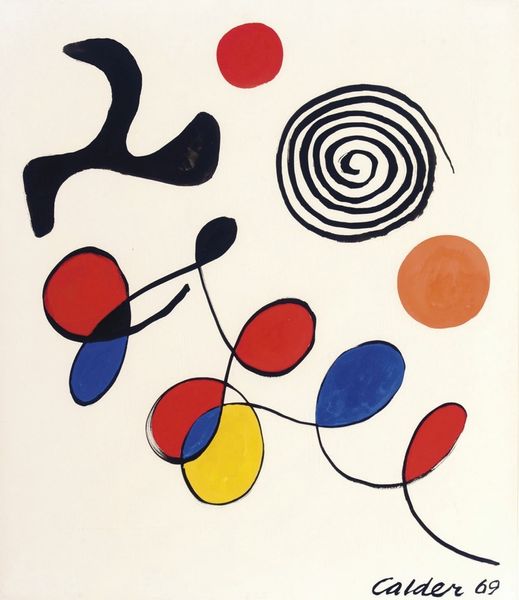
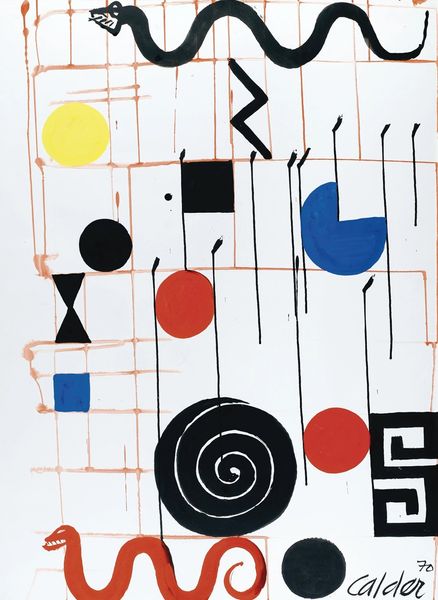
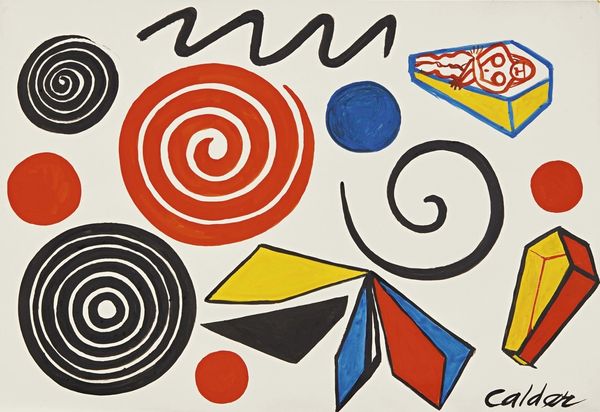
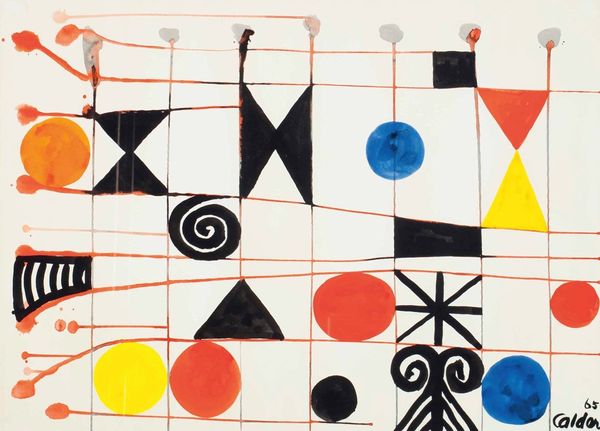
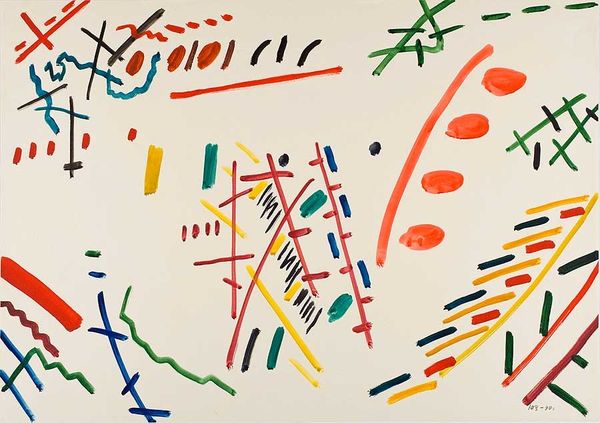
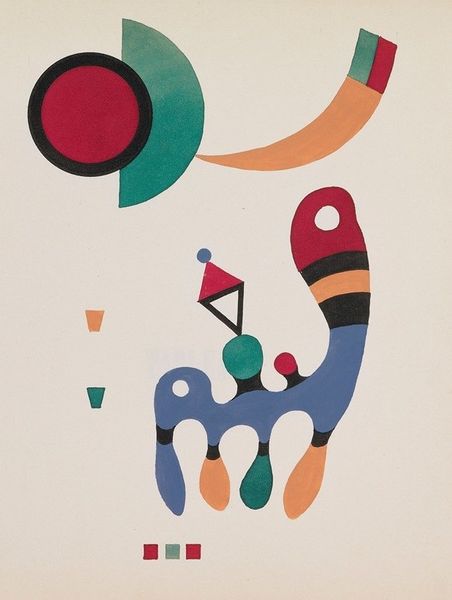
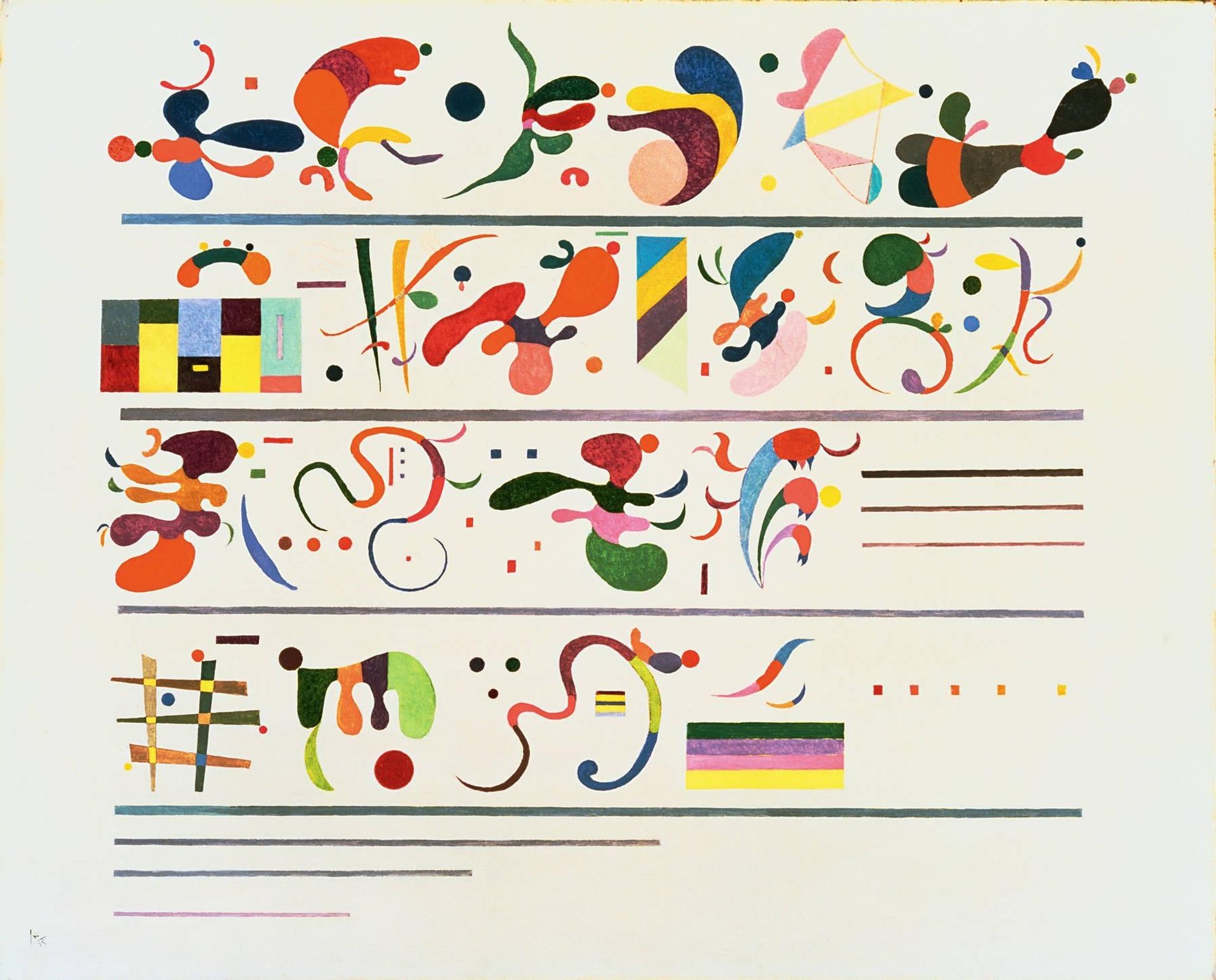
Editor: Here we have Wassily Kandinsky’s “Succession,” created in 1935. It's bursting with colorful, playful shapes arranged across the canvas. I'm struck by the way they seem to float against the white background, almost like musical notes on a staff. What is your interpretation of the elements at play here? Curator: Musical notes! I love that you picked up on that, because Kandinsky saw colour as tied to sound. Look at how he balances those rhythmic, vibrant forms across the space, as if composing a silent symphony. It’s joyful, don’t you think? Though, perhaps, a carefully orchestrated joy. There's structure even within the spontaneity; the piece feels incredibly balanced in its use of line and colour, with echoes of both control and playful impulse. How does that read to you? Editor: I see what you mean, and balanced makes sense; there's a deliberate, layered aspect that contains the vibrancy. But what strikes me as well, is an improvisational quality too – almost like he was experimenting and developing as he went. Is that just me? Curator: Not at all! Think of it as the jazz of abstraction. He's setting up the parameters, then improvising like mad within them! Look closely, and you will start to see that play between structure and free form is present in the succession of lines too! Each object, line and element leads to the other... but there is that joy again too, an exuberant exploration, an improvisational attitude – like watching pure creativity unfold. Editor: So, it’s this dynamic balance between deliberate composition and improvisational freedom that gives the piece its energy. I appreciate knowing that. Curator: Precisely. Now, doesn't this work makes you want to grab a brush and compose a symphony of your own?
Succession
1935


Artwork details
- Dimensions
- 100 x 81 cm
- Location
- Philips Collection, Washington, DC, US
- Copyright
- Public domain
Tags
Comments
Share your thoughts
About this artwork
Editor: Here we have Wassily Kandinsky’s “Succession,” created in 1935. It's bursting with colorful, playful shapes arranged across the canvas. I'm struck by the way they seem to float against the white background, almost like musical notes on a staff. What is your interpretation of the elements at play here? Curator: Musical notes! I love that you picked up on that, because Kandinsky saw colour as tied to sound. Look at how he balances those rhythmic, vibrant forms across the space, as if composing a silent symphony. It’s joyful, don’t you think? Though, perhaps, a carefully orchestrated joy. There's structure even within the spontaneity; the piece feels incredibly balanced in its use of line and colour, with echoes of both control and playful impulse. How does that read to you? Editor: I see what you mean, and balanced makes sense; there's a deliberate, layered aspect that contains the vibrancy. But what strikes me as well, is an improvisational quality too – almost like he was experimenting and developing as he went. Is that just me? Curator: Not at all! Think of it as the jazz of abstraction. He's setting up the parameters, then improvising like mad within them! Look closely, and you will start to see that play between structure and free form is present in the succession of lines too! Each object, line and element leads to the other... but there is that joy again too, an exuberant exploration, an improvisational attitude – like watching pure creativity unfold. Editor: So, it’s this dynamic balance between deliberate composition and improvisational freedom that gives the piece its energy. I appreciate knowing that. Curator: Precisely. Now, doesn't this work makes you want to grab a brush and compose a symphony of your own?
Comments
Share your thoughts