About this artwork
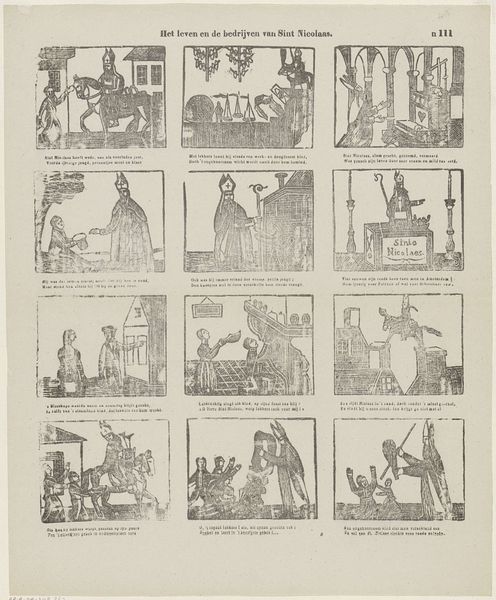
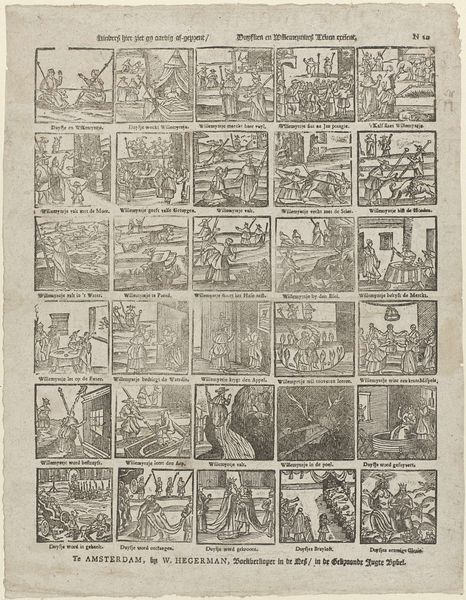
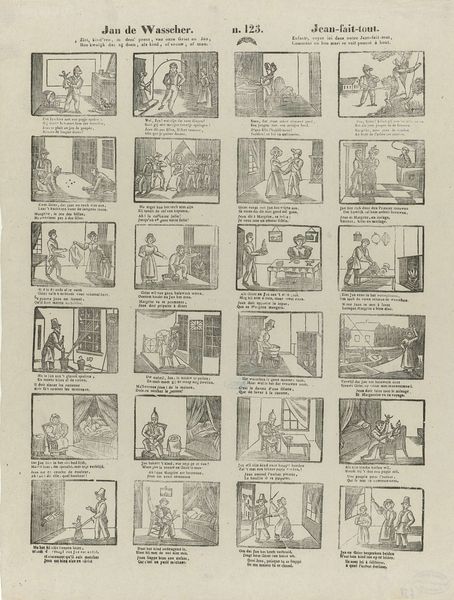
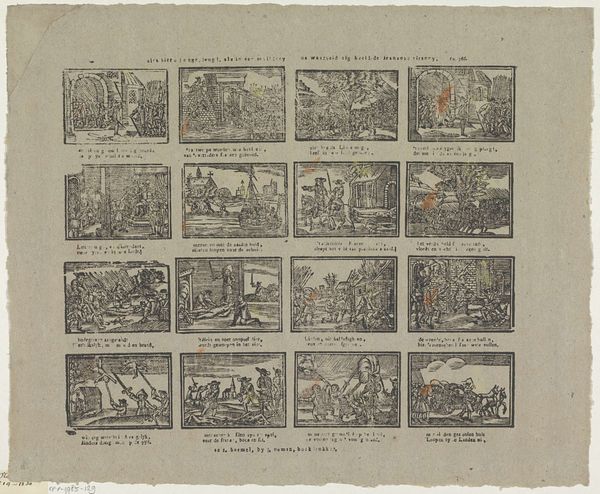
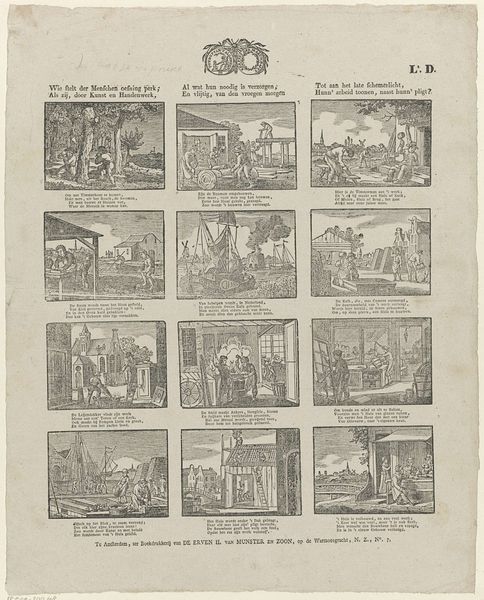
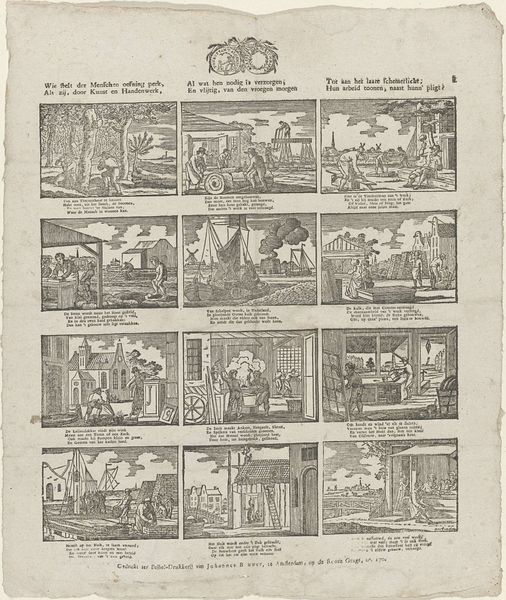
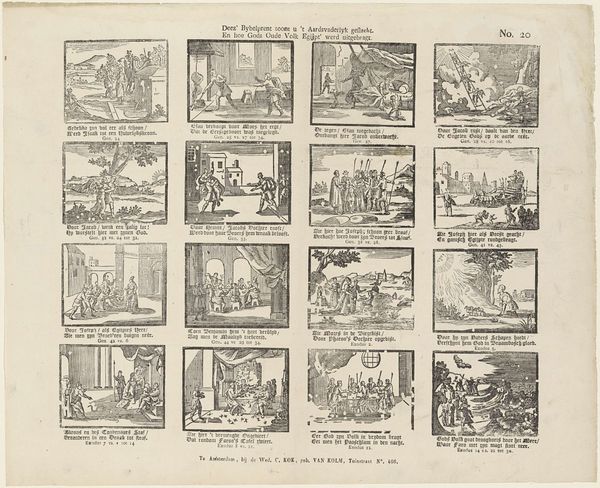
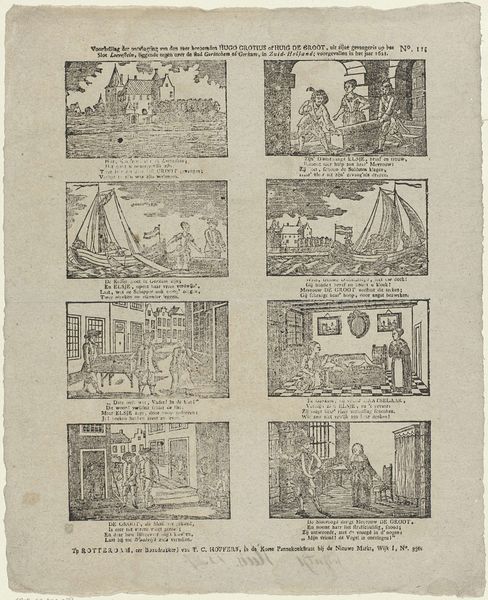
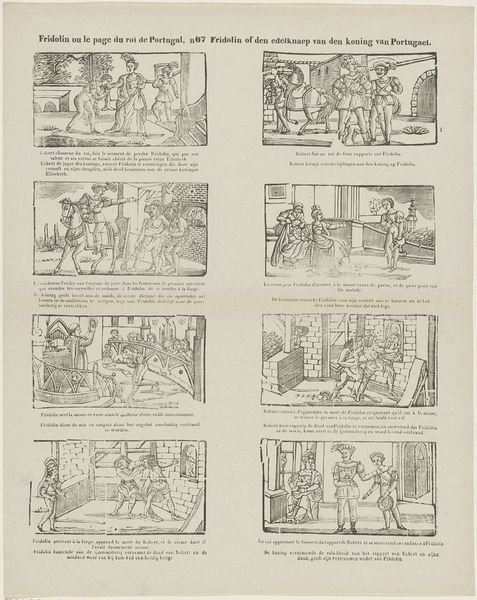
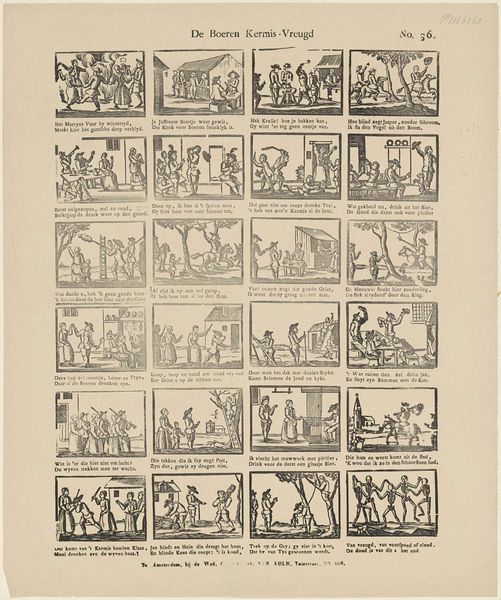
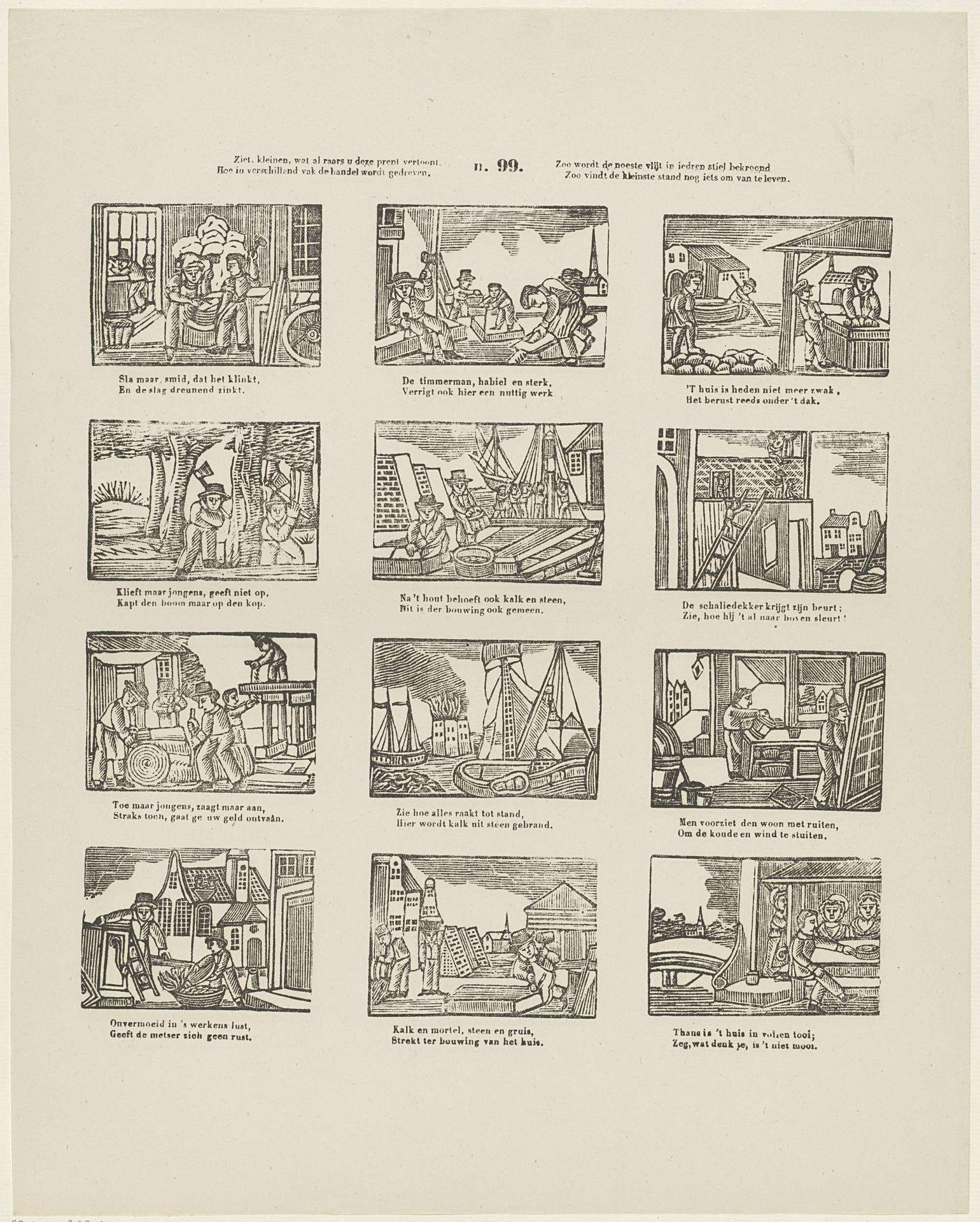
This print by Glenisson & Zonen presents a series of vignettes, each depicting a different trade or profession and offering a glimpse into the industrious spirit of its time. Note the recurring motif of labor, and the tools used. These symbols of work – the carpenter's tools, the fisherman’s boat, the mason’s materials – appear throughout art history. Think of the ancient Egyptian depictions of craftsmen, or the medieval guilds' emblems. The symbol of craftsmanship has come to represent not just a trade but a societal role. Consider, too, the psychological weight of such imagery. These trades carry the emotional associations of provision, structure, and growth, engaging the viewer on a deep, subconscious level. The image taps into our collective memory of the trades, reminding us of the enduring importance of skilled work. This image's non-linear, cyclical progression resurfaces, evolves, and takes on new meanings in different historical contexts.
Ziet, kleinen, wat al raars u deze prent vertoont, / Hoe in verschillend vak de handel wordt gedreven, / Zoo wordt de noeste vlijt in iedren stiel bekroond, / Zoo vindt de kleinste stand nog iets om van te leven
1833 - 1900

Artwork details
- Medium
- print, engraving
- Dimensions
- height 401 mm, width 319 mm
- Copyright
- Rijks Museum: Open Domain
Tags
Comments
Share your thoughts
About this artwork
This print by Glenisson & Zonen presents a series of vignettes, each depicting a different trade or profession and offering a glimpse into the industrious spirit of its time. Note the recurring motif of labor, and the tools used. These symbols of work – the carpenter's tools, the fisherman’s boat, the mason’s materials – appear throughout art history. Think of the ancient Egyptian depictions of craftsmen, or the medieval guilds' emblems. The symbol of craftsmanship has come to represent not just a trade but a societal role. Consider, too, the psychological weight of such imagery. These trades carry the emotional associations of provision, structure, and growth, engaging the viewer on a deep, subconscious level. The image taps into our collective memory of the trades, reminding us of the enduring importance of skilled work. This image's non-linear, cyclical progression resurfaces, evolves, and takes on new meanings in different historical contexts.
Comments
Share your thoughts