About this artwork
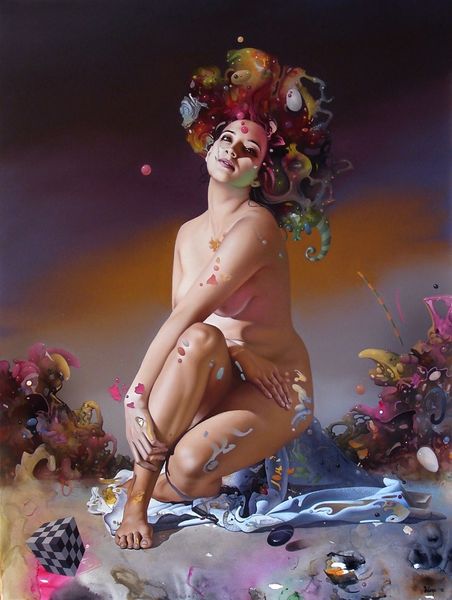
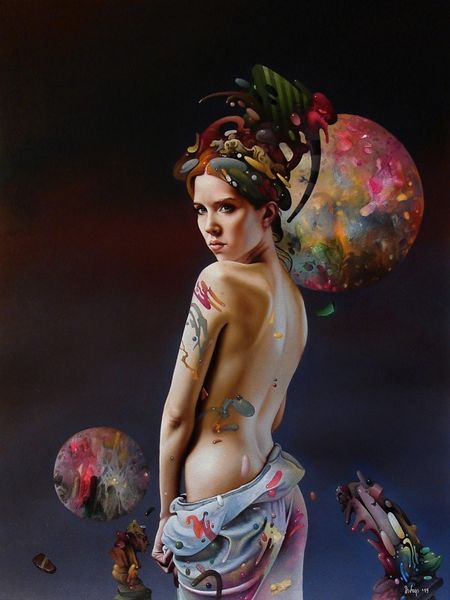
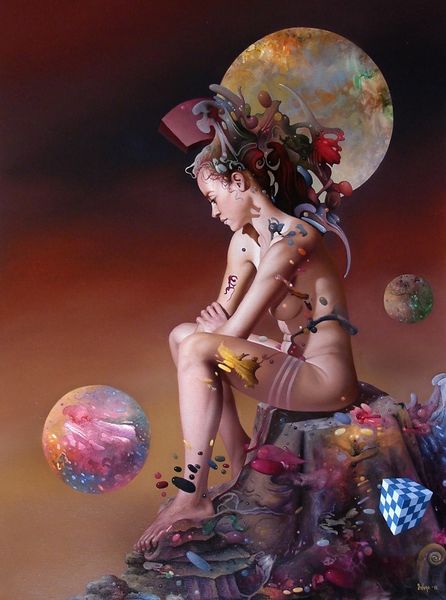
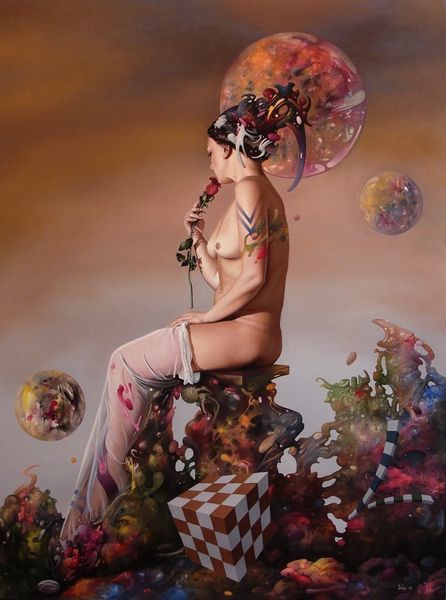
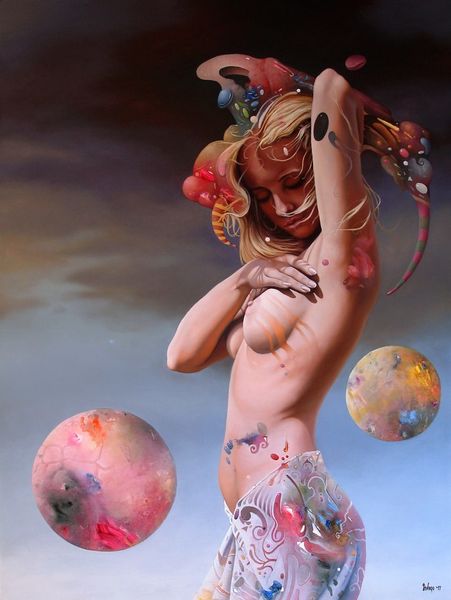
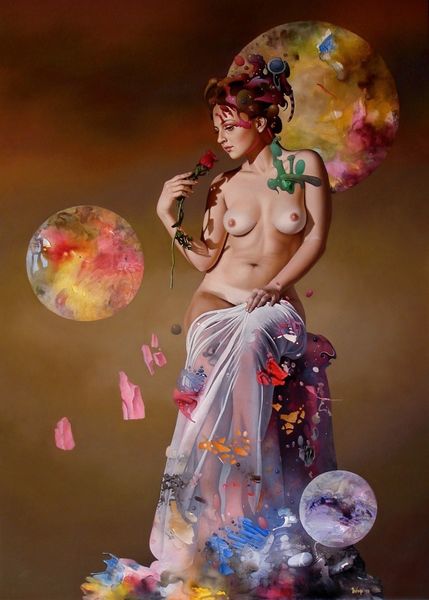
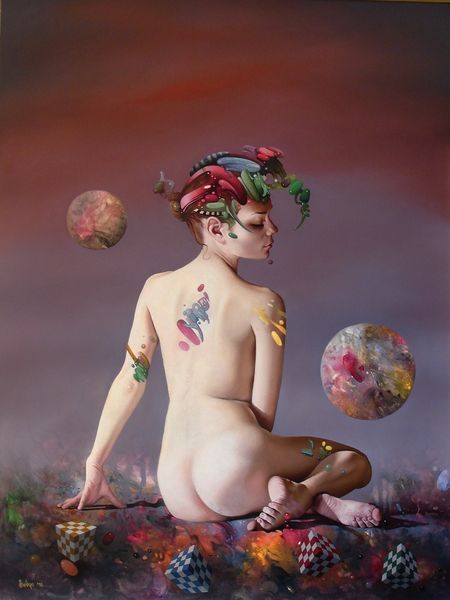
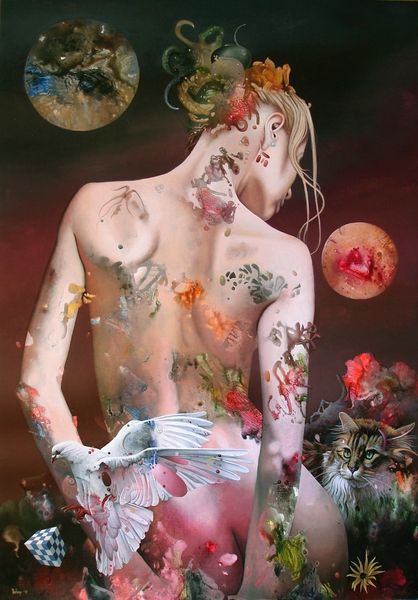
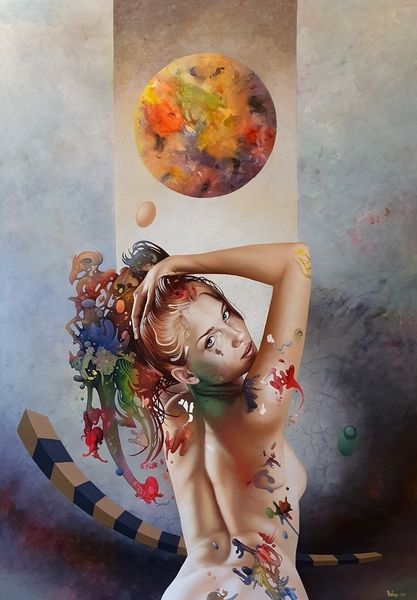
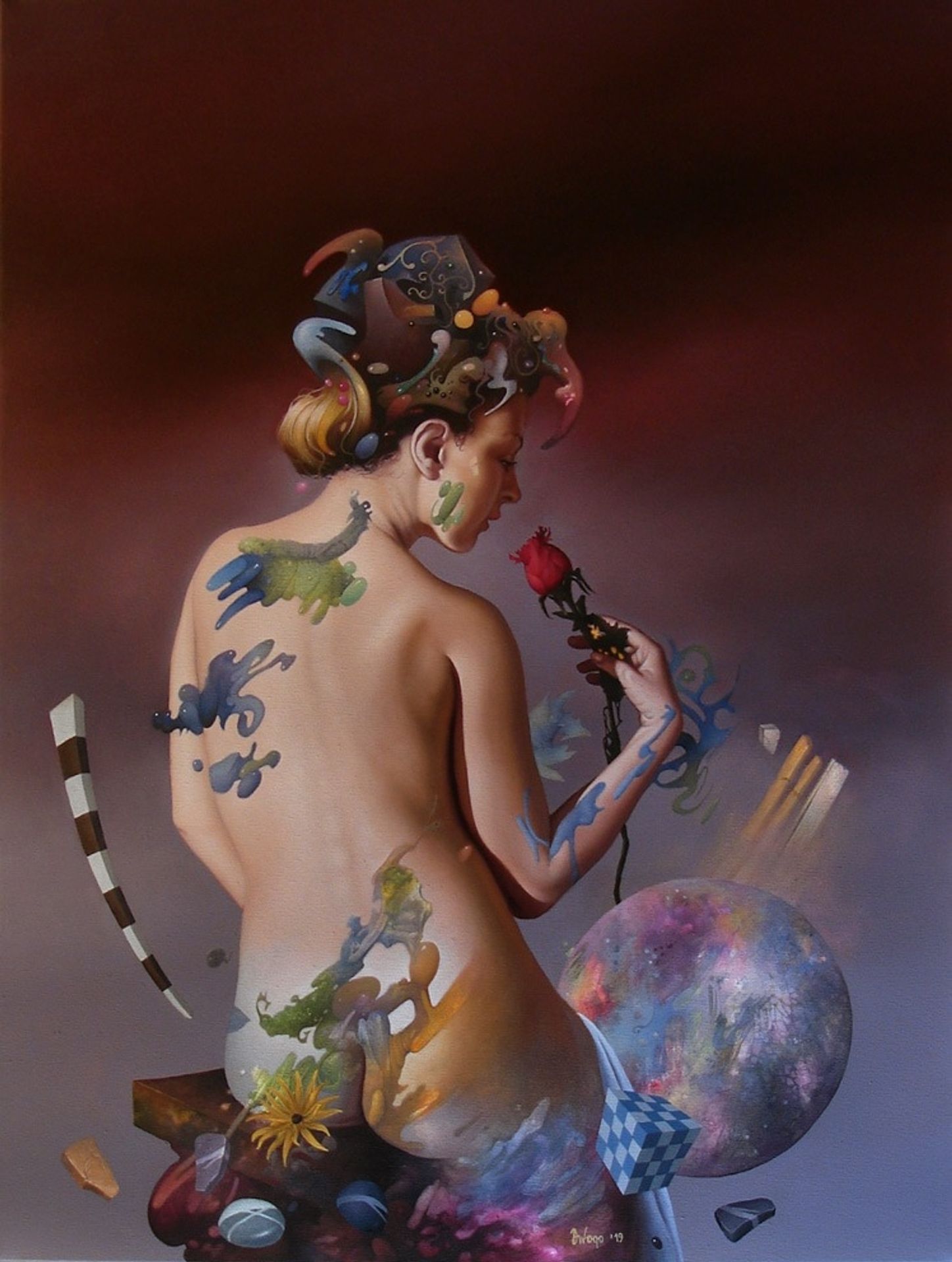
Dragan Ilić Di Vogo made *Pigmalion C* and it seems to be all about this dance between control and chance that we find in painting. Look at how the skin tones blend and shift, a real mastery of classical technique, and then BAM, unexpected splatters and floating forms. The texture here is key. On the figure, the paint is so smooth and delicately layered it practically glows. Then your eye hits those curious abstract shapes, like the ones on her back and arm, and they seem to have a life of their own, don't they? Are they tattoos, birthmarks, or just paint? I love how the controlled and uncontrolled seem to be merging. That single rose she's holding seems like a reference to art history, a Vanitas. Vogo puts it into a new conversation, asking questions about beauty, perception, and what happens when we try to capture something fleeting. For me it's a reminder that art is always in conversation with itself, constantly reinterpreting the past.

Artwork details
- Medium
- mixed-media, painting, acrylic-paint
- Copyright
- Modern Artists: Artvee
Tags
portrait
mixed-media
fantasy art
painting
fantasy illustration
fantasy-art
acrylic-paint
figuration
surrealist
nude
surrealism
realism
Comments
No comments
About this artwork
Dragan Ilić Di Vogo made *Pigmalion C* and it seems to be all about this dance between control and chance that we find in painting. Look at how the skin tones blend and shift, a real mastery of classical technique, and then BAM, unexpected splatters and floating forms. The texture here is key. On the figure, the paint is so smooth and delicately layered it practically glows. Then your eye hits those curious abstract shapes, like the ones on her back and arm, and they seem to have a life of their own, don't they? Are they tattoos, birthmarks, or just paint? I love how the controlled and uncontrolled seem to be merging. That single rose she's holding seems like a reference to art history, a Vanitas. Vogo puts it into a new conversation, asking questions about beauty, perception, and what happens when we try to capture something fleeting. For me it's a reminder that art is always in conversation with itself, constantly reinterpreting the past.
Comments
No comments