About this artwork
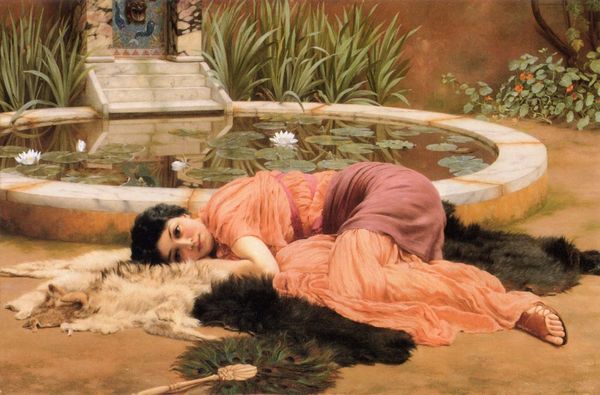
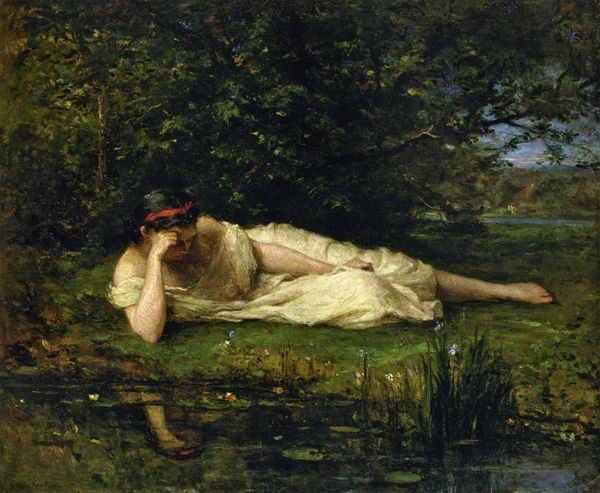
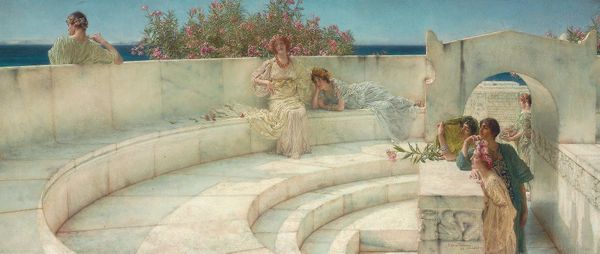
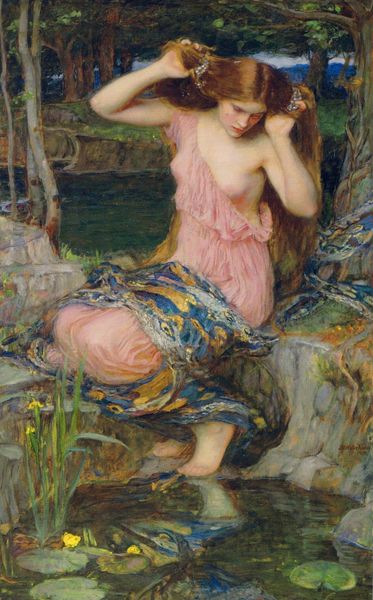
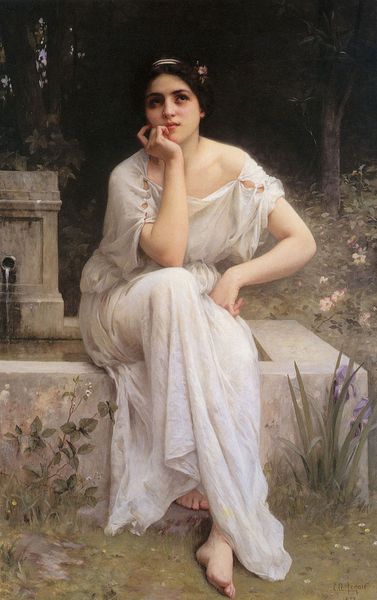
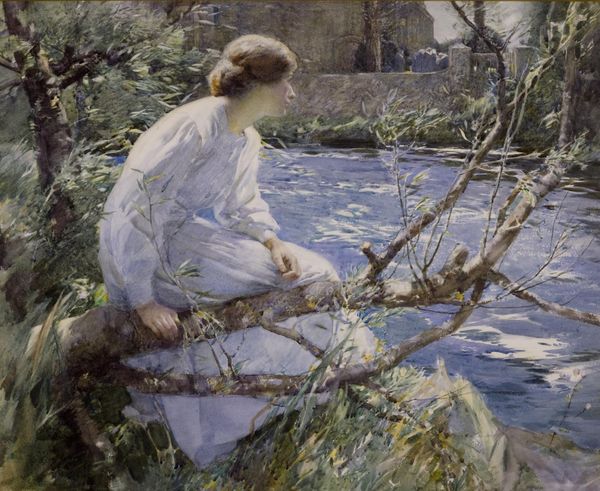
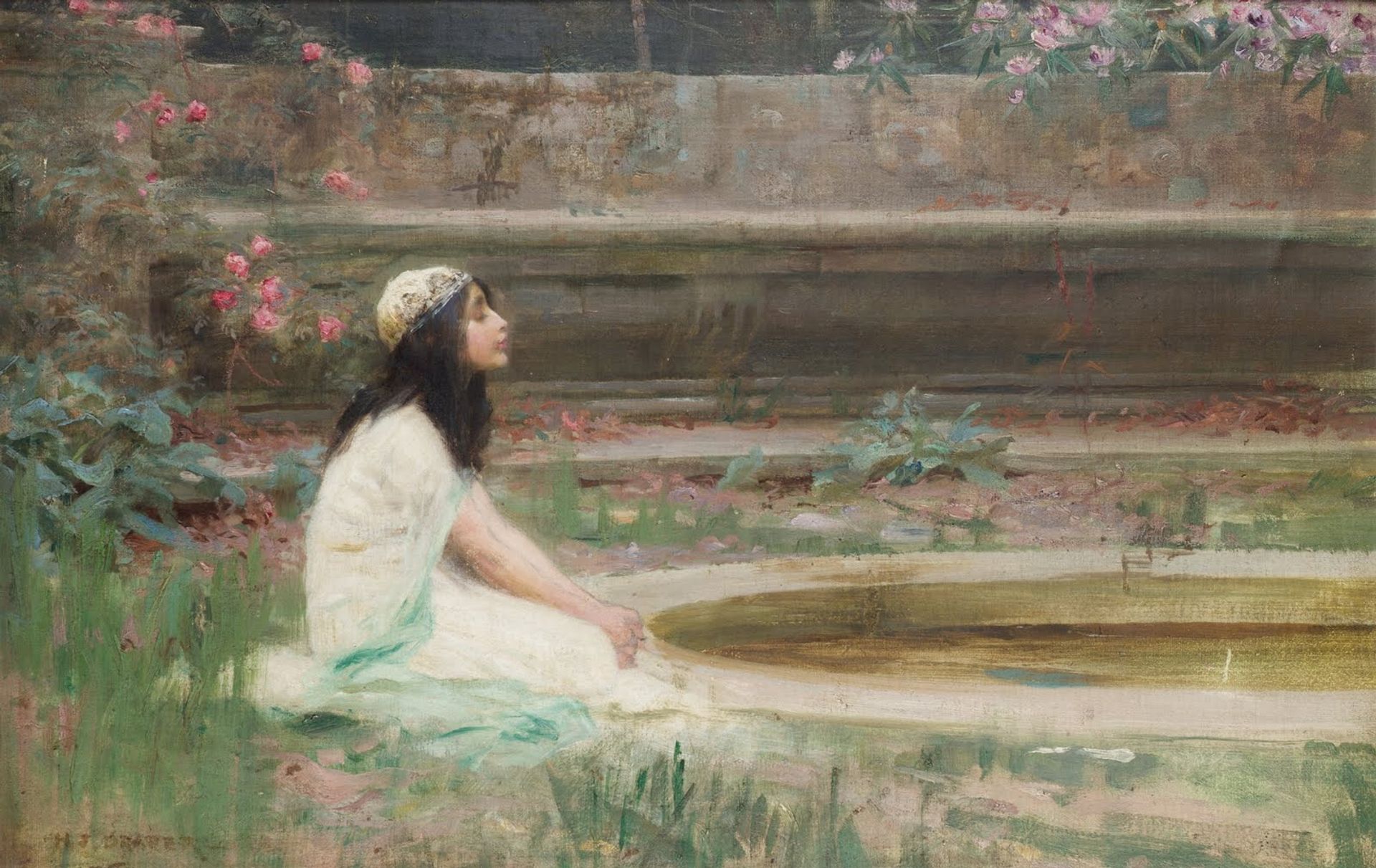
Herbert James Draper painted ‘A Young Girl by a Pool’ using oil on canvas, a very typical choice for the period. However, the real story here is the artist's technique. Draper was working at a time when the art world was rapidly industrializing, and the commercial market was booming. If we look closely at the surface of the canvas, we see signs of quick, almost mechanical application, made possible by advances in pigment production and pre-primed canvases. He applied the paint in thin layers, allowing for a quick turnaround and a high volume of production. The painting has a dreamy, idealized quality, reflecting the Victorian era's nostalgia for classical beauty. Yet, this aesthetic was achieved through modern means, a testament to how industrial processes were reshaping art itself. So, when we consider the social context, we see how Draper's choices, though seemingly traditional, were deeply enmeshed with the changing world of art production and consumption, blurring the lines between craft and industry.

Artwork details
- Medium
- plein-air, watercolor
- Copyright
- Public domain
Tags
portrait
gouache
impressionism
plein-air
landscape
watercolor
romanticism
watercolour illustration
genre-painting
Comments
No comments
About this artwork
Herbert James Draper painted ‘A Young Girl by a Pool’ using oil on canvas, a very typical choice for the period. However, the real story here is the artist's technique. Draper was working at a time when the art world was rapidly industrializing, and the commercial market was booming. If we look closely at the surface of the canvas, we see signs of quick, almost mechanical application, made possible by advances in pigment production and pre-primed canvases. He applied the paint in thin layers, allowing for a quick turnaround and a high volume of production. The painting has a dreamy, idealized quality, reflecting the Victorian era's nostalgia for classical beauty. Yet, this aesthetic was achieved through modern means, a testament to how industrial processes were reshaping art itself. So, when we consider the social context, we see how Draper's choices, though seemingly traditional, were deeply enmeshed with the changing world of art production and consumption, blurring the lines between craft and industry.
Comments
No comments