About this artwork
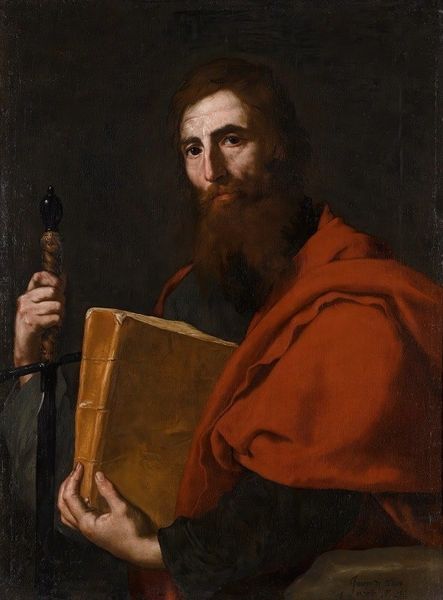
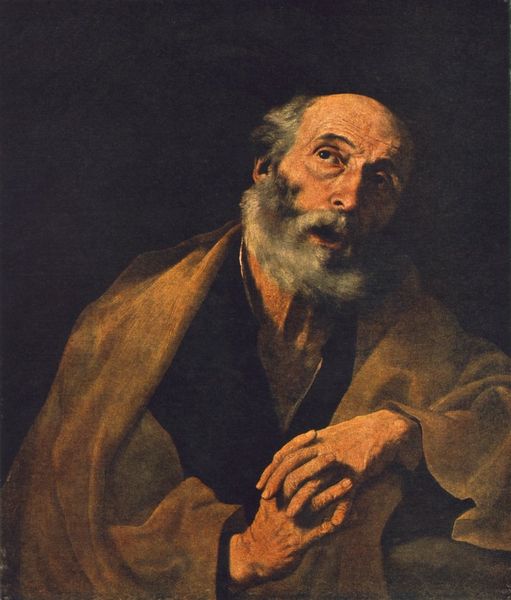
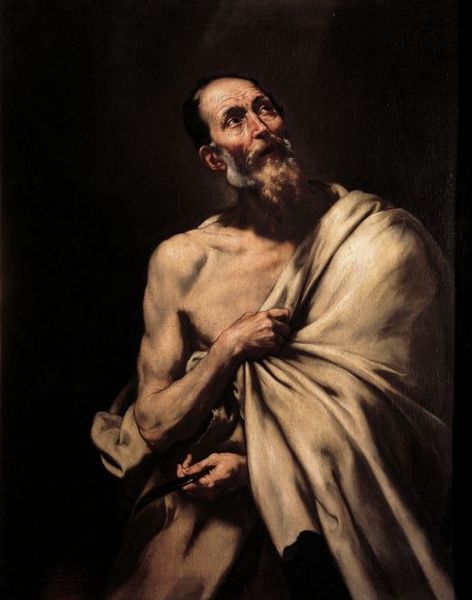
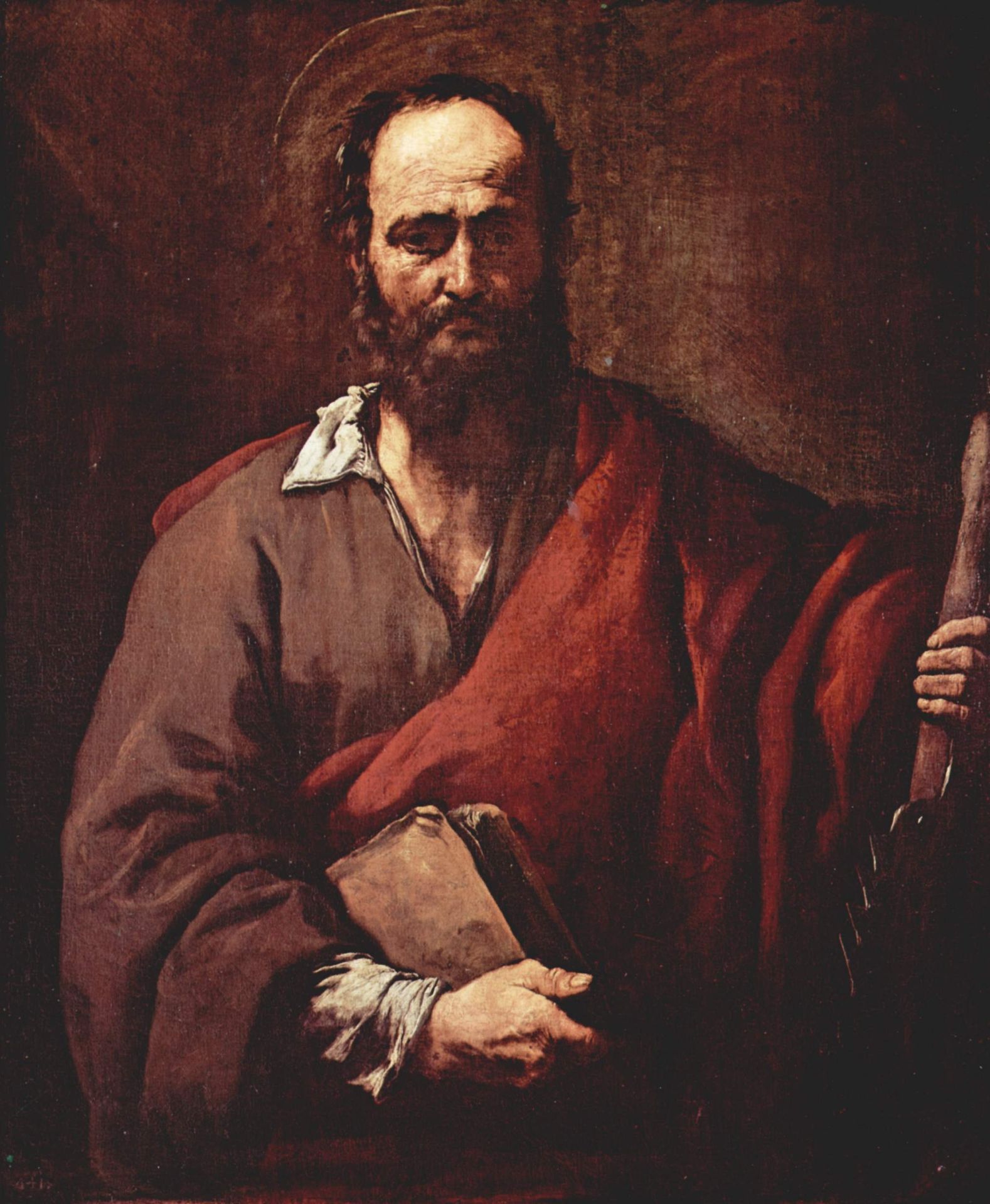
Editor: Jusepe de Ribera's "St. Simon," painted around 1630, strikes me with its tenebrism; the contrast of light and shadow is incredible. I'm also captivated by the detail in St. Simon’s face, which looks aged, wise, and careworn. What strikes you most about the composition and artistic choices here? Curator: Immediately, it is the formal structure of light and dark that dictates the work's emotive force. Ribera’s masterful use of chiaroscuro transcends mere representation, forging a stark division within the pictorial plane. This contrast creates a tension. Observe how this division illuminates the saint's weathered features, and it casts the remaining areas in profound shadow, rendering an almost sculptural quality. The materiality, the layering of the oil paint, gives the surface an almost palpable depth, would you agree? Editor: Absolutely, especially in his robe. The brushstrokes are visible, adding a tactile dimension. The way the light hits the folds… it's stunning. Curator: Note also the geometric composition – the placement of the book in conjunction with the angle of the saint's torso and cloak, working against the dark background – create lines that guide the viewer’s gaze. This invites analysis from a purely visual standpoint. It’s almost as if each formal component is designed to underscore an intellectual encounter, stripping it of extraneous adornment, in fact. Editor: It's interesting to consider the structure, how these shapes and lights are interconnected and deliberate. The artist is emphasizing these simple components in creating an iconic image, wouldn’t you say? I will remember to consider an artwork’s composition and its influence. Curator: Indeed. Analyzing the arrangement of line, form, and shadow in works such as Ribera’s can lead to a far deeper understanding of visual storytelling.

Artwork details
- Medium
- oil-paint
- Dimensions
- 107 x 91 cm
- Location
- Museo del Prado, Madrid, Spain
- Copyright
- Public domain
Tags
Comments
Share your thoughts
About this artwork
Editor: Jusepe de Ribera's "St. Simon," painted around 1630, strikes me with its tenebrism; the contrast of light and shadow is incredible. I'm also captivated by the detail in St. Simon’s face, which looks aged, wise, and careworn. What strikes you most about the composition and artistic choices here? Curator: Immediately, it is the formal structure of light and dark that dictates the work's emotive force. Ribera’s masterful use of chiaroscuro transcends mere representation, forging a stark division within the pictorial plane. This contrast creates a tension. Observe how this division illuminates the saint's weathered features, and it casts the remaining areas in profound shadow, rendering an almost sculptural quality. The materiality, the layering of the oil paint, gives the surface an almost palpable depth, would you agree? Editor: Absolutely, especially in his robe. The brushstrokes are visible, adding a tactile dimension. The way the light hits the folds… it's stunning. Curator: Note also the geometric composition – the placement of the book in conjunction with the angle of the saint's torso and cloak, working against the dark background – create lines that guide the viewer’s gaze. This invites analysis from a purely visual standpoint. It’s almost as if each formal component is designed to underscore an intellectual encounter, stripping it of extraneous adornment, in fact. Editor: It's interesting to consider the structure, how these shapes and lights are interconnected and deliberate. The artist is emphasizing these simple components in creating an iconic image, wouldn’t you say? I will remember to consider an artwork’s composition and its influence. Curator: Indeed. Analyzing the arrangement of line, form, and shadow in works such as Ribera’s can lead to a far deeper understanding of visual storytelling.
Comments
Share your thoughts