About this artwork
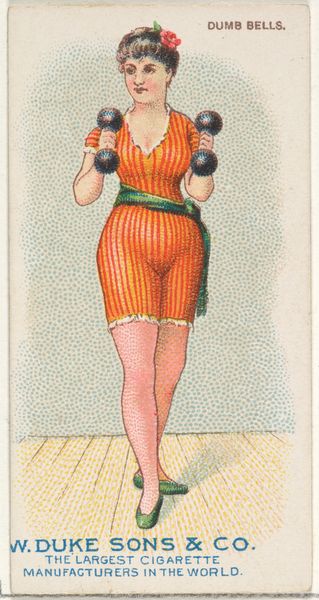
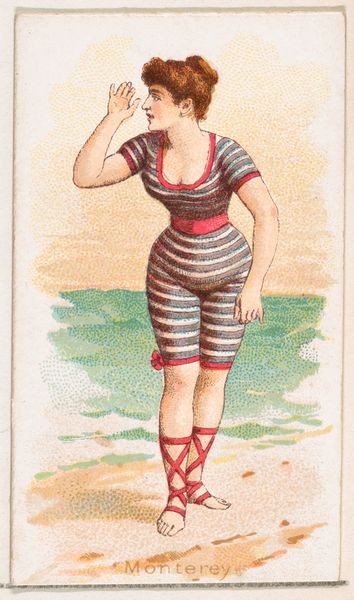
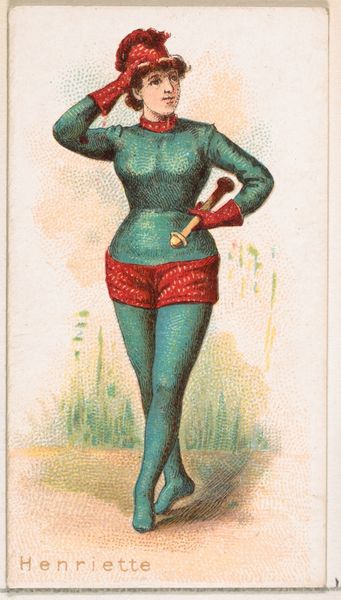
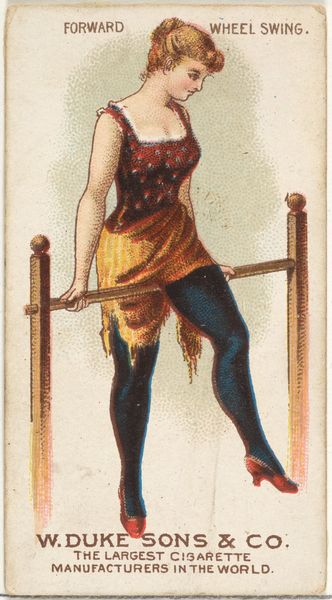
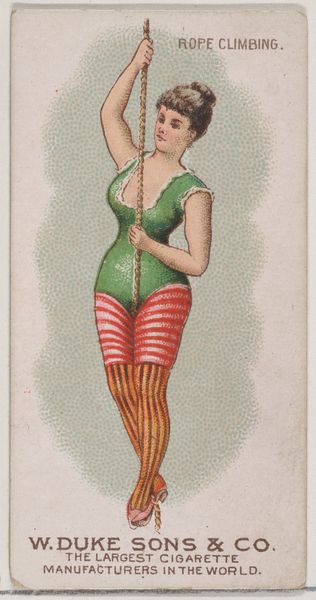
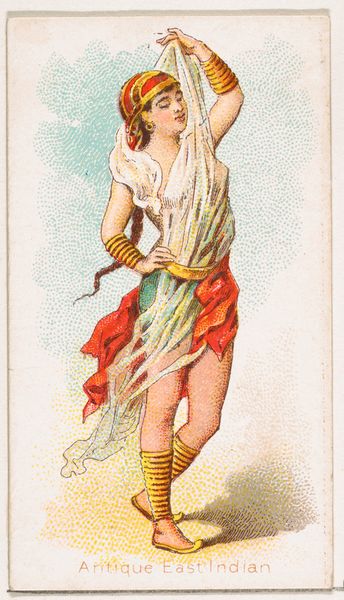
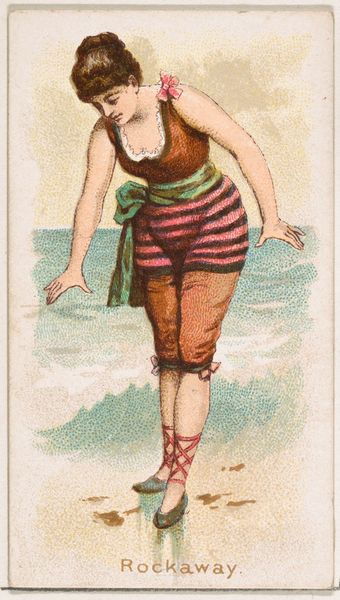
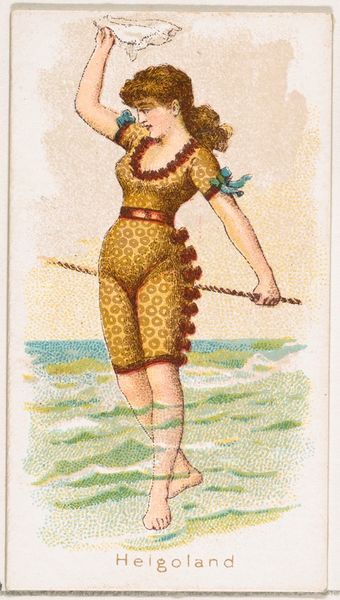
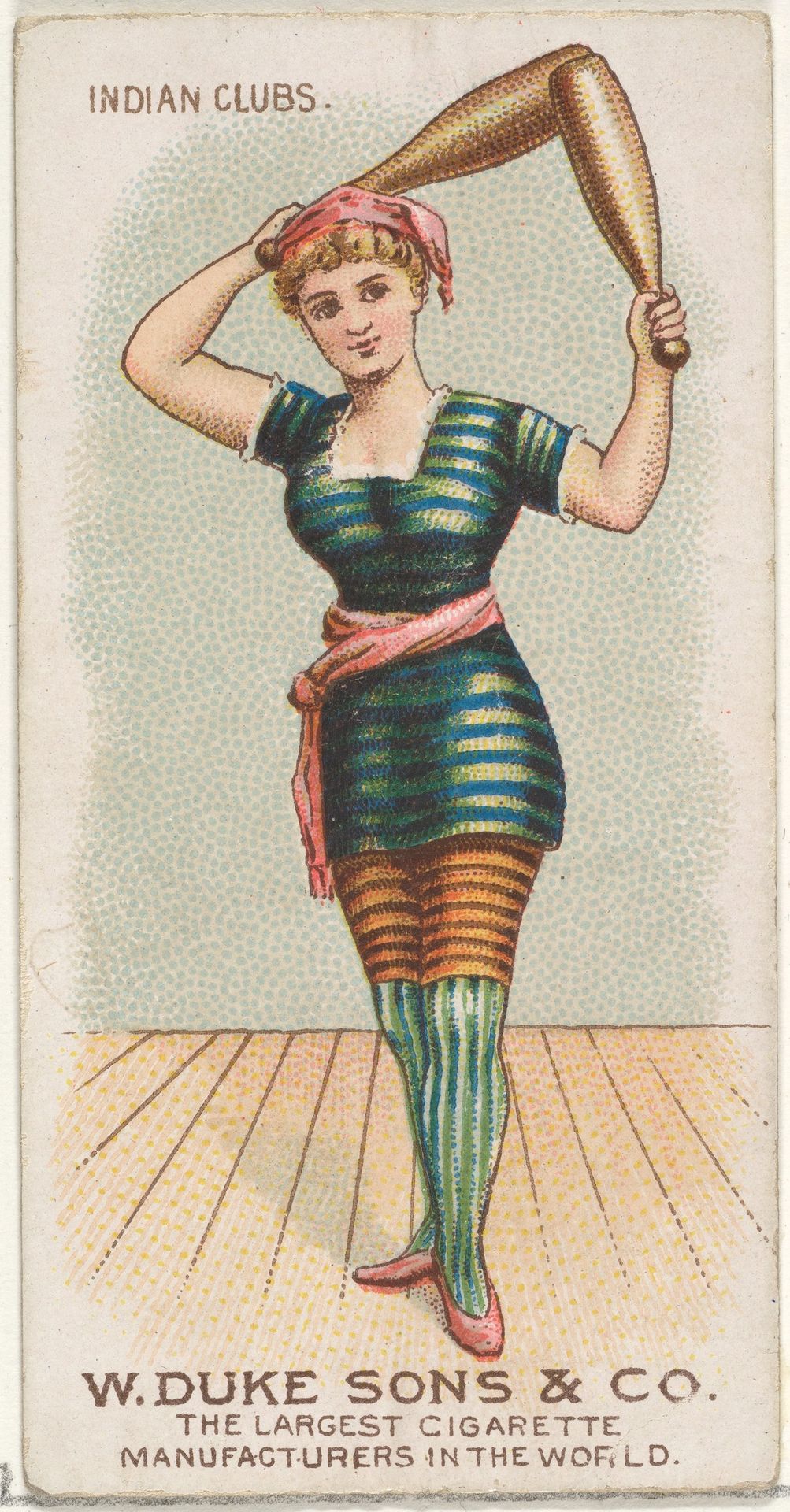
Editor: So, this is "Indian Clubs" from the "Gymnastic Exercises" series, created in 1887 by W. Duke, Sons & Co. It’s a colored-pencil print that looks like it was part of an advertisement for cigarettes. I’m struck by the way the female figure is presented. What do you see in this piece? Curator: I see the commodification of both fitness and the female form. This print, made with colored pencils and printed for mass consumption on cigarette cards, highlights the intersection of industrial production, advertising, and the Victorian obsession with physical culture. What labor went into the design and manufacture of this print, and who profited from its circulation? Editor: That's a great point. I didn't think about the manufacturing. Were these types of images common for cigarette cards at the time? Curator: They were incredibly common. Think about the raw materials – the paper pulp, the colored pigments, the printing press itself. These were products of a rapidly industrializing world, fueling both consumerism and new forms of visual culture. Furthermore, consider the "Indian Clubs" themselves. What are their material origins, their production process, and their relationship to leisure and labor? The materiality speaks volumes. Editor: So, the artwork isn't just the image, but also the physical card and how it was made? That shifts my understanding completely. Curator: Exactly. It challenges our traditional view of art by drawing our attention to labor and capital that are enmeshed in what we typically classify as consumer ephemera, thus expanding art into something with wider economic implications. Editor: I've definitely learned to look beyond the surface of images like this now. The materials and production process are just as important as the subject. Curator: Indeed. Thinking about materials forces us to ask bigger questions about how society and visual culture interconnect.
Indian Clubs, from the Gymnastic Exercises series (N77) for Duke brand cigarettes
1887

W. Duke, Sons & Co.
1870 - 1920
The Metropolitan Museum of Art
Metropolitan Museum of Art, New York, NYArtwork details
- Medium
- drawing, coloured-pencil, print
- Dimensions
- Sheet: 2 3/4 x 1 1/2 in. (7 x 3.8 cm)
- Location
- Metropolitan Museum of Art, New York, NY
- Copyright
- Public Domain
Tags
portrait
drawing
coloured-pencil
caricature
caricature
coloured pencil
genre-painting
Comments
Be the first to share your thoughts about this work.
About this artwork
Editor: So, this is "Indian Clubs" from the "Gymnastic Exercises" series, created in 1887 by W. Duke, Sons & Co. It’s a colored-pencil print that looks like it was part of an advertisement for cigarettes. I’m struck by the way the female figure is presented. What do you see in this piece? Curator: I see the commodification of both fitness and the female form. This print, made with colored pencils and printed for mass consumption on cigarette cards, highlights the intersection of industrial production, advertising, and the Victorian obsession with physical culture. What labor went into the design and manufacture of this print, and who profited from its circulation? Editor: That's a great point. I didn't think about the manufacturing. Were these types of images common for cigarette cards at the time? Curator: They were incredibly common. Think about the raw materials – the paper pulp, the colored pigments, the printing press itself. These were products of a rapidly industrializing world, fueling both consumerism and new forms of visual culture. Furthermore, consider the "Indian Clubs" themselves. What are their material origins, their production process, and their relationship to leisure and labor? The materiality speaks volumes. Editor: So, the artwork isn't just the image, but also the physical card and how it was made? That shifts my understanding completely. Curator: Exactly. It challenges our traditional view of art by drawing our attention to labor and capital that are enmeshed in what we typically classify as consumer ephemera, thus expanding art into something with wider economic implications. Editor: I've definitely learned to look beyond the surface of images like this now. The materials and production process are just as important as the subject. Curator: Indeed. Thinking about materials forces us to ask bigger questions about how society and visual culture interconnect.
Comments
Be the first to share your thoughts about this work.