About this artwork
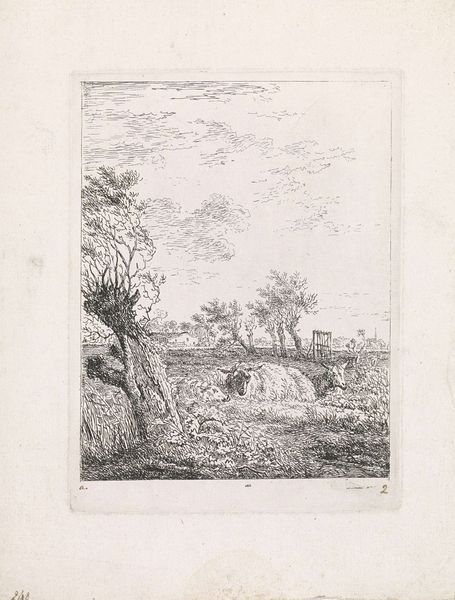
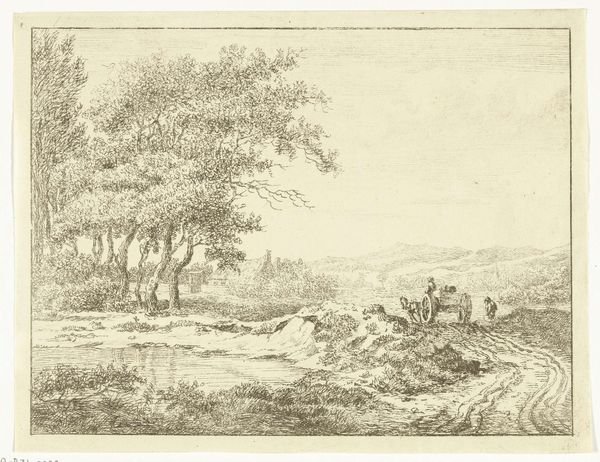
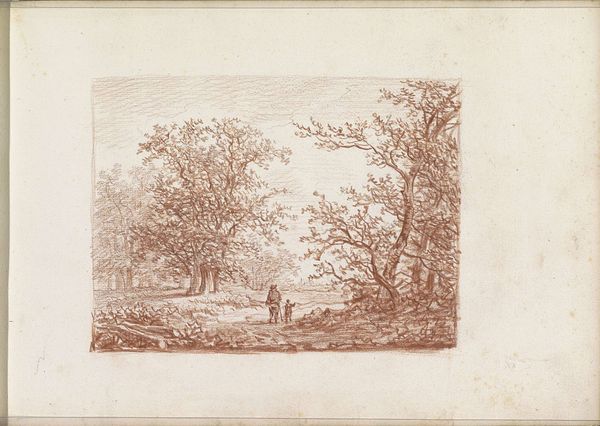
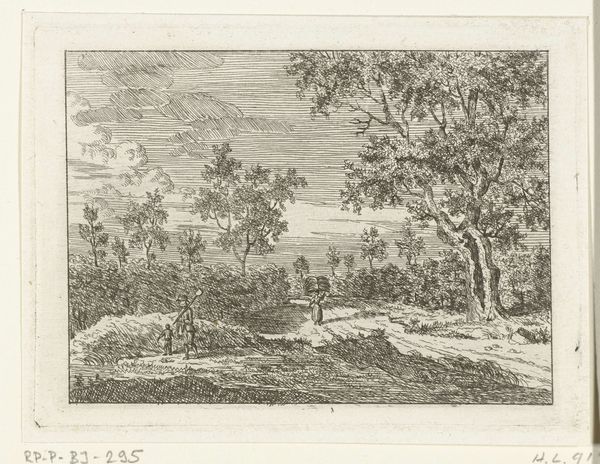
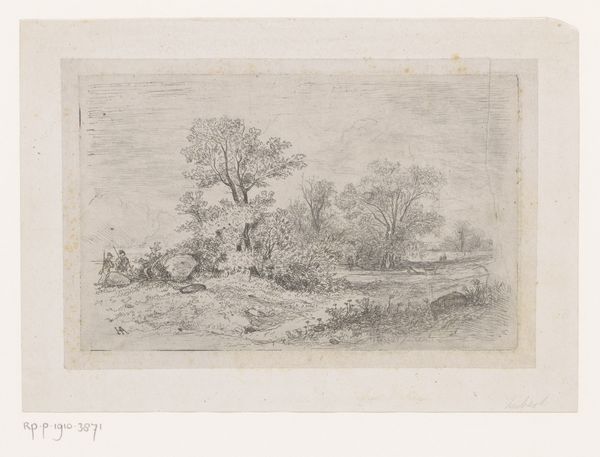
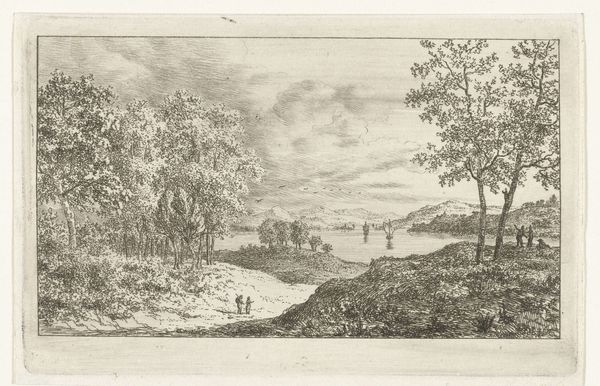
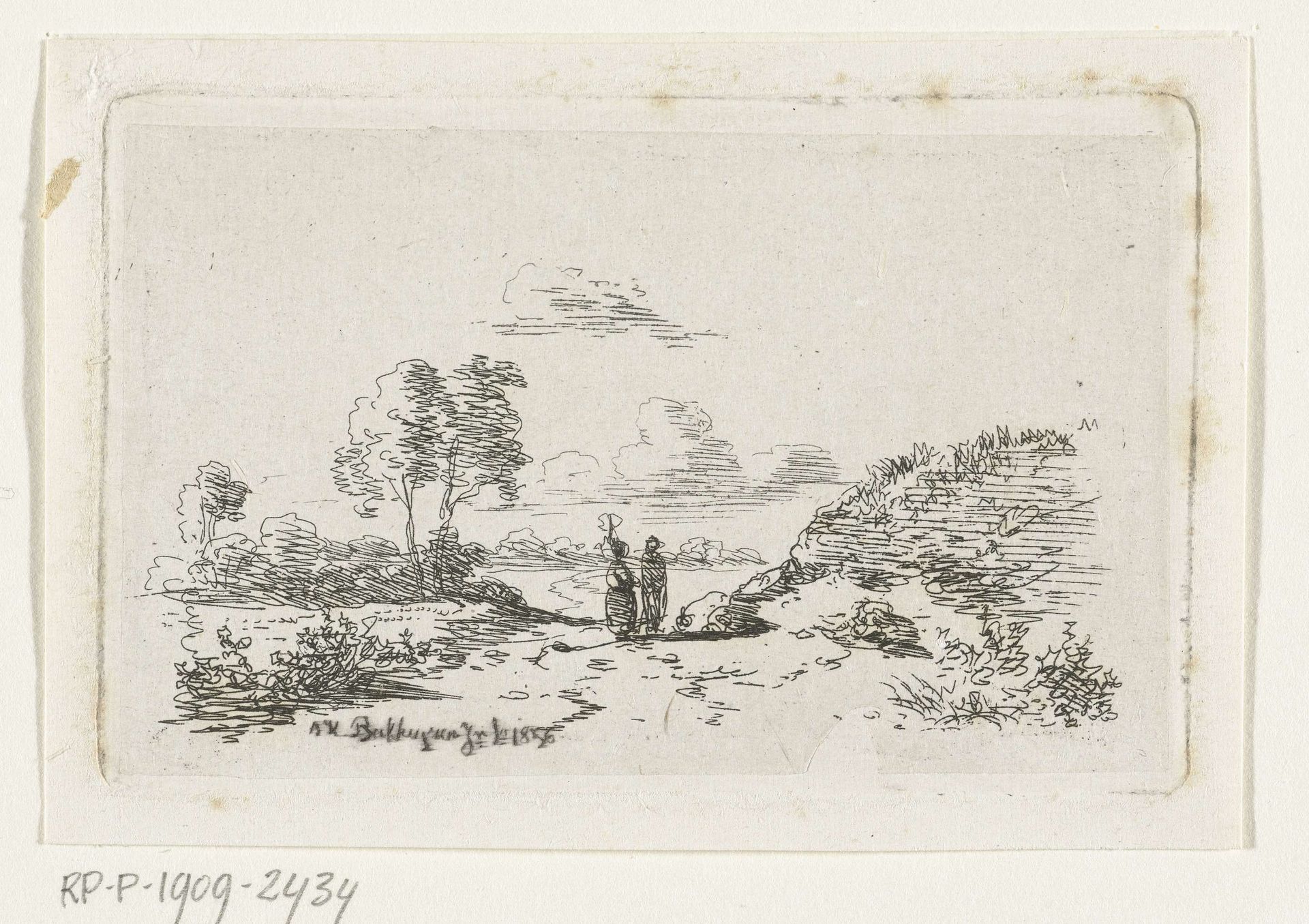
Dirk Vis Blokhuyzen created this landscape with two figures on a sandy path, using etching, in the 19th century. The etcher's line is paramount here, and the image is totally dependent on it. Note the sharp, bitten quality that indicates an acid-resist ground, carefully applied before Blokhuyzen submerged the plate in acid. The controlled corrosion of the metal allows him to create a delicate, yet reproducible image. Consider the social context; this was an era when printmaking served both art and industry. Etchings like this one democratized art, making landscapes accessible beyond the elite. The labor-intensive process, from preparing the plate to the final print, contrasts with the apparent ease of the scene depicted. Ultimately, this print embodies a fusion of craft and fine art, inviting us to appreciate not only the image but also the artistry embedded in its making.

Artwork details
- Dimensions
- height 58 mm, width 91 mm
- Copyright
- Rijks Museum: Open Domain
Comments
Share your thoughts
About this artwork
Dirk Vis Blokhuyzen created this landscape with two figures on a sandy path, using etching, in the 19th century. The etcher's line is paramount here, and the image is totally dependent on it. Note the sharp, bitten quality that indicates an acid-resist ground, carefully applied before Blokhuyzen submerged the plate in acid. The controlled corrosion of the metal allows him to create a delicate, yet reproducible image. Consider the social context; this was an era when printmaking served both art and industry. Etchings like this one democratized art, making landscapes accessible beyond the elite. The labor-intensive process, from preparing the plate to the final print, contrasts with the apparent ease of the scene depicted. Ultimately, this print embodies a fusion of craft and fine art, inviting us to appreciate not only the image but also the artistry embedded in its making.
Comments
Share your thoughts