About this artwork
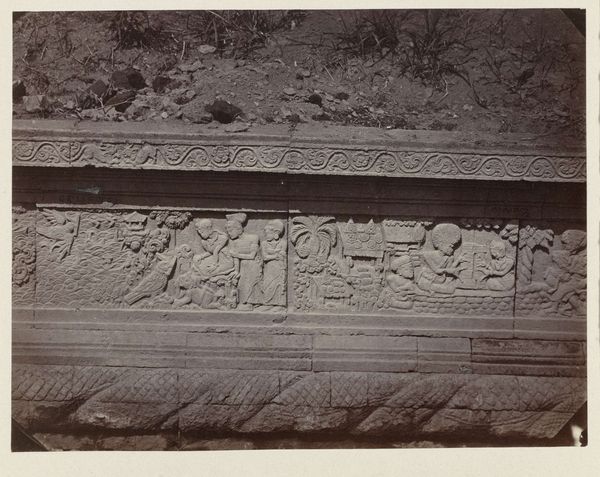
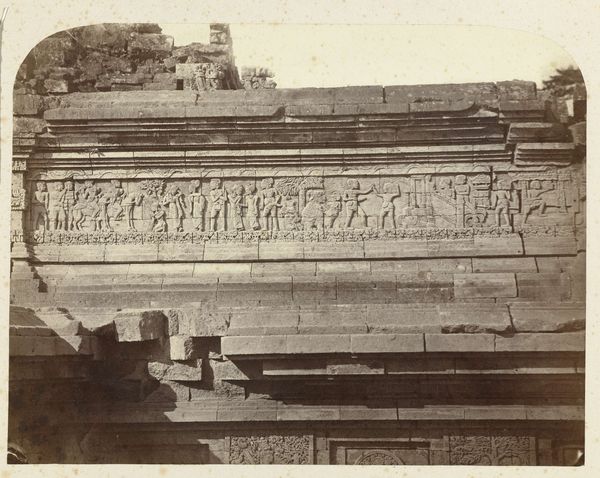
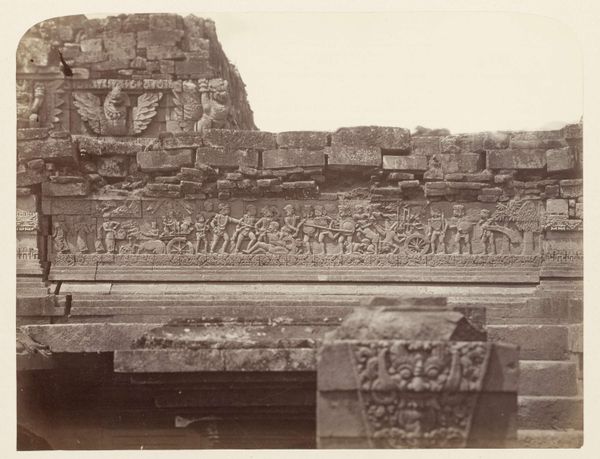
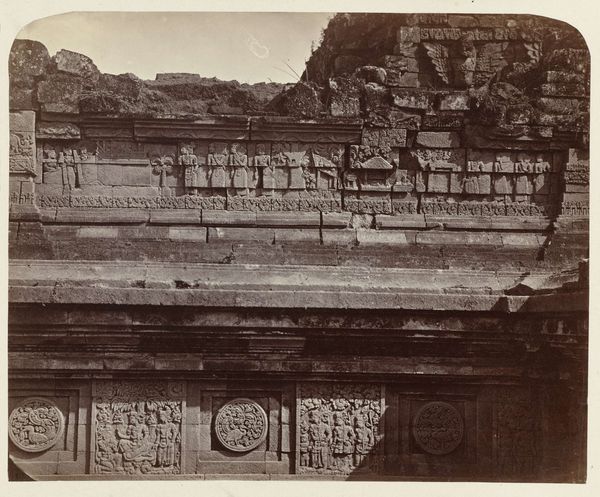
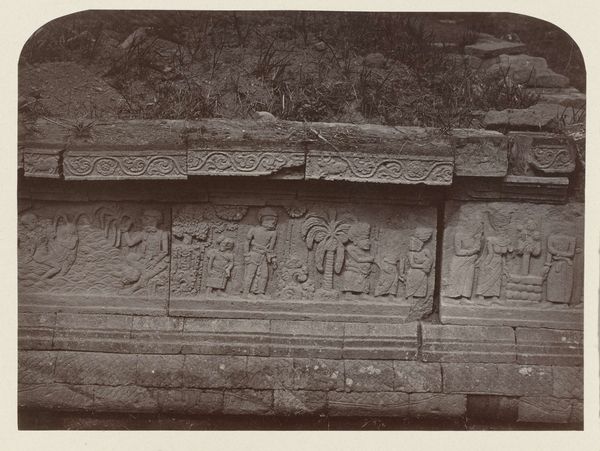
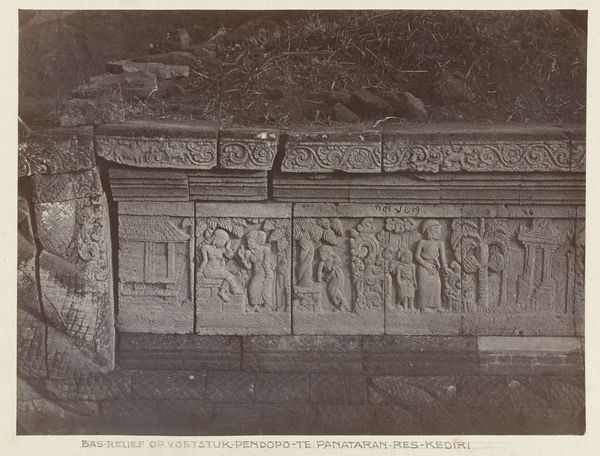
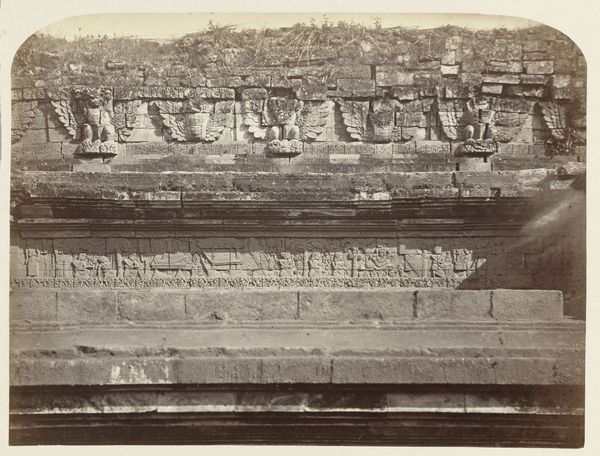
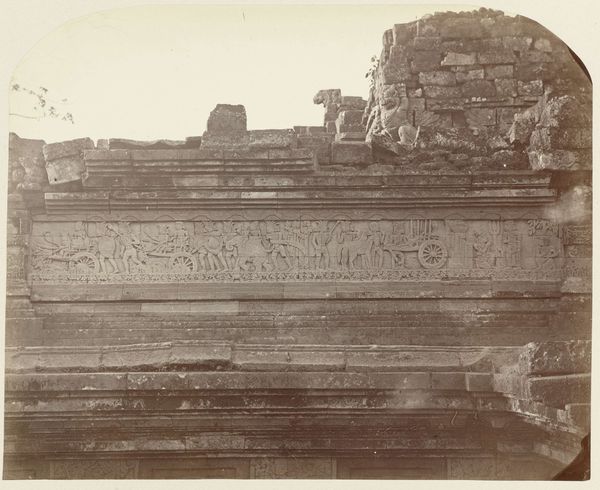
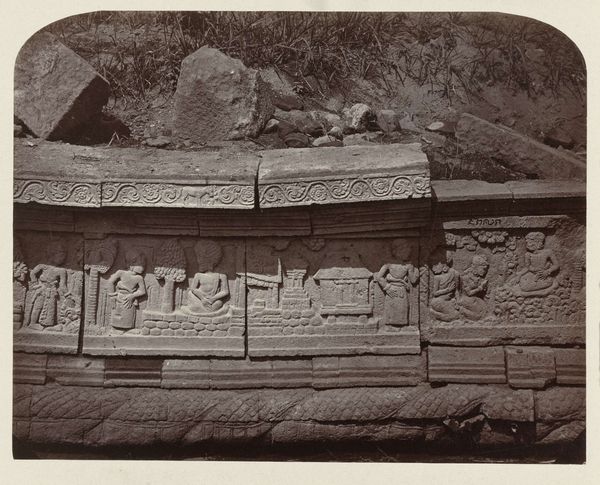
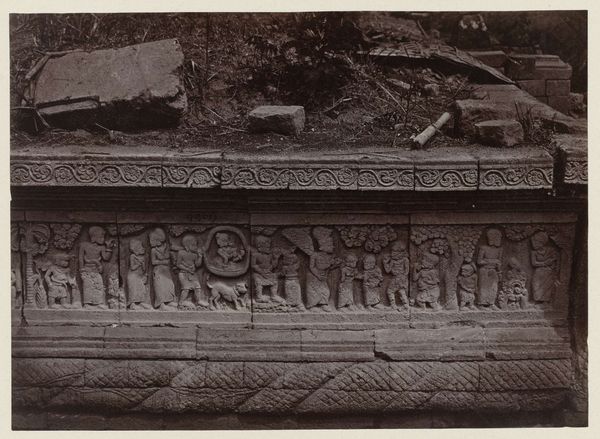
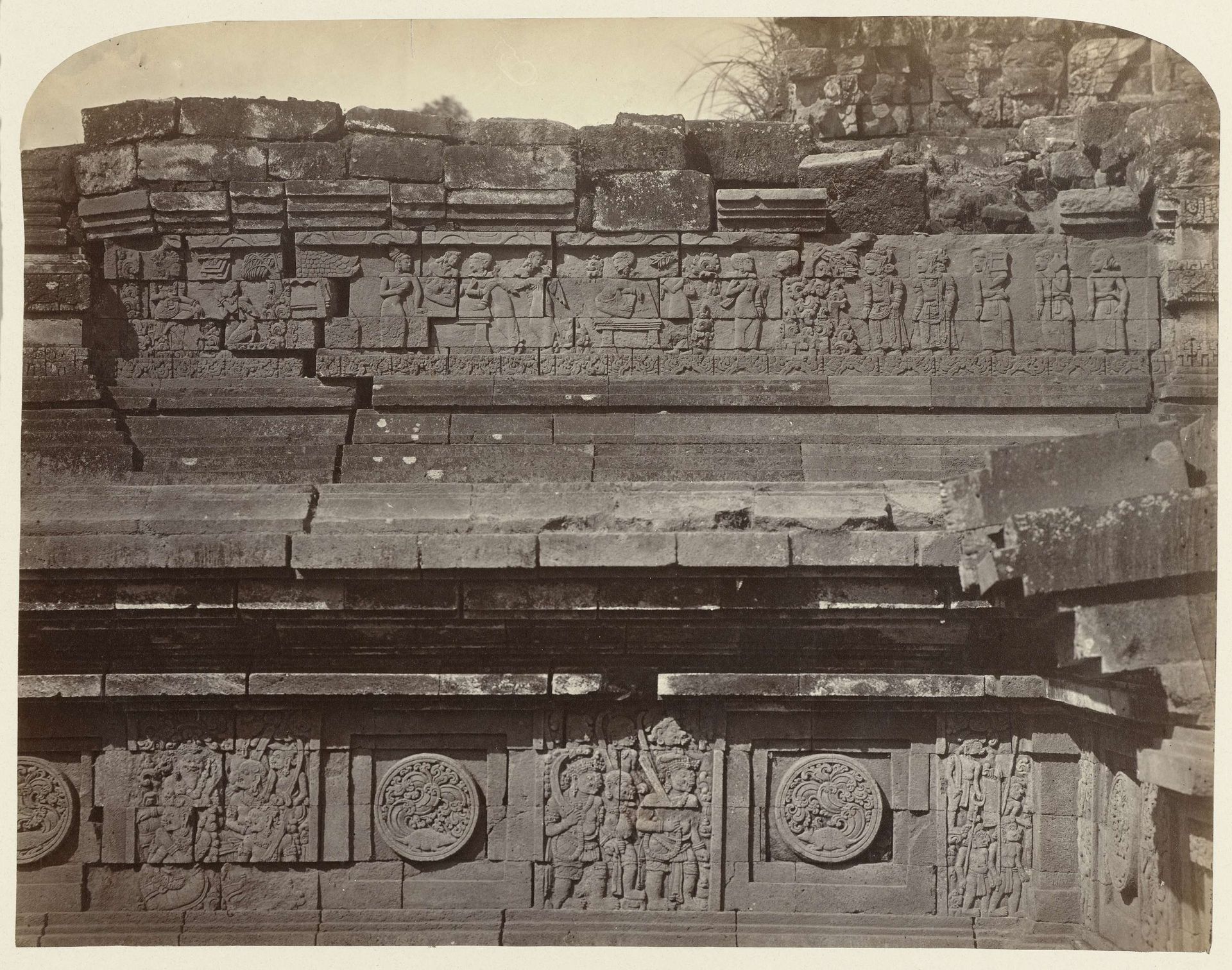
Curator: This striking photographic print, possibly dating to 1867, captures a bas-relief from Candi Panataran, titled "Basreliëf met het verhaal van Ramayana en Krishnayana, afgebeeld aan de oostzijde van Candi Panataran". It's credited to Isidore Kinsbergen. Editor: My immediate reaction is a sense of layered storytelling; the textures and the tonal range really emphasize the stratification of these carved narratives. You get a sense of immense time passing. Curator: Precisely. This carving portrays scenes from the Ramayana and Krishnayana epics, effectively illustrating narratives that shape Hindu cultural identity and dharma. Think about how this imagery functions as both a spiritual guide and a visual history lesson for devotees. Editor: I am compelled by the interplay of the circular medallions contrasting with the rectangular registers of narrative friezes. The use of rounded forms versus the strict linearity affects a push-pull of visual attention, doesn't it? The artist has so meticulously arranged all the elements. Curator: Indeed. And those roundels can represent the cyclical nature of time itself in Hindu cosmology – a reminder of eternal recurrence within these earthly tales. I am struck by how the choice to present it in photography rather than say, etching, freezes this fleeting moment of the temple’s appearance. Editor: It's brilliant how Kinsbergen chose a camera. He understood the inherent contrast – between light and shadow to accentuate the depth and complexity of the relief. Curator: This particular presentation is profound. By documenting the temple, and specifically focusing on narratives of dharma and devotion, Kinsbergen ensured a tangible link remains with the ancient values in a rapidly changing world. These narratives help communities reflect on and reenact the foundational beliefs, over and over again. Editor: Seeing this photograph certainly makes you reflect on how texture, light, and form operate across cultures and throughout time to generate emotion and continuity. Curator: I agree. The intersection of art, history, and culture is clearly on display, prompting reflection on the continuity of cultural values through visual representation.
Basreliëf met het verhaal van Ramayana en Krishnayana, afgebeeld aan de oostzijde van Candi Panataran
Possibly 1867

Artwork details
- Medium
- carving, print, relief, photography
- Dimensions
- height 290 mm, width 340 mm
- Copyright
- Rijks Museum: Open Domain
Tags
Comments
Share your thoughts
About this artwork
Curator: This striking photographic print, possibly dating to 1867, captures a bas-relief from Candi Panataran, titled "Basreliëf met het verhaal van Ramayana en Krishnayana, afgebeeld aan de oostzijde van Candi Panataran". It's credited to Isidore Kinsbergen. Editor: My immediate reaction is a sense of layered storytelling; the textures and the tonal range really emphasize the stratification of these carved narratives. You get a sense of immense time passing. Curator: Precisely. This carving portrays scenes from the Ramayana and Krishnayana epics, effectively illustrating narratives that shape Hindu cultural identity and dharma. Think about how this imagery functions as both a spiritual guide and a visual history lesson for devotees. Editor: I am compelled by the interplay of the circular medallions contrasting with the rectangular registers of narrative friezes. The use of rounded forms versus the strict linearity affects a push-pull of visual attention, doesn't it? The artist has so meticulously arranged all the elements. Curator: Indeed. And those roundels can represent the cyclical nature of time itself in Hindu cosmology – a reminder of eternal recurrence within these earthly tales. I am struck by how the choice to present it in photography rather than say, etching, freezes this fleeting moment of the temple’s appearance. Editor: It's brilliant how Kinsbergen chose a camera. He understood the inherent contrast – between light and shadow to accentuate the depth and complexity of the relief. Curator: This particular presentation is profound. By documenting the temple, and specifically focusing on narratives of dharma and devotion, Kinsbergen ensured a tangible link remains with the ancient values in a rapidly changing world. These narratives help communities reflect on and reenact the foundational beliefs, over and over again. Editor: Seeing this photograph certainly makes you reflect on how texture, light, and form operate across cultures and throughout time to generate emotion and continuity. Curator: I agree. The intersection of art, history, and culture is clearly on display, prompting reflection on the continuity of cultural values through visual representation.
Comments
Share your thoughts