![[Avenue, Mess and Capt. Hill's House] by Captain R. B. Hill](https://d2w8kbdekdi1gv.cloudfront.net/eyJidWNrZXQiOiAiYXJ0ZXJhLWltYWdlcy1idWNrZXQiLCAia2V5IjogImFydHdvcmtzLzIwYjQzMzhjLTRhY2UtNGI5OC04ZDU4LWY5Y2E1NzNiMjJkYy8yMGI0MzM4Yy00YWNlLTRiOTgtOGQ1OC1mOWNhNTczYjIyZGNfZnVsbC5qcGciLCAiZWRpdHMiOiB7InJlc2l6ZSI6IHsid2lkdGgiOiAxOTIwLCAiaGVpZ2h0IjogMTkyMCwgImZpdCI6ICJpbnNpZGUifX19)
About this artwork
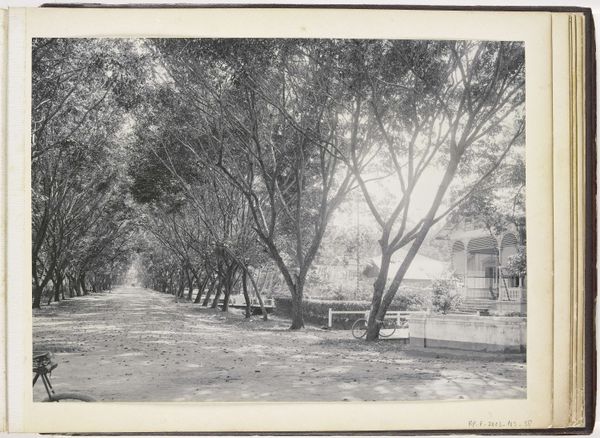
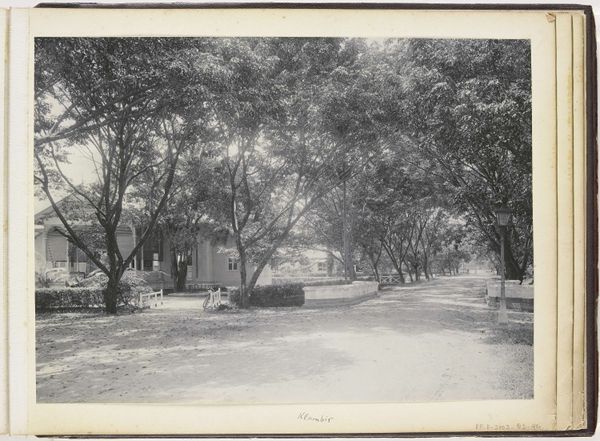
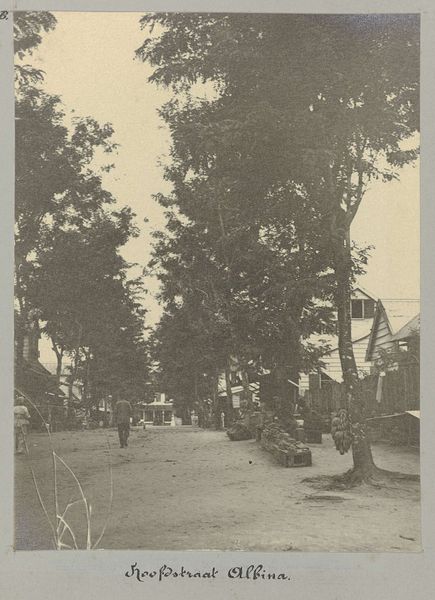
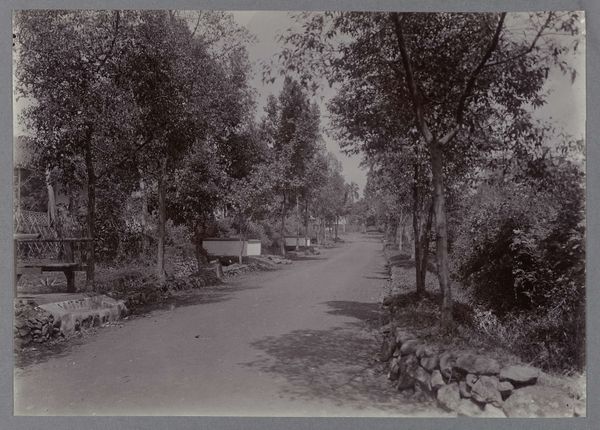
This vintage photograph, “[Avenue, Mess and Capt. Hill's House]” at the Metropolitan Museum of Art, draws us in with its sepia tones and structured composition. Our eyes are led down a central avenue flanked by trees towards a distant building. The linear perspective creates depth, guiding us through the landscape. The photograph invites semiotic analysis. The trees, framing the avenue like pillars, create a sense of order, yet their natural, organic forms soften the rigid structure. This interplay between nature and architecture suggests a dialogue between the controlled and the untamed, reflecting broader cultural themes of man's relationship with the environment. The house at the end of the avenue acts as a focal point, yet it remains distant and somewhat obscured, hinting at the complexities of home, belonging, and the colonial gaze. The monochromatic palette unifies the scene, emphasizing the tonal variations and textures of the leaves, branches, and earth, creating a sense of nostalgia. Consider how the composition invites reflection on the relationship between the individual and the built environment.
[Avenue, Mess and Capt. Hill's House] 1850s

Captain R. B. Hill
@captainrbhill
The Metropolitan Museum of Art
Metropolitan Museum of Art, New York, NYArtwork details
- Medium
- photography, gelatin-silver-print
- Dimensions
- Image: 17.9 x 23.1 cm (7 1/16 x 9 1/8 in.) Mount: 21 x 28.1 cm (8 1/4 x 11 1/16 in.)
- Location
- Metropolitan Museum of Art, New York, NY
- Copyright
- Public Domain
Tags
film photography
landscape
street-photography
photography
road
gelatin-silver-print
realism
Comments
No comments
About this artwork
This vintage photograph, “[Avenue, Mess and Capt. Hill's House]” at the Metropolitan Museum of Art, draws us in with its sepia tones and structured composition. Our eyes are led down a central avenue flanked by trees towards a distant building. The linear perspective creates depth, guiding us through the landscape. The photograph invites semiotic analysis. The trees, framing the avenue like pillars, create a sense of order, yet their natural, organic forms soften the rigid structure. This interplay between nature and architecture suggests a dialogue between the controlled and the untamed, reflecting broader cultural themes of man's relationship with the environment. The house at the end of the avenue acts as a focal point, yet it remains distant and somewhat obscured, hinting at the complexities of home, belonging, and the colonial gaze. The monochromatic palette unifies the scene, emphasizing the tonal variations and textures of the leaves, branches, and earth, creating a sense of nostalgia. Consider how the composition invites reflection on the relationship between the individual and the built environment.
Comments
No comments