drawing, print
portrait
drawing
neoclacissism
caricature
caricature
genre-painting
Dimensions: height 182 mm, width 111 mm
Copyright: Rijks Museum: Open Domain
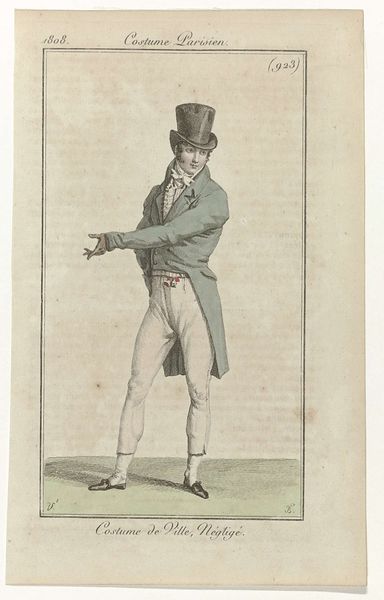
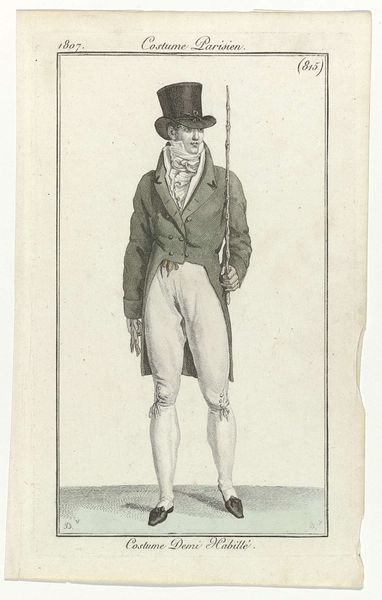
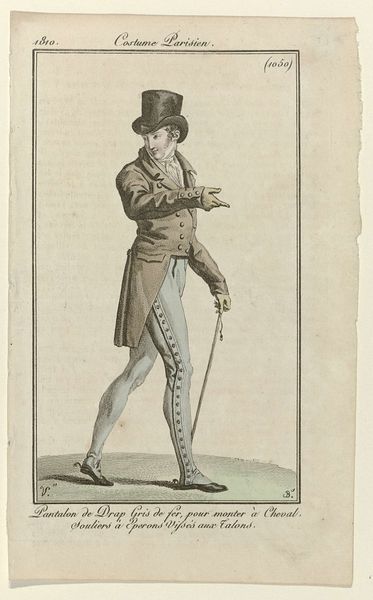
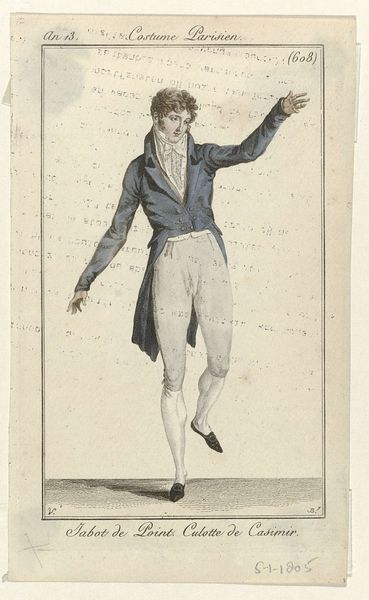
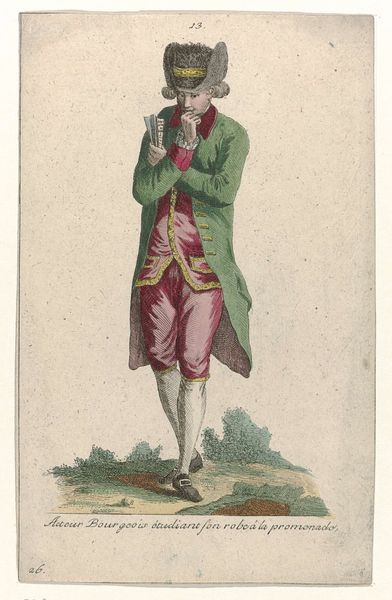
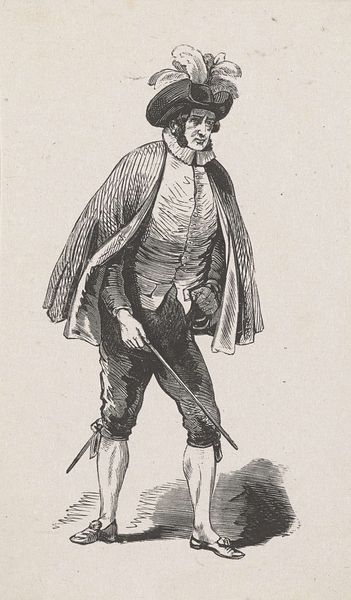
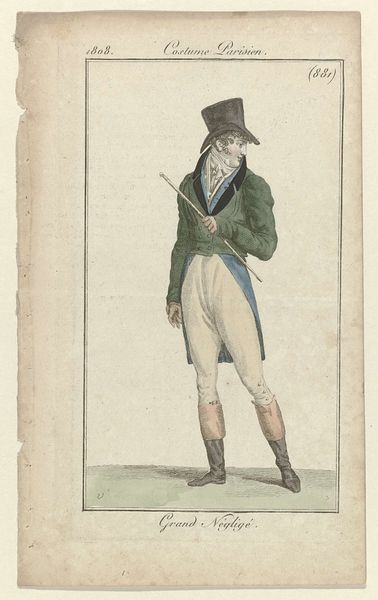
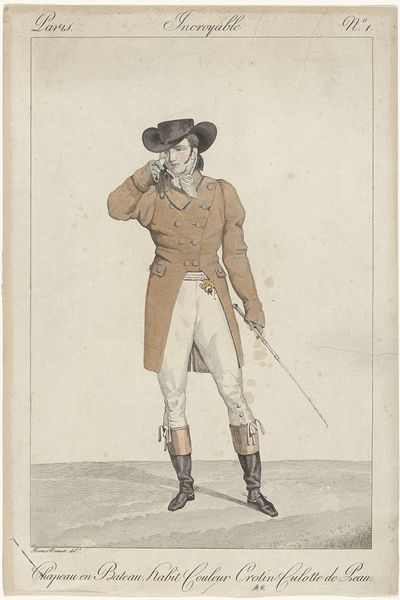
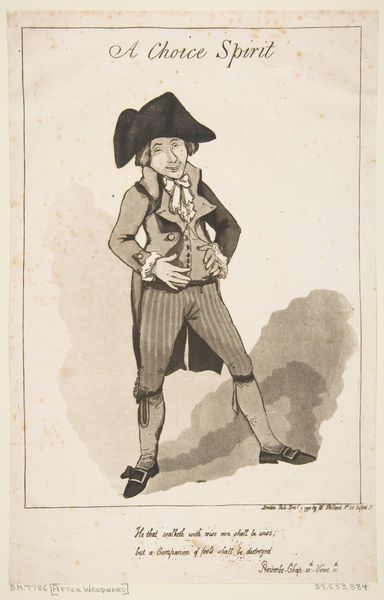
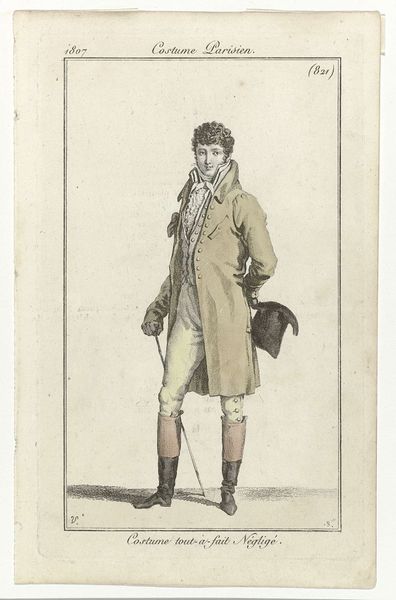
Curator: This is a print titled "Journal des Dames et des Modes: Men’s Fashion," dating from 1803. The artist credited is Pierre Charles Baquoy, and you can find it here at the Rijksmuseum. Editor: My initial impression? Slightly satirical. The exaggerated proportions and the somewhat stiff pose of the figure hint at a commentary on the fashions of the time. Curator: It's fascinating how print media, like this very example, shaped and disseminated fashion trends in the early 19th century. "Journal des Dames et des Modes" wasn't just showing clothing; it was creating a dialogue around status and aspiration. The labour behind each individual print and it's role of democratization of visual culture cannot be ignored. Editor: Absolutely, the costume itself tells a story. The high collar, the cut of the coat, the tied breeches, everything works together to create a specific visual language. Notice how the light catches the folds of the cravat, drawing the eye. It is a game of lines, forms and shadows. Curator: I'm more interested in the societal impact and reach that Baquoy and the "Journal" had. The etching was relatively easy to reproduce compared to painting. The intended audience played a large part in defining tastes and even contributing to Paris becoming an important city in global production chains and consumer behaviours. Editor: Fair point, though I'm drawn to the visual tension. There's something inherently contradictory about rendering something as fleeting as fashion in a static, durable medium like a print. The way the artist manipulates line and form allows us to have visual communication and discourse about status in 19th-century French society. Curator: In essence, this work encapsulates how visual culture was commodified, distributed, and consumed during the rise of industrial capitalism. Even his pose is communicating to those seeing it for a possible market for the costume. Editor: Indeed, this print cleverly freezes a specific moment in time, prompting us to examine the codes of elegance and satire through a purely visual frame. Curator: So much can be unearthed by digging deep into the labour practices surrounding "Costume Parisien" – it definitely makes this etching one worth our attention. Editor: Precisely. It's the intersection of meticulous detail and visual rhetoric that makes this work so compelling.
Comments

The Journal des Dames et des Modes occasionally provided coverage of men’s styles. These illustrations give a good picture of trends in mens’ clothing from 1797 to 1825. During the 18th century, gentlemen wore culotte (knee-breeches) 1. These fell out of fashion with the elimination of strict class distinctions during the French Revolution, to be replaced by a type of long trouser(s) known as pantalon à la Hussarde 2. These were worn with hussar boots. ‘Pantaloons’ 3 were trousers pulled tight with an elastic strap under the instep. Carrick 4 coats with a double collar were popular, and in the evenings men wore a special dress cloak 5.


Join the conversation
Join millions of artists and users on Artera today and experience the ultimate creative platform.