About this artwork
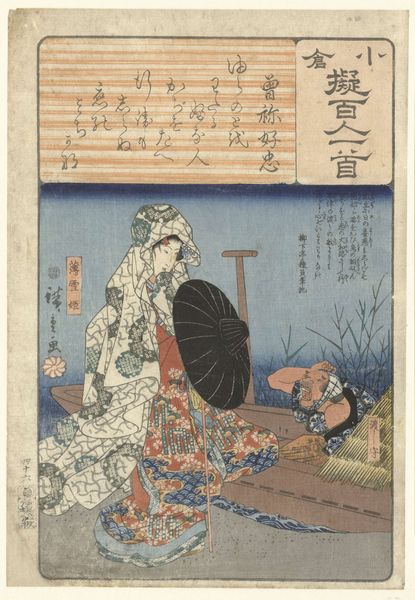
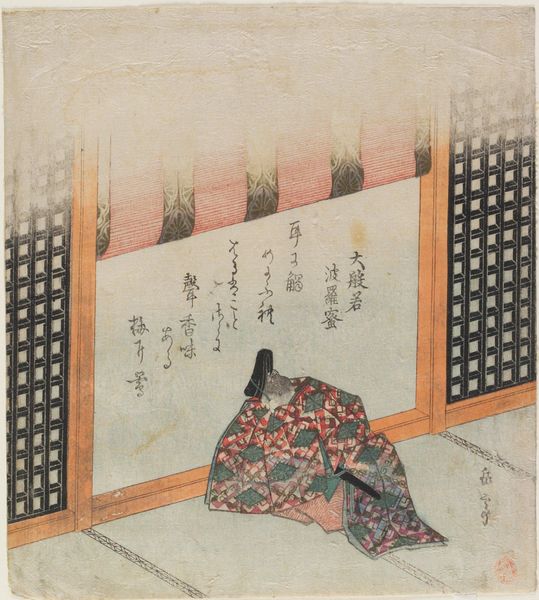
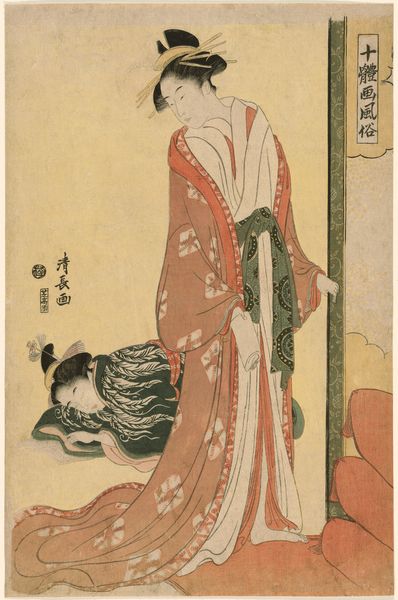
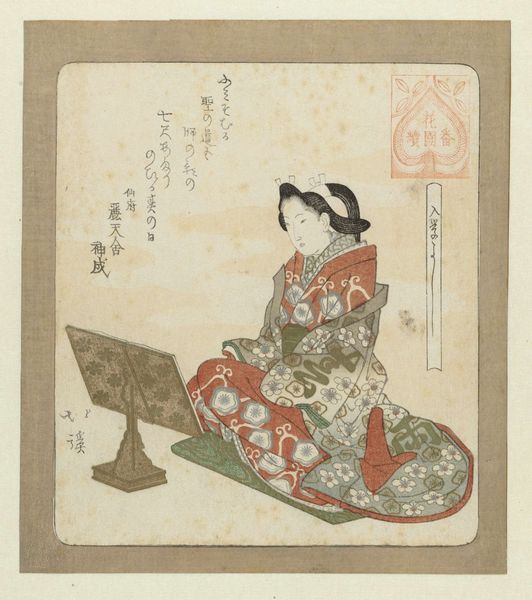
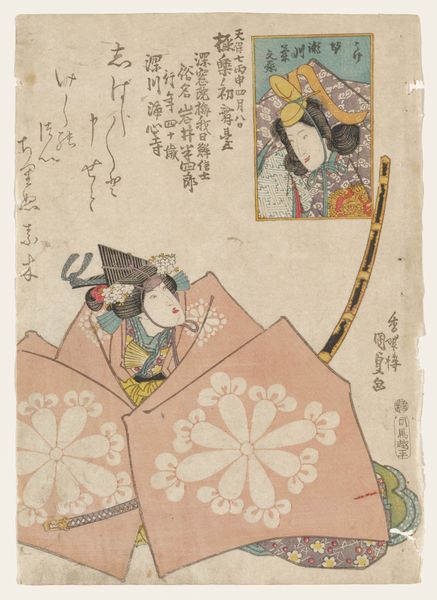
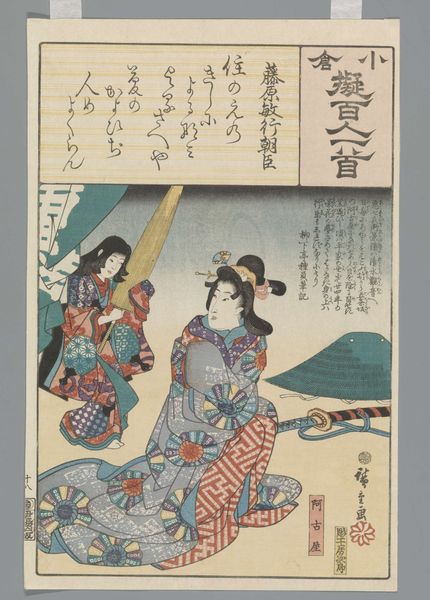
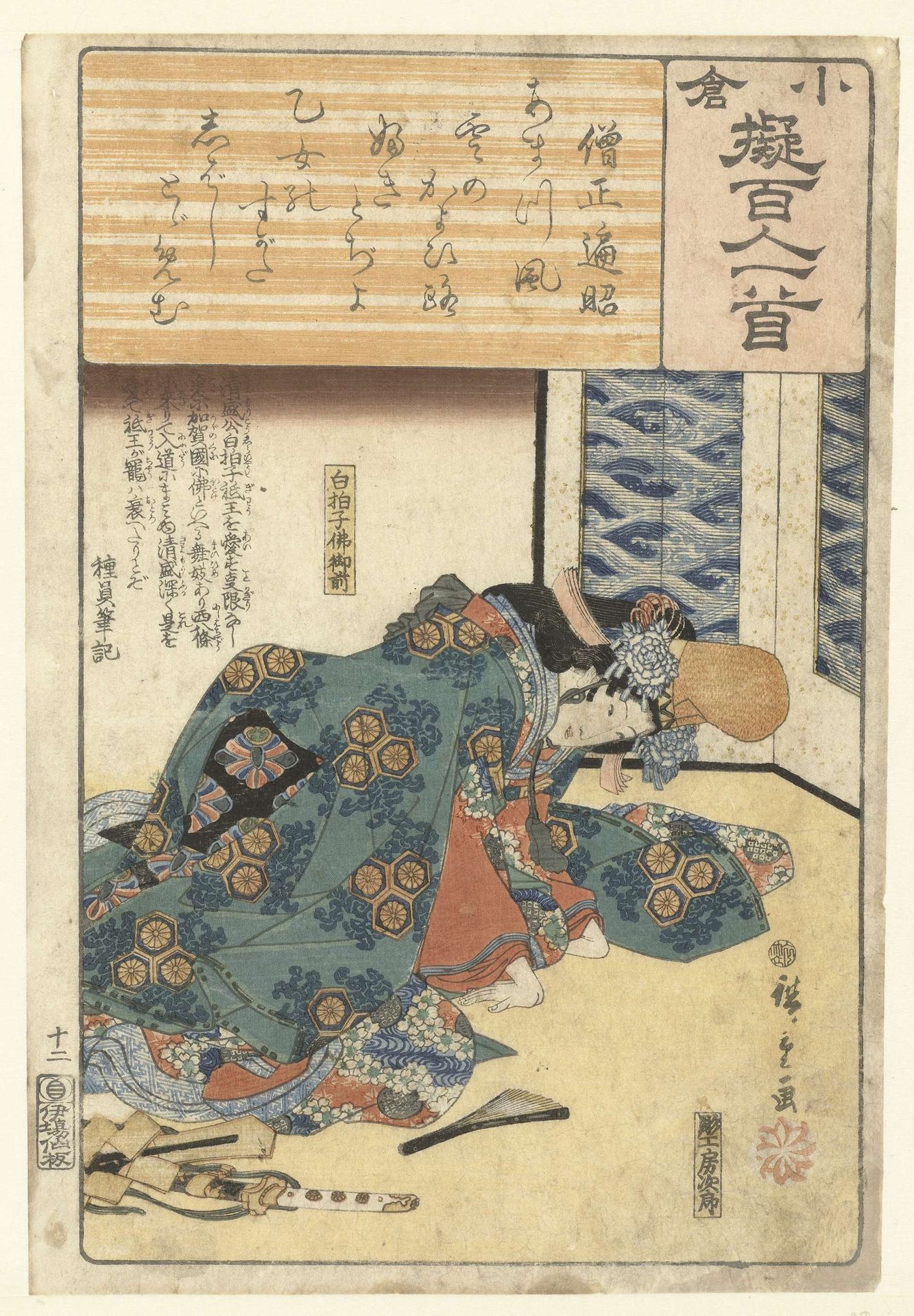
This print, *Knielende danseres*, was made by Utagawa Hiroshige in the mid-19th century using woodblock printing. This process, known as *ukiyo-e*, involves carving an image into a wooden block, inking it, and then pressing paper onto the block to transfer the design. The process demands meticulous labor. Each color requires a separate block, adding complexity. The flat, graphic quality of the print, with its emphasis on line and pattern, is directly related to this technique. Look at the dancer's robe, decorated with intricate floral motifs; these patterns would have to be carved precisely. The social significance of *ukiyo-e* lies in its accessibility. Woodblock prints were relatively inexpensive, and widely circulated within the middle class. Paying attention to materials and making helps us move beyond traditional art history to understand art’s wider cultural impact.

Artwork details
- Medium
- print, woodblock-print
- Dimensions
- height 360 mm, width 244 mm
- Location
- Rijksmuseum
- Copyright
- Rijks Museum: Open Domain
Tags
portrait
asian-art
ukiyo-e
figuration
coloured pencil
woodblock-print
genre-painting
Comments
No comments
About this artwork
This print, *Knielende danseres*, was made by Utagawa Hiroshige in the mid-19th century using woodblock printing. This process, known as *ukiyo-e*, involves carving an image into a wooden block, inking it, and then pressing paper onto the block to transfer the design. The process demands meticulous labor. Each color requires a separate block, adding complexity. The flat, graphic quality of the print, with its emphasis on line and pattern, is directly related to this technique. Look at the dancer's robe, decorated with intricate floral motifs; these patterns would have to be carved precisely. The social significance of *ukiyo-e* lies in its accessibility. Woodblock prints were relatively inexpensive, and widely circulated within the middle class. Paying attention to materials and making helps us move beyond traditional art history to understand art’s wider cultural impact.
Comments
No comments