About this artwork
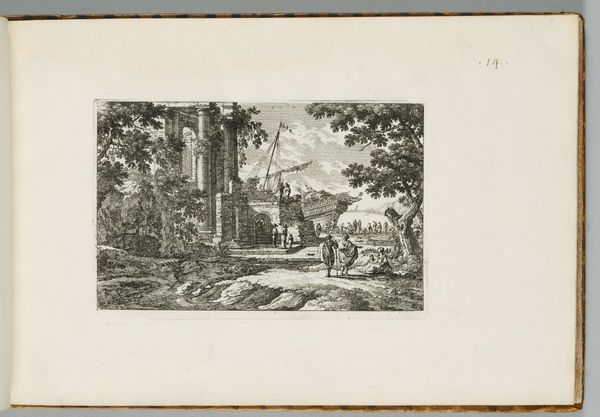
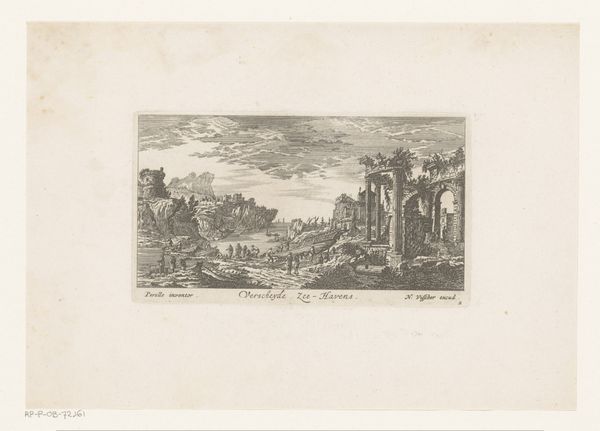
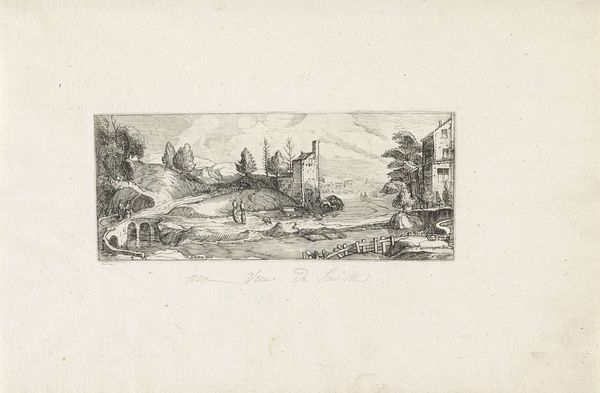
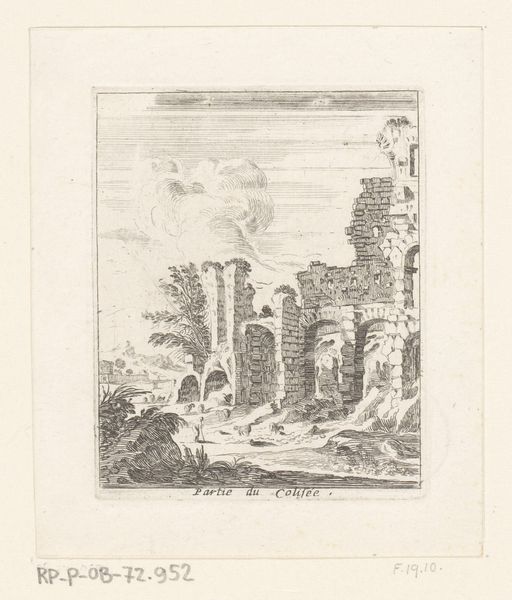
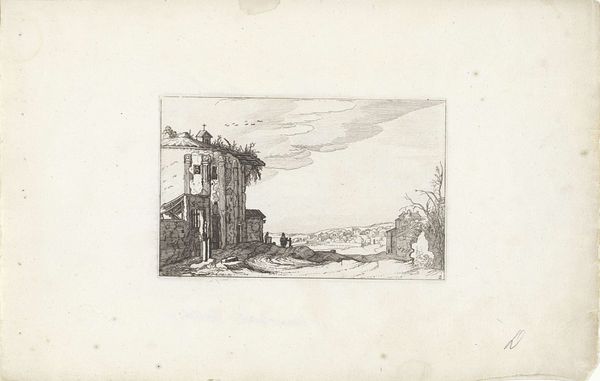
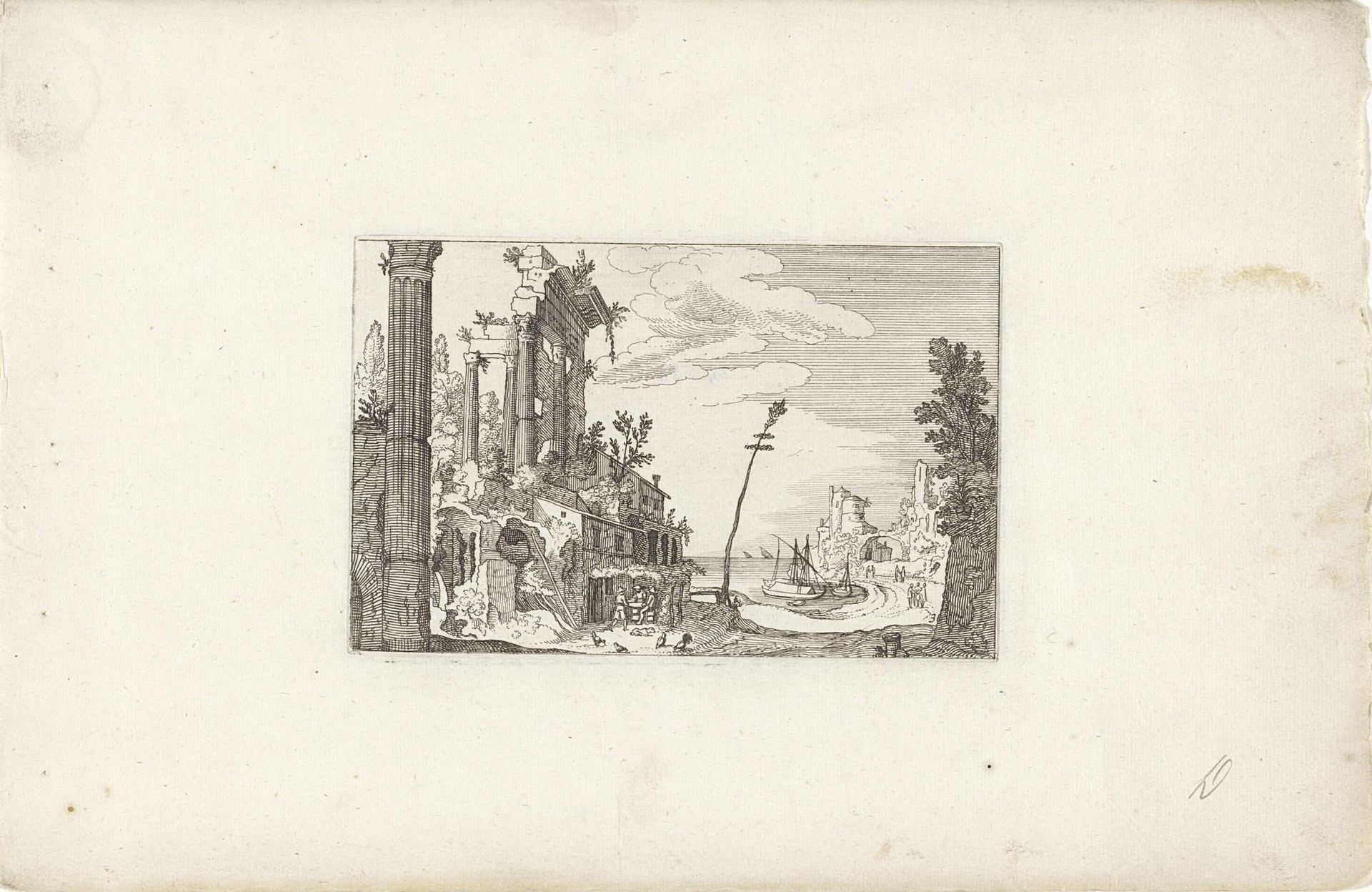
Claes Jansz. Visscher created this etching, "Harbor View in Rome," in the 17th century. The composition is divided into distinct spatial zones. Notice how the architectural ruins command the left, juxtaposed against the harbor scene on the right. Visscher masterfully uses linear perspective. The lines of the architecture and the coastline converge, drawing our eyes to the distant sea and sky. The use of light and shadow in this work creates a sense of depth. See how the artist uses darker lines to define the foreground ruins and lighter lines to depict the background elements such as the clouds. The architecture is depicted in decay, which speaks to the theme of the transience of human achievement. Consider how the artist integrates nature, like trees growing from the ruins, symbolizing renewal amidst decay. Visscher's etching is not just a depiction of a place, but an exploration of themes of time, ruin, and nature.

Artwork details
- Medium
- print, etching
- Dimensions
- height 101 mm, width 155 mm
- Location
- Rijksmuseum
- Copyright
- Rijks Museum: Open Domain
Tags
Comments
Share your thoughts
About this artwork
Claes Jansz. Visscher created this etching, "Harbor View in Rome," in the 17th century. The composition is divided into distinct spatial zones. Notice how the architectural ruins command the left, juxtaposed against the harbor scene on the right. Visscher masterfully uses linear perspective. The lines of the architecture and the coastline converge, drawing our eyes to the distant sea and sky. The use of light and shadow in this work creates a sense of depth. See how the artist uses darker lines to define the foreground ruins and lighter lines to depict the background elements such as the clouds. The architecture is depicted in decay, which speaks to the theme of the transience of human achievement. Consider how the artist integrates nature, like trees growing from the ruins, symbolizing renewal amidst decay. Visscher's etching is not just a depiction of a place, but an exploration of themes of time, ruin, and nature.
Comments
Share your thoughts