About this artwork
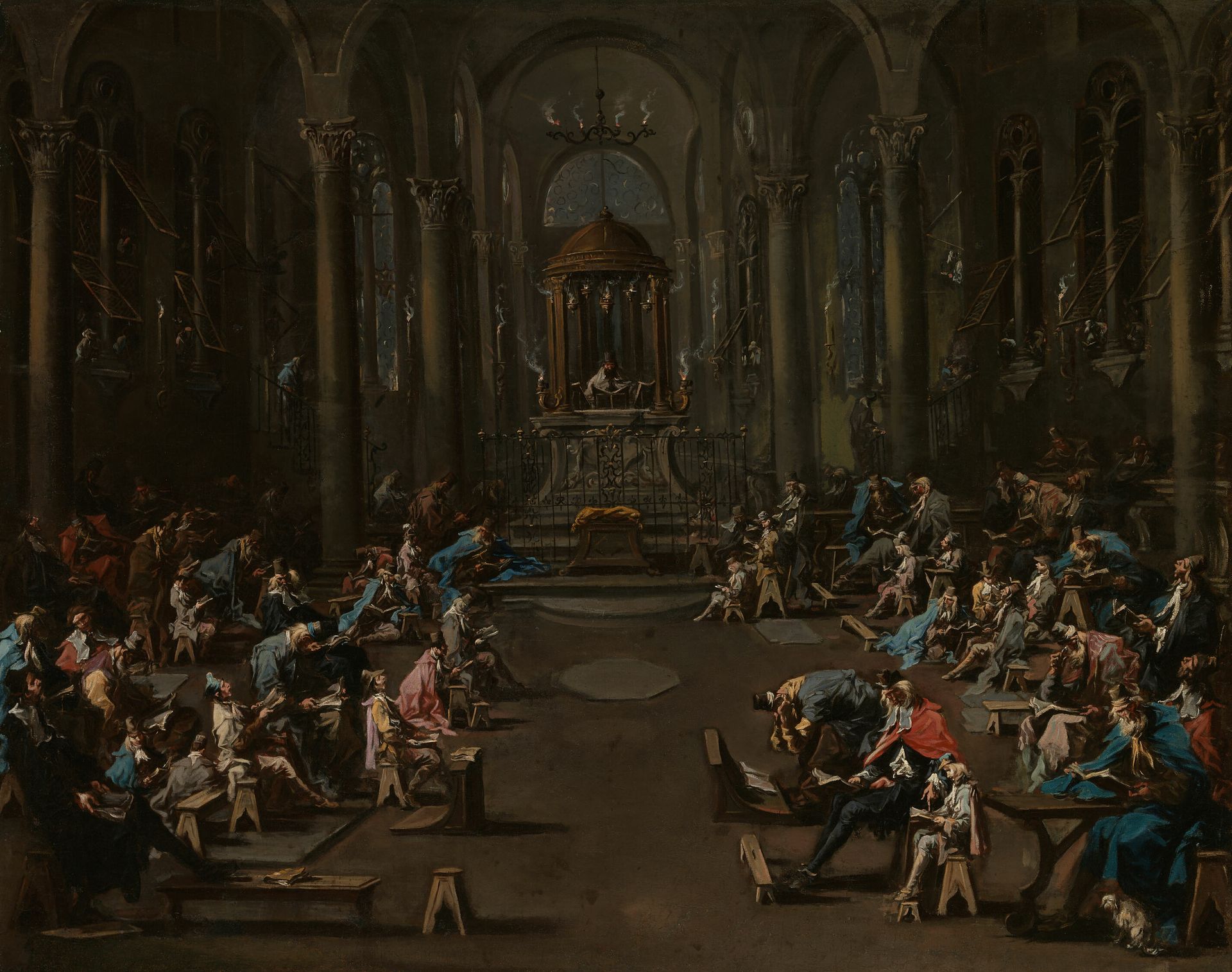
Alessandro Magnasco painted this oil on canvas, “The Synagogue,” in the 18th century, during a time of significant shifts in the social status of religious and ethnic minorities in Europe. Magnasco’s painting offers a glimpse into the Jewish community and its religious practices in Italy. The image creates meaning through the depiction of the architecture of the Synagogue, dress codes, and the activities of its members. Religious tolerance varied across different regions and states during this period. Magnasco’s work may reflect changing attitudes toward minority communities. Was it an attempt to represent Jewish life with respect? Or did it reinforce stereotypes and prejudices? Further research into the social and institutional history of Jews in 18th-century Italy, using archival documents, religious texts, and contemporary accounts, can provide a deeper understanding of the artwork’s context. The meaning of art is contingent on such social and institutional contexts.
The Synagogue
1725 - 1735


Artwork details
- Medium
- painting, oil-paint, sculpture, oil-on-canvas
- Dimensions
- 47 × 58 15/16 in. (119.4 × 149.8 cm)
- Location
- The Art Institute of Chicago
- Copyright
- Public Domain
Tags
Comments
Share your thoughts
About this artwork
Alessandro Magnasco painted this oil on canvas, “The Synagogue,” in the 18th century, during a time of significant shifts in the social status of religious and ethnic minorities in Europe. Magnasco’s painting offers a glimpse into the Jewish community and its religious practices in Italy. The image creates meaning through the depiction of the architecture of the Synagogue, dress codes, and the activities of its members. Religious tolerance varied across different regions and states during this period. Magnasco’s work may reflect changing attitudes toward minority communities. Was it an attempt to represent Jewish life with respect? Or did it reinforce stereotypes and prejudices? Further research into the social and institutional history of Jews in 18th-century Italy, using archival documents, religious texts, and contemporary accounts, can provide a deeper understanding of the artwork’s context. The meaning of art is contingent on such social and institutional contexts.
Comments
Share your thoughts