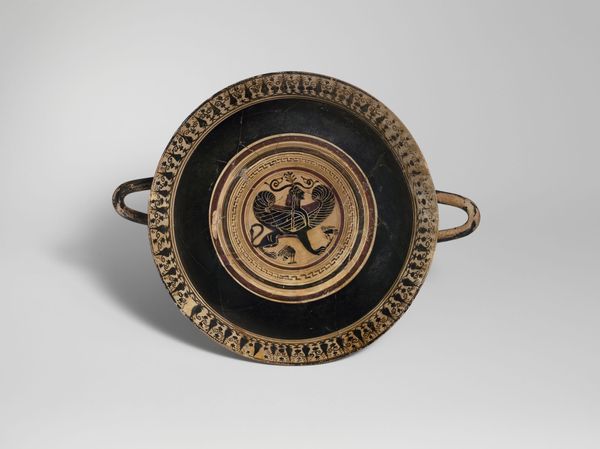
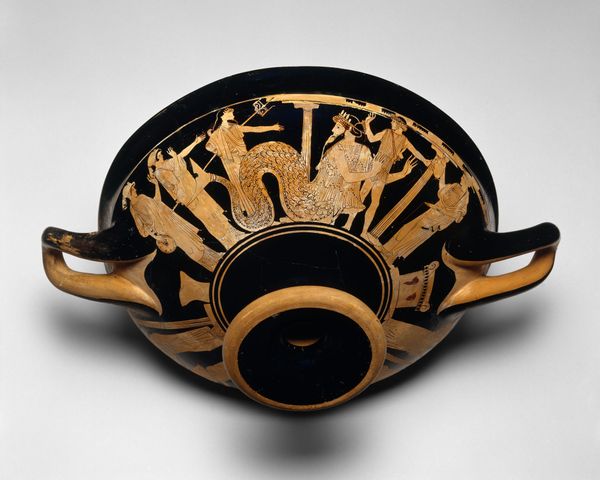
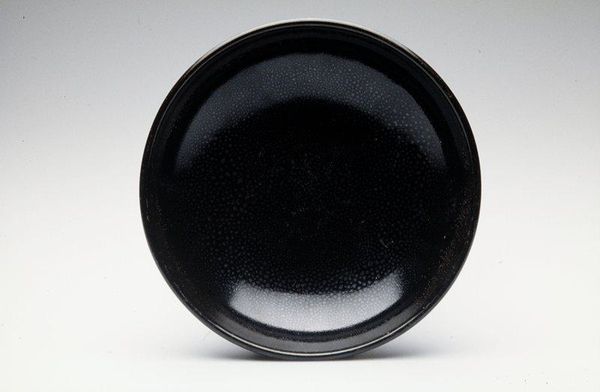
Terracotta Kylix - Eye Cup (drinking Cup) 530 BC
0:00
0:00


drawing, ceramic, terracotta
#
drawing
#
greek-and-roman-art
#
ceramic
#
figuration
#
ancient-mediterranean
#
terracotta
Copyright: Public domain
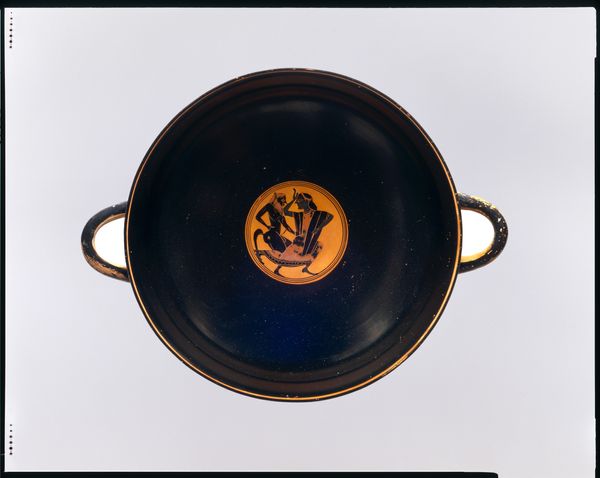
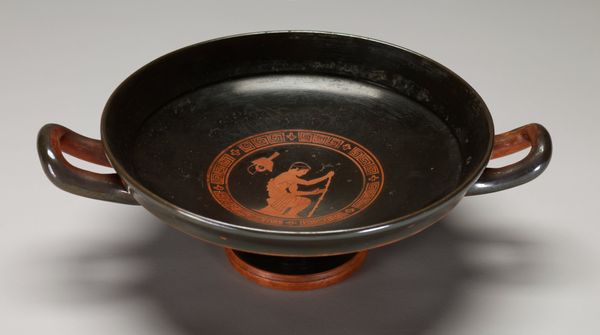
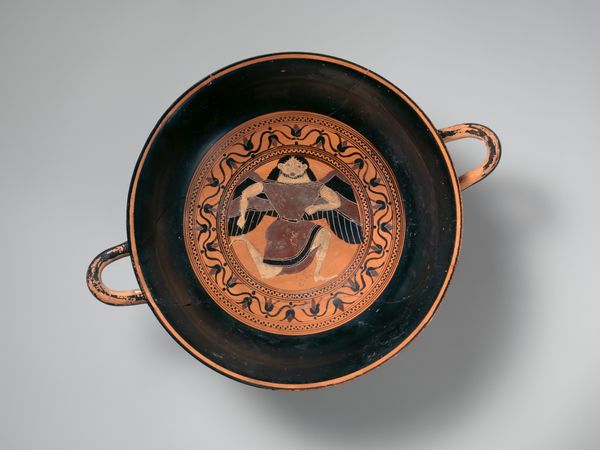
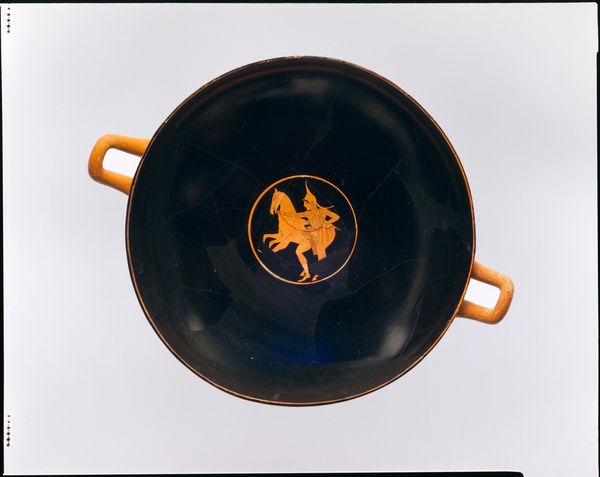
This terracotta kylix, or drinking cup, was made in Ancient Greece some time between 900 and 31 BC. Notice the striking design of the eyes on the outside of the cup. The black and red colors were achieved through a complex firing process involving careful control of oxygen levels in the kiln. Consider the social context of this object. Drinking cups like these weren't just functional items; they were integral to the symposium, an important social institution in ancient Greece. The symposium was a gathering of men, often aristocrats, who would drink, eat, and engage in philosophical discussions. The imagery on the cups, often depicting scenes from mythology or daily life, would have been a conversation starter, a way to display one's knowledge and wit. As historians, we might turn to texts from the period, such as Plato's "Symposium," to understand the rituals and social dynamics surrounding these gatherings. Through careful study, we can begin to understand the world that this object once inhabited.
Comments
No comments
Be the first to comment and join the conversation on the ultimate creative platform.
 Collect
 React
React Comment
More like this