About this artwork
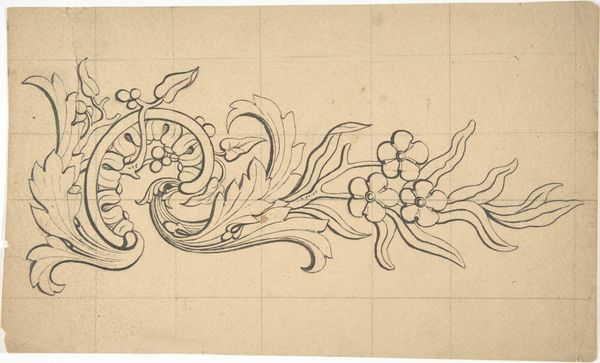
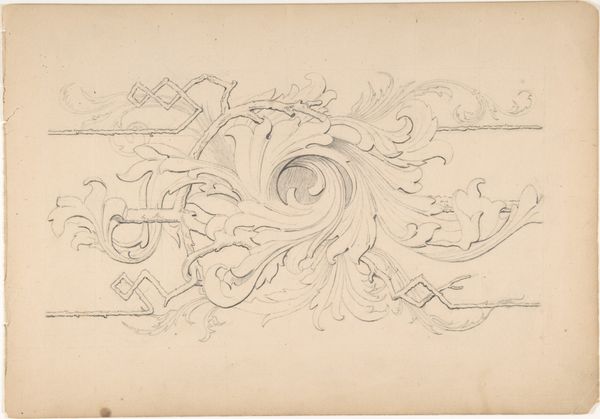
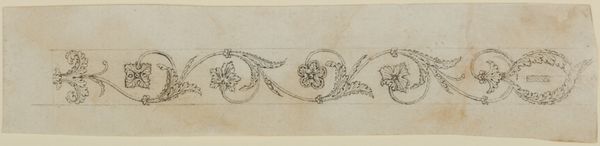
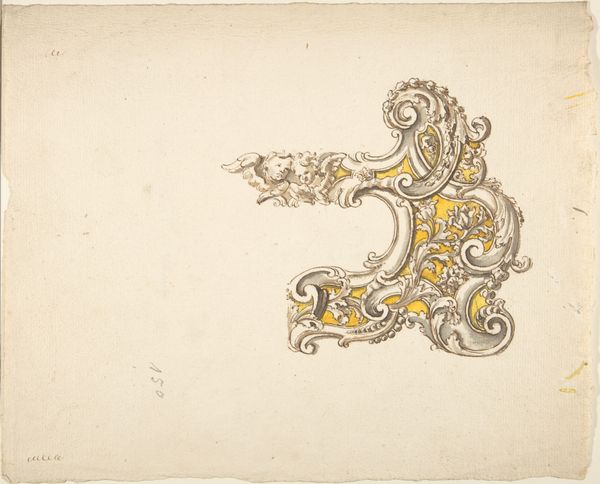
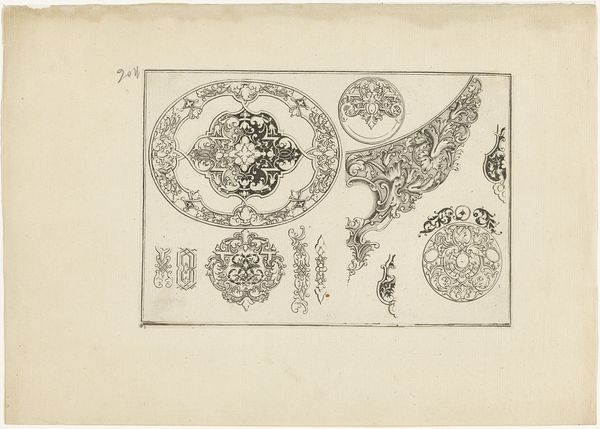
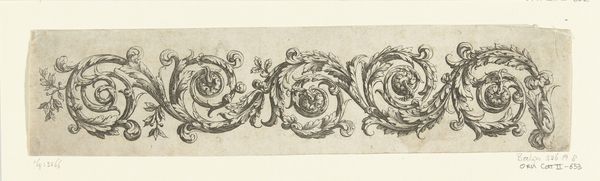
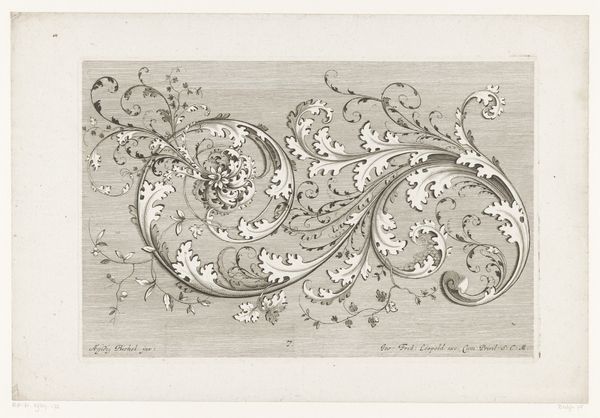
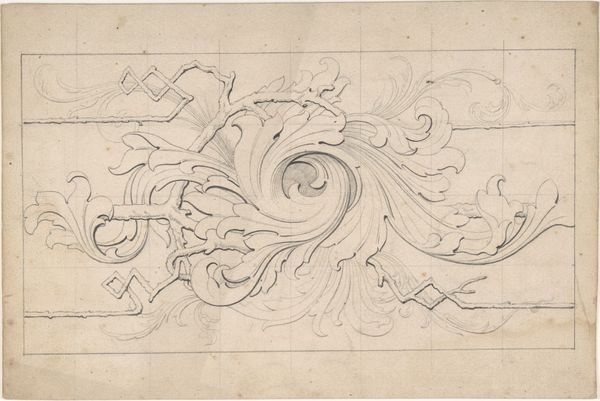
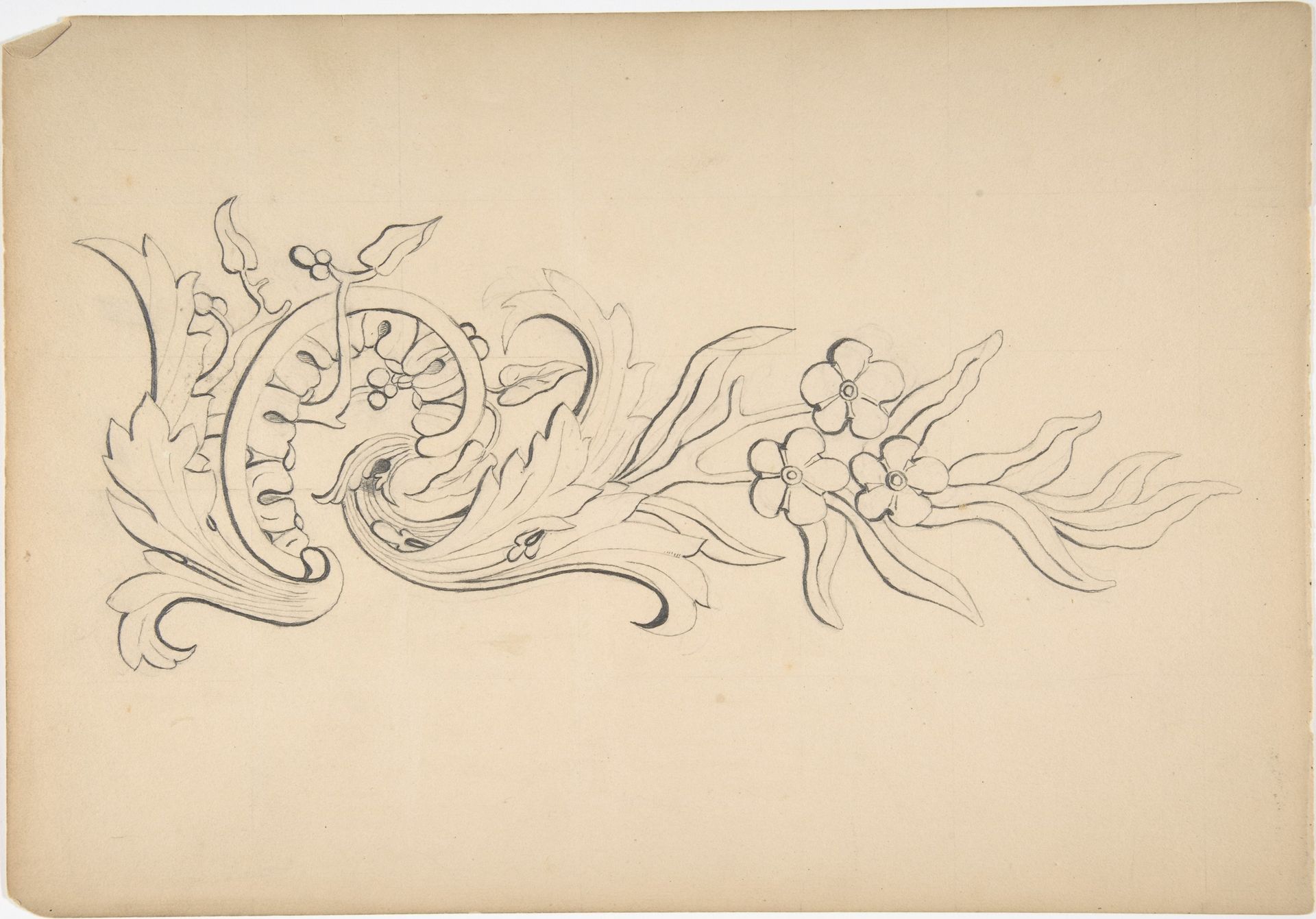
Editor: Here we have Robert William Hume's "Designs for borders and corners, acanthus," probably created sometime between 1830 and 1904. It's a pencil drawing on paper, and it strikes me as rather delicate despite the strong lines. As someone interested in visual symbols, what jumps out at you in this work? Curator: The intertwining of the acanthus and the smaller flowers speaks volumes about cultural memory. The acanthus, especially, has a deep resonance in Western art, doesn’t it? Think of its presence in classical architecture; it symbolizes endurance, immortality even. Hume’s choice to pair this powerful, almost archaic symbol with what appear to be more delicate flowers creates an interesting tension. Do you see that tension too? Editor: I do! The smaller flowers feel... domestic, almost, compared to the grand acanthus. So, is he contrasting those ideas deliberately? Curator: It’s very possible. He might be commenting on the way grand, historical narratives are constantly being reinterpreted and softened by personal, domestic experiences. Consider, too, the fact that this is a *design*—a template for something to be *made*. It suggests a transformation of abstract ideas into something tangible and useful, perhaps commenting on art's ability to bring the profound into the everyday. Editor: That's fascinating! So it's not just a pretty drawing, but a meditation on history, culture, and how we make meaning. I’ll definitely look at decorative art differently now. Curator: Precisely! The power of an image isn't just in its immediate aesthetic, but in its layered conversations with the past and potential futures. Always keep asking what memories it awakens!
Designs for borders and corners, acanthus
1830 - 1904

Robert William Hume
1816 - 1904
The Metropolitan Museum of Art
Metropolitan Museum of Art, New York, NYArtwork details
- Medium
- drawing, print, pencil
- Location
- Metropolitan Museum of Art, New York, NY
- Copyright
- Public Domain
Tags
Comments
Share your thoughts
About this artwork
Editor: Here we have Robert William Hume's "Designs for borders and corners, acanthus," probably created sometime between 1830 and 1904. It's a pencil drawing on paper, and it strikes me as rather delicate despite the strong lines. As someone interested in visual symbols, what jumps out at you in this work? Curator: The intertwining of the acanthus and the smaller flowers speaks volumes about cultural memory. The acanthus, especially, has a deep resonance in Western art, doesn’t it? Think of its presence in classical architecture; it symbolizes endurance, immortality even. Hume’s choice to pair this powerful, almost archaic symbol with what appear to be more delicate flowers creates an interesting tension. Do you see that tension too? Editor: I do! The smaller flowers feel... domestic, almost, compared to the grand acanthus. So, is he contrasting those ideas deliberately? Curator: It’s very possible. He might be commenting on the way grand, historical narratives are constantly being reinterpreted and softened by personal, domestic experiences. Consider, too, the fact that this is a *design*—a template for something to be *made*. It suggests a transformation of abstract ideas into something tangible and useful, perhaps commenting on art's ability to bring the profound into the everyday. Editor: That's fascinating! So it's not just a pretty drawing, but a meditation on history, culture, and how we make meaning. I’ll definitely look at decorative art differently now. Curator: Precisely! The power of an image isn't just in its immediate aesthetic, but in its layered conversations with the past and potential futures. Always keep asking what memories it awakens!
Comments
Share your thoughts