1797 - 1800
Porringer


Listen to curator's interpretation
Curatorial notes
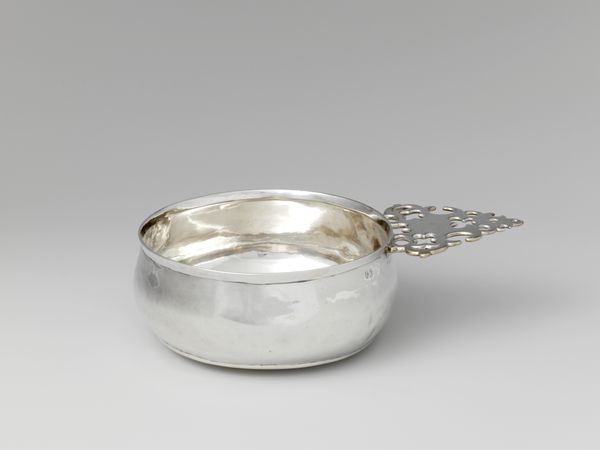
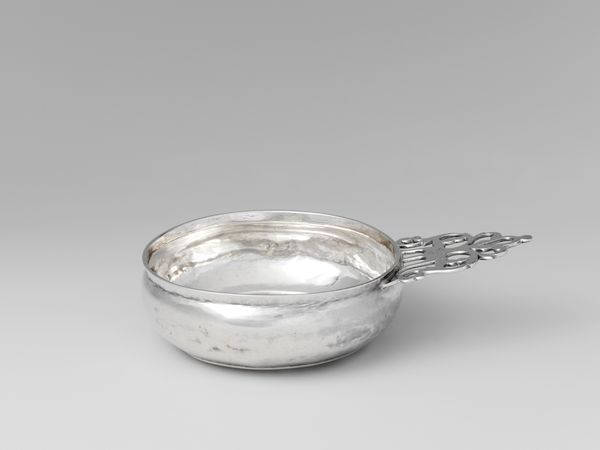
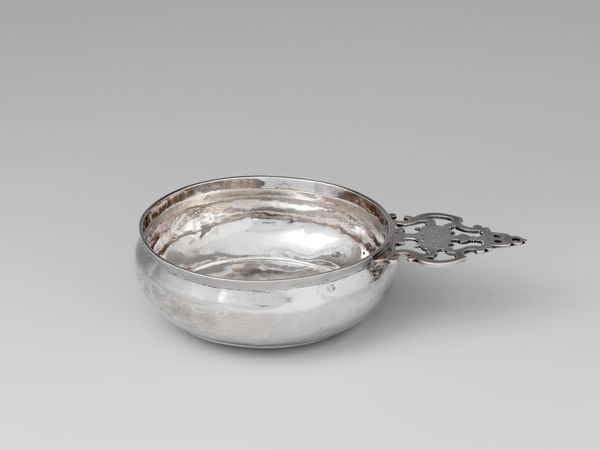
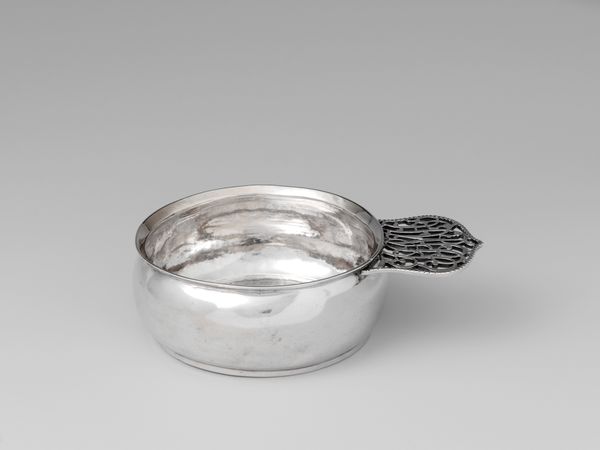
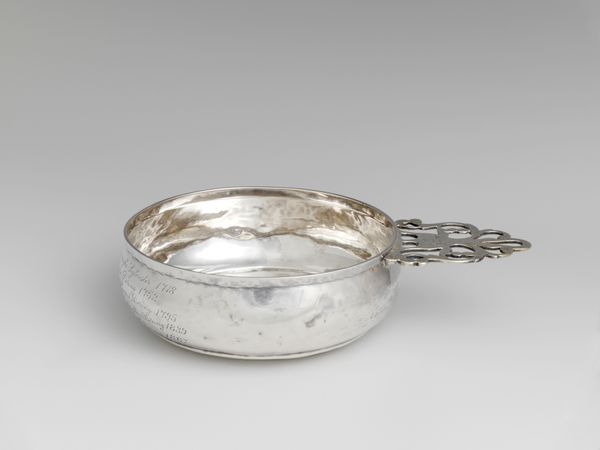
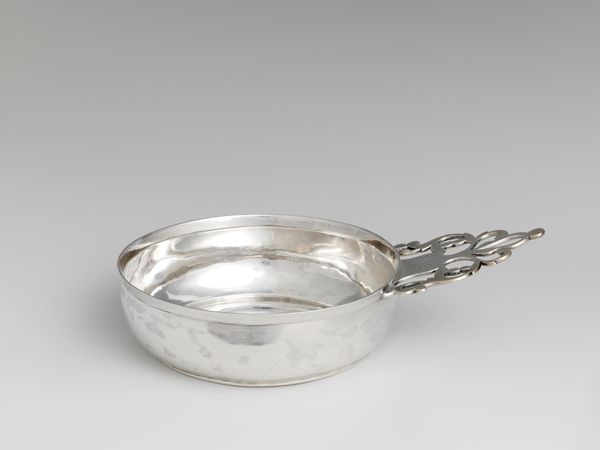
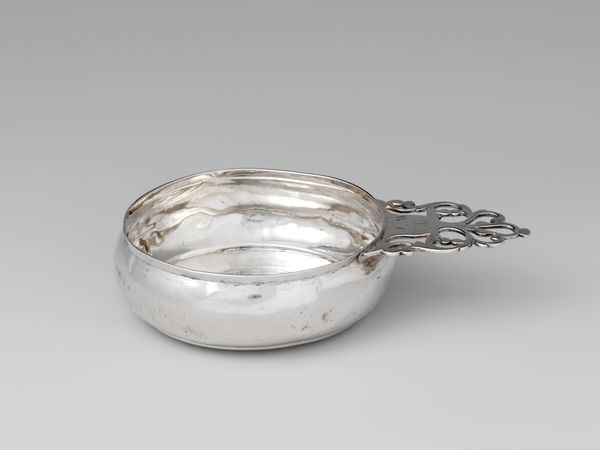
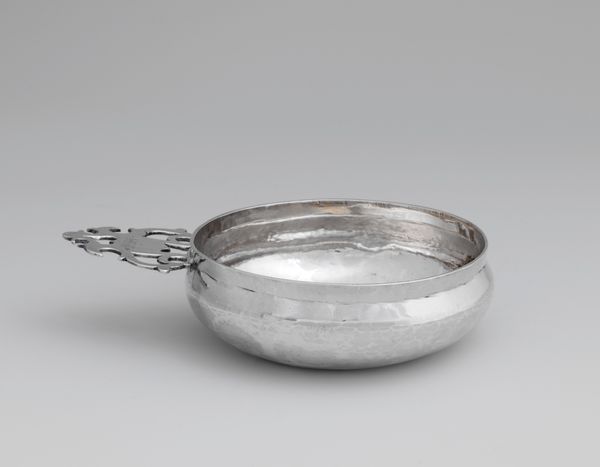
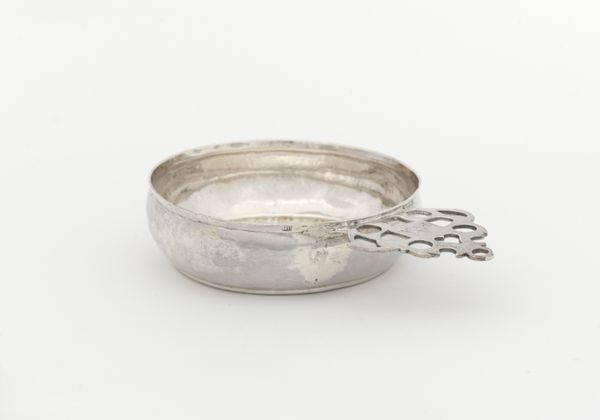
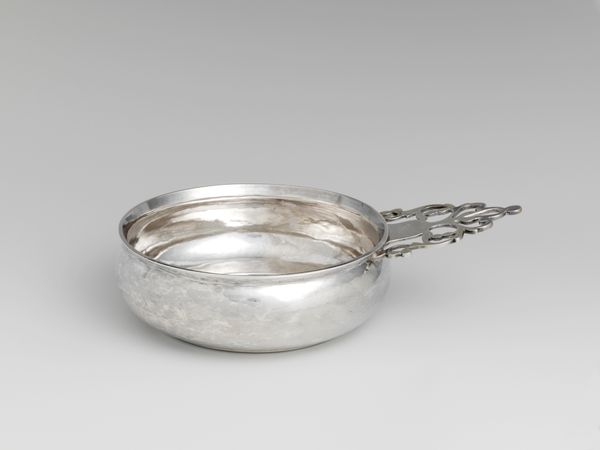
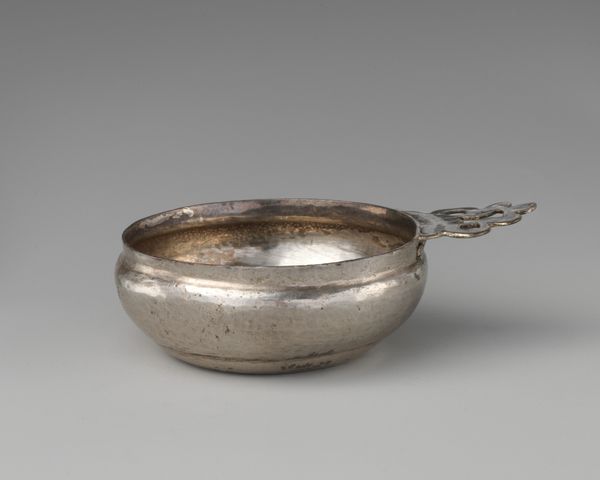
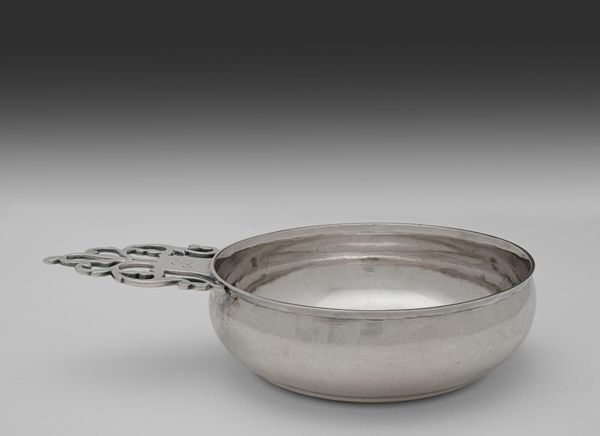
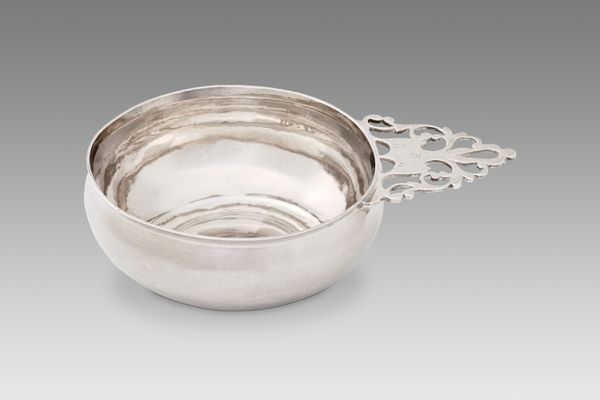
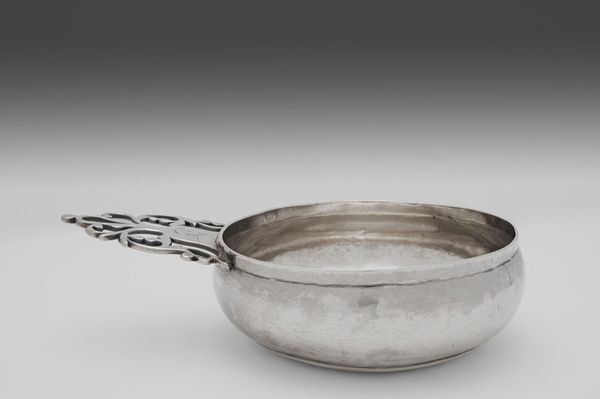
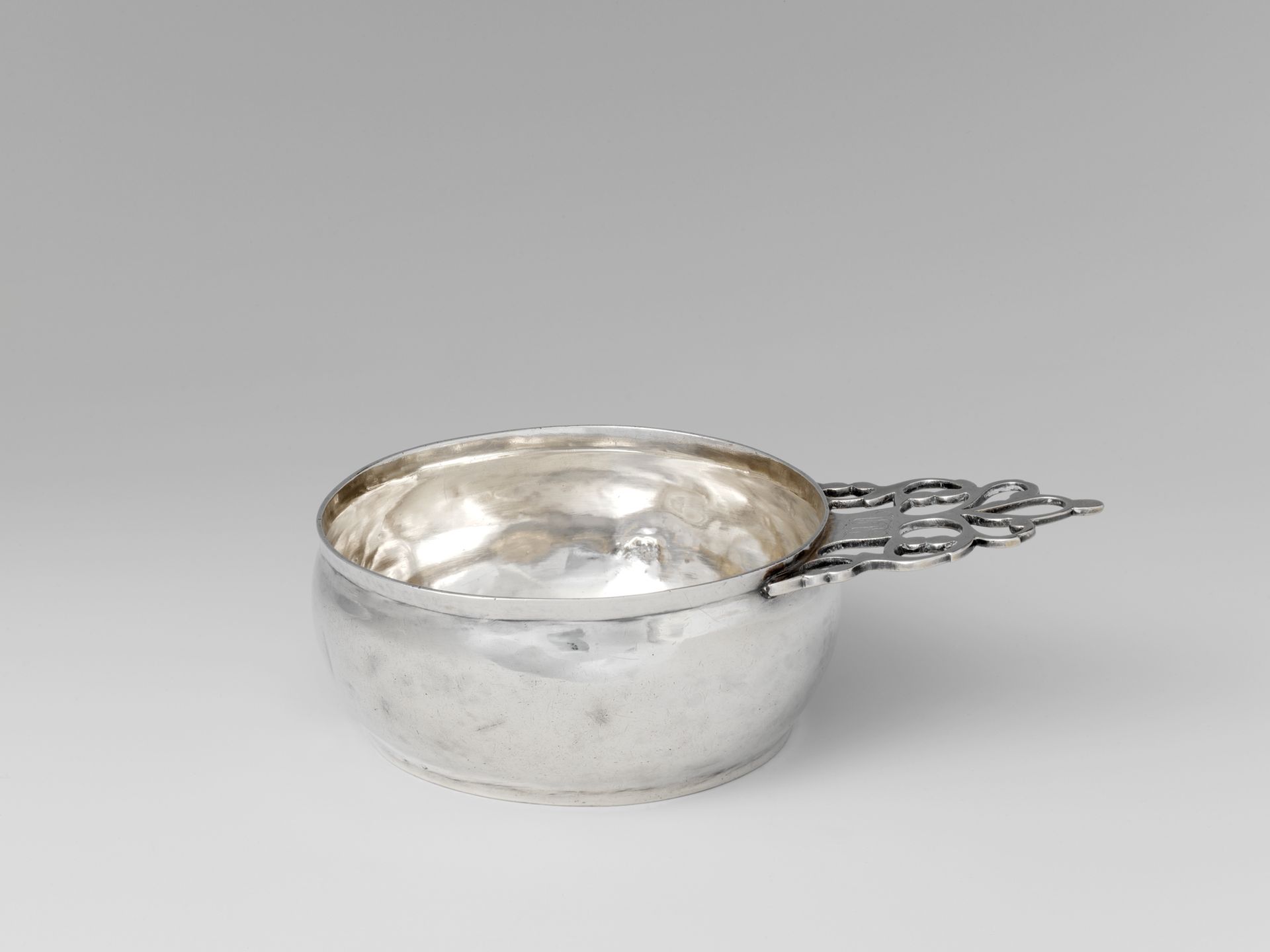
Editor: This is a silver porringer crafted between 1797 and 1800, currently held at the Metropolitan Museum of Art. What strikes me most is its stark simplicity; the hammered texture is lovely against that delicate, ornate handle. What do you see in this piece? Curator: The object presents a fascinating interplay of textures and forms. The hammered surface of the bowl, reflecting light unevenly, creates a dynamic visual field contrasted by the smooth, reflective rim. Observe the handle: its piercing introduces negative space and establishes a rhythmic pattern, a sort of visual echo against the volume of the bowl. Editor: I see what you mean about the handle; it is more than decoration; the negative space adds another layer. What about the bowl's roundness and depth? Do they contribute anything formally? Curator: Indeed. The concavity of the bowl draws the eye inward, a centripetal force contained by the circular rim. This containment focuses attention on the interior space, its reflective surface promising a kind of optical "filling," wouldn't you agree? The materiality itself–the cool, hard sheen of the silver–lends a sense of restraint and order to the whole. How do you interpret its visual weight, given that delicate handle? Editor: Interesting point about the weight and the "filling." Perhaps it asks us to consider not just functionality, but also absence. It’s much more nuanced than I initially perceived. Thanks for helping me to appreciate the compositional elements and see beyond the object's simple function! Curator: Precisely. By observing its formal relationships, we grasp not just its beauty, but also its internal logic. There’s always more than meets the eye.