About this artwork
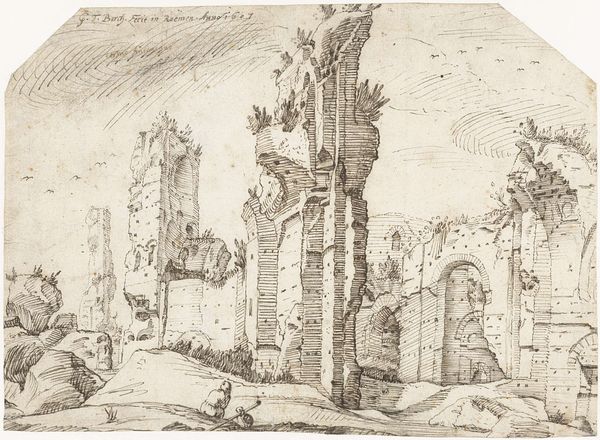
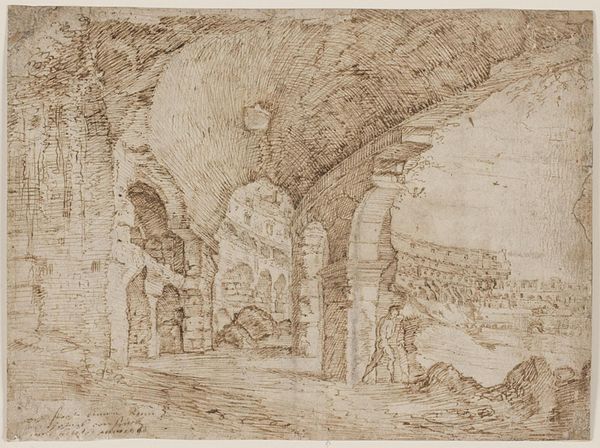
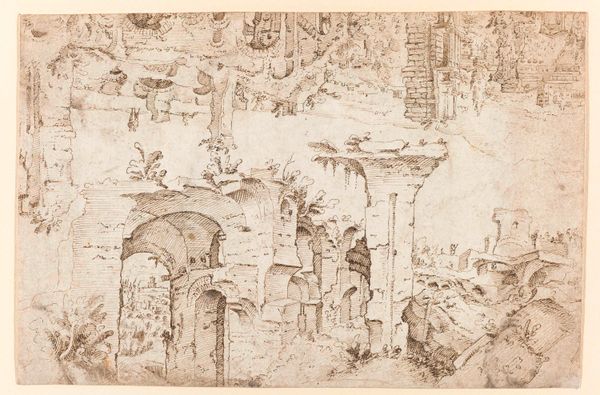
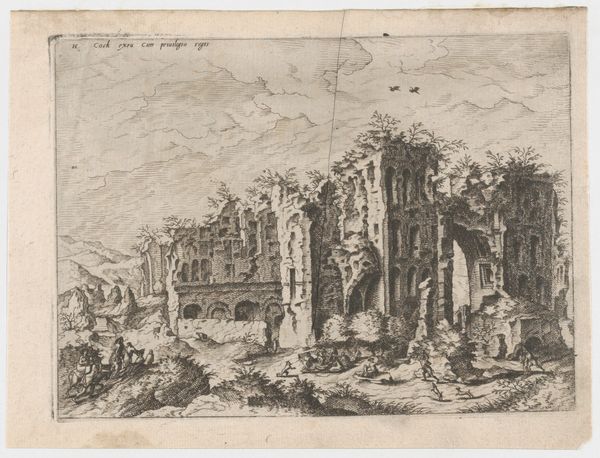
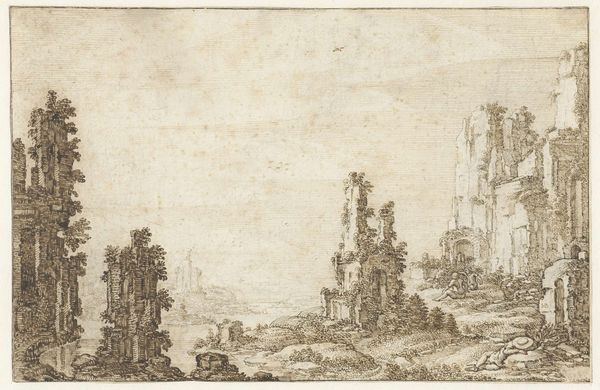
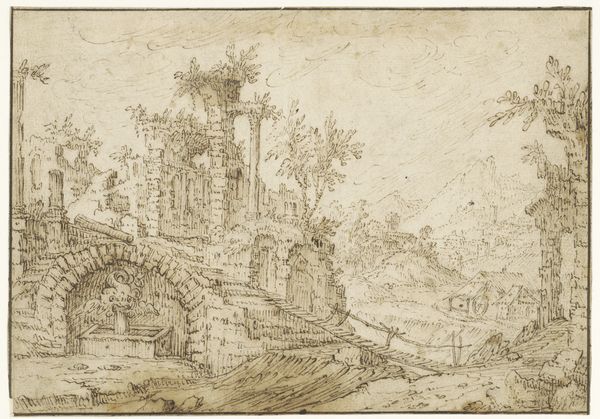
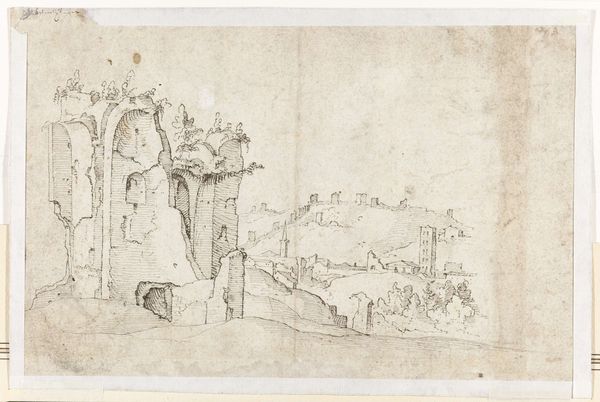
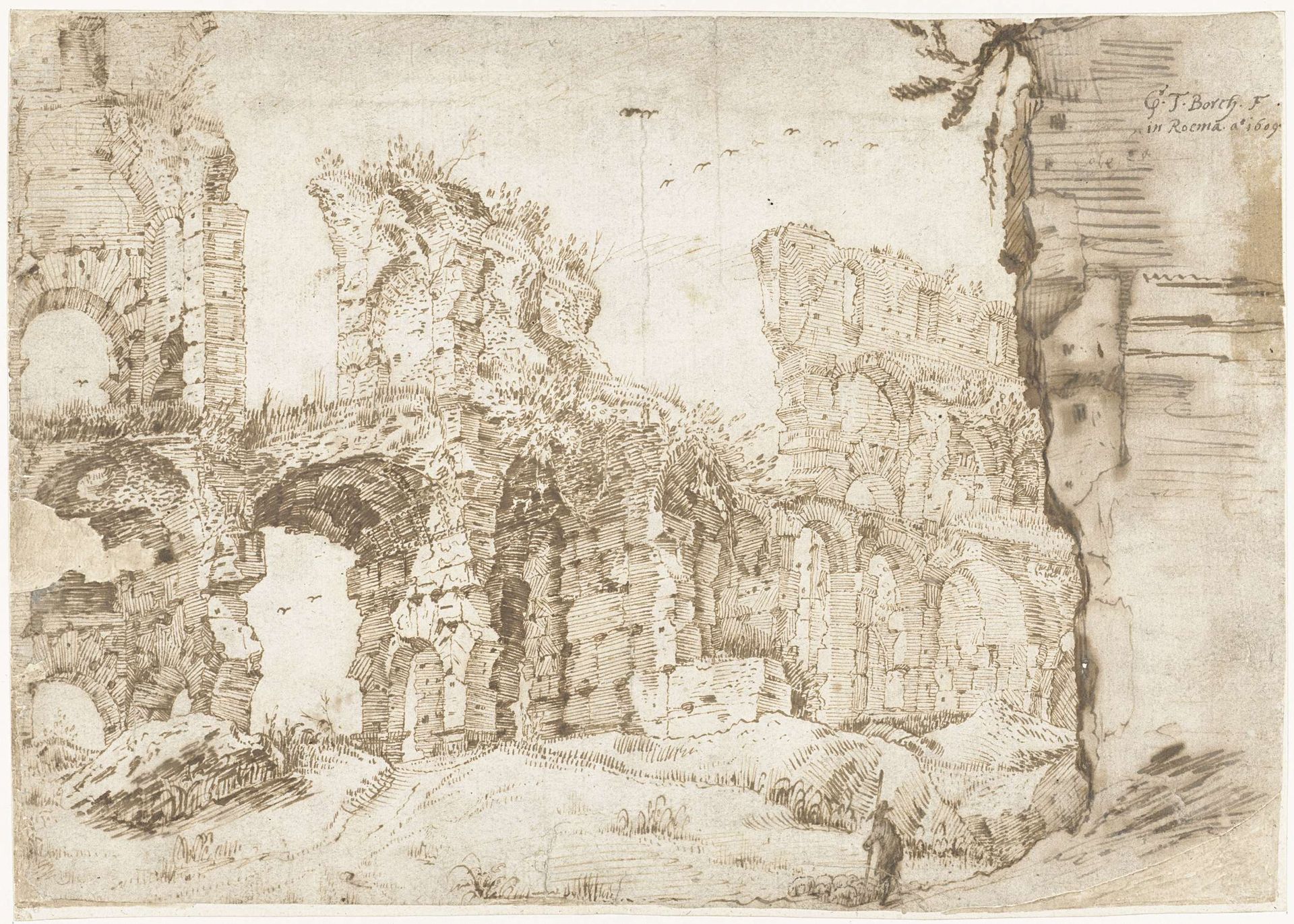
Gerard ter Borch made this pen and brown ink drawing of the Colosseum in Rome around 1634. The image comes alive through the skillful application of line work, built up in layers to describe the rough texture and substantial weight of the ruined architecture. Consider the process behind this drawing. Ter Borch would have needed a steady hand and keen eye to capture the Colosseum's intricate details with just pen and ink. The social significance lies in the Colosseum itself – originally a site of mass entertainment and brutal spectacle. It is a relic of the Roman Empire built on conquest and slave labor. Ter Borch presents it in decay. The drawing encourages us to contemplate the passage of time and the impermanence of human creations. It reminds us that even the grandest structures eventually return to the earth. This piece transcends traditional boundaries, inviting viewers to consider the interplay of material, process, and historical context.
Ruins of the Colosseum, Rome, seen from within
1609

Gerard ter (I) Borch
1584 - 1662Location
RijksmuseumArtwork details
- Medium
- drawing, etching
- Dimensions
- height 190 mm, width 271 mm
- Location
- Rijksmuseum
- Copyright
- Rijks Museum: Open Domain
Tags
Comments
Share your thoughts
About this artwork
Gerard ter Borch made this pen and brown ink drawing of the Colosseum in Rome around 1634. The image comes alive through the skillful application of line work, built up in layers to describe the rough texture and substantial weight of the ruined architecture. Consider the process behind this drawing. Ter Borch would have needed a steady hand and keen eye to capture the Colosseum's intricate details with just pen and ink. The social significance lies in the Colosseum itself – originally a site of mass entertainment and brutal spectacle. It is a relic of the Roman Empire built on conquest and slave labor. Ter Borch presents it in decay. The drawing encourages us to contemplate the passage of time and the impermanence of human creations. It reminds us that even the grandest structures eventually return to the earth. This piece transcends traditional boundaries, inviting viewers to consider the interplay of material, process, and historical context.
Comments
Share your thoughts