About this artwork
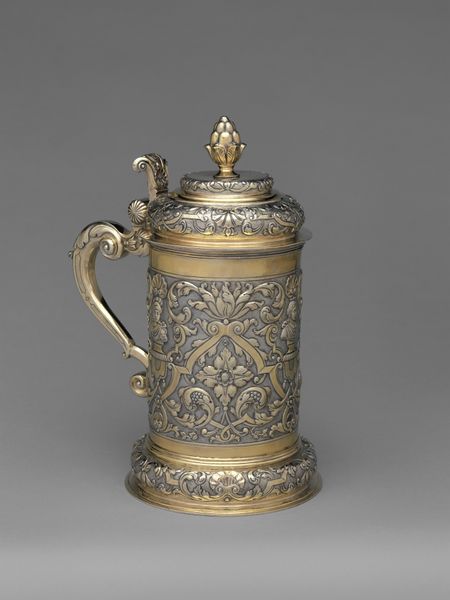
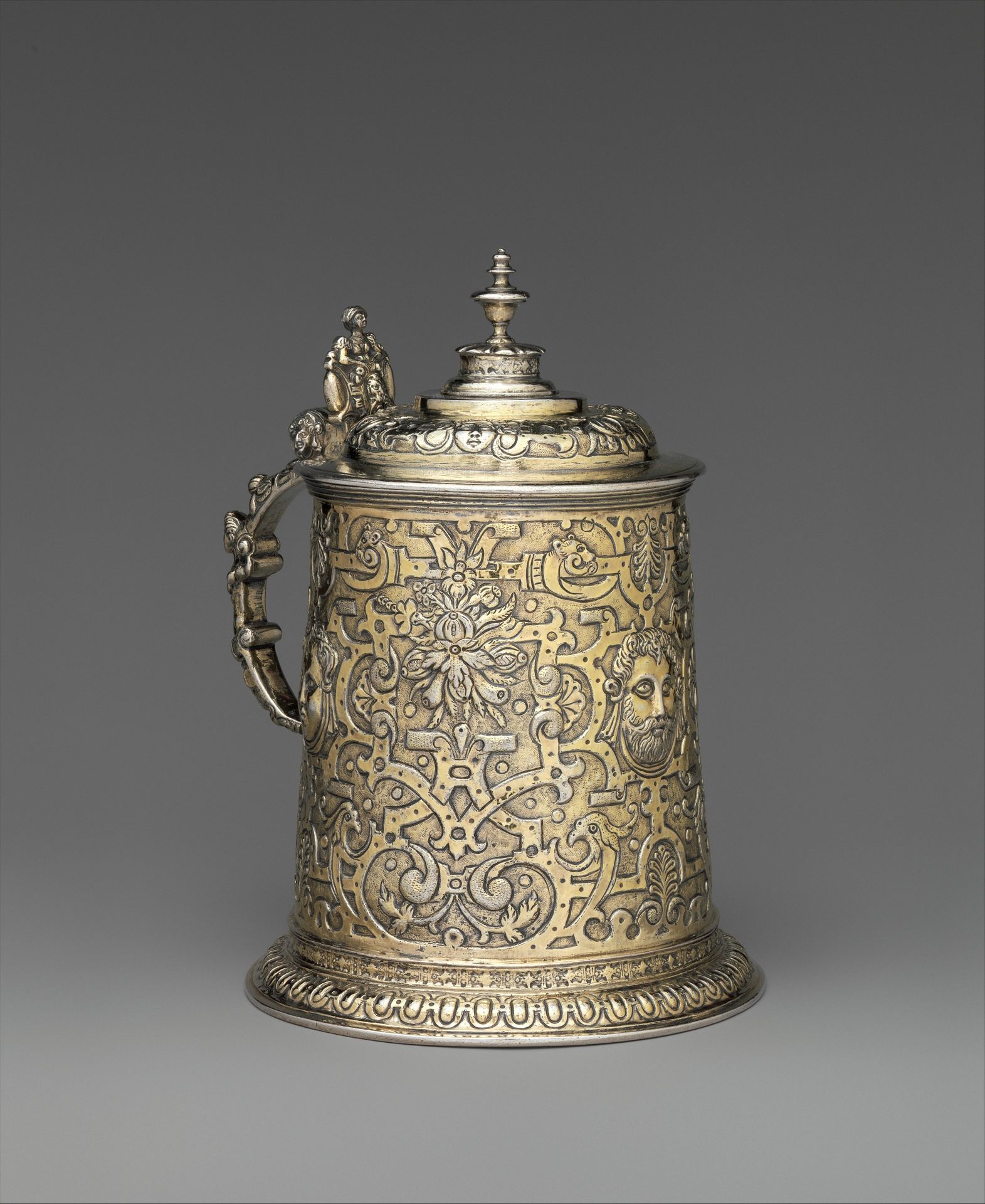
This tankard was crafted by Gregorius Gunesch sometime between 1592 and 1602, rendered in silver with meticulous detail. The overwhelming visual experience of the tankard is the density of its decoration, a labyrinth of floral motifs, geometric patterns, and figural representations densely packed across its surface. The structure employs a semiotic system, where the elaborate ornamentation transcends mere decoration. Consider how the placement of each element contributes to a larger narrative, perhaps reflecting the cultural values and social hierarchies of the period. The tankard destabilizes established meanings by integrating secular design elements into a functional object traditionally associated with communal or ceremonial use. Notice how the scale and composition of the embellishments function aesthetically, but also as a reflection of cultural and philosophical ideas about abundance, status, and the relationship between the individual and society. Each aspect invites ongoing interpretation and re-interpretation, challenging us to look beyond its utilitarian purpose.
Tankard
1585 - 1599


Artwork details
- Medium
- silver, metal, relief, sculpture
- Dimensions
- Overall: 7 1/2 x 5 1/4 in. (19 x 13.4 cm)
- Location
- Metropolitan Museum of Art, New York, NY
- Copyright
- Public Domain
Tags
Comments
Share your thoughts
About this artwork
This tankard was crafted by Gregorius Gunesch sometime between 1592 and 1602, rendered in silver with meticulous detail. The overwhelming visual experience of the tankard is the density of its decoration, a labyrinth of floral motifs, geometric patterns, and figural representations densely packed across its surface. The structure employs a semiotic system, where the elaborate ornamentation transcends mere decoration. Consider how the placement of each element contributes to a larger narrative, perhaps reflecting the cultural values and social hierarchies of the period. The tankard destabilizes established meanings by integrating secular design elements into a functional object traditionally associated with communal or ceremonial use. Notice how the scale and composition of the embellishments function aesthetically, but also as a reflection of cultural and philosophical ideas about abundance, status, and the relationship between the individual and society. Each aspect invites ongoing interpretation and re-interpretation, challenging us to look beyond its utilitarian purpose.
Comments
Share your thoughts