About this artwork
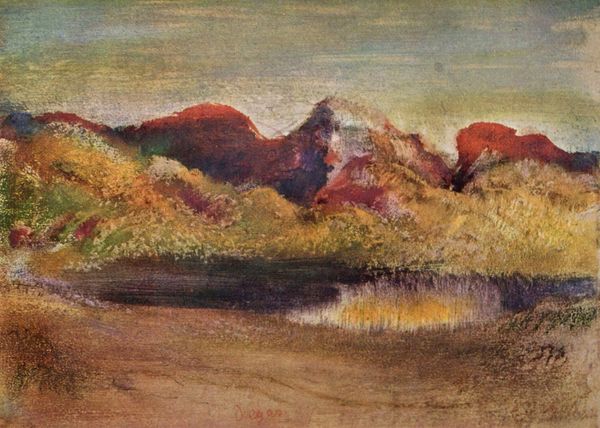
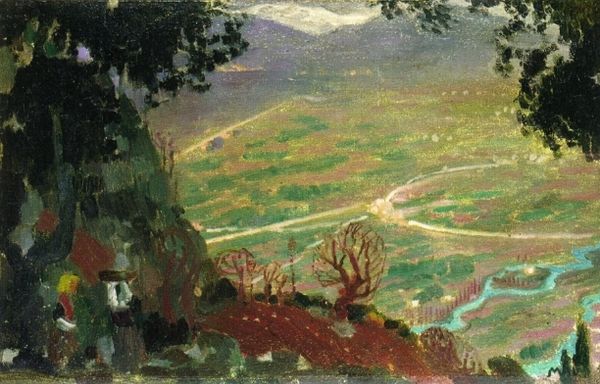
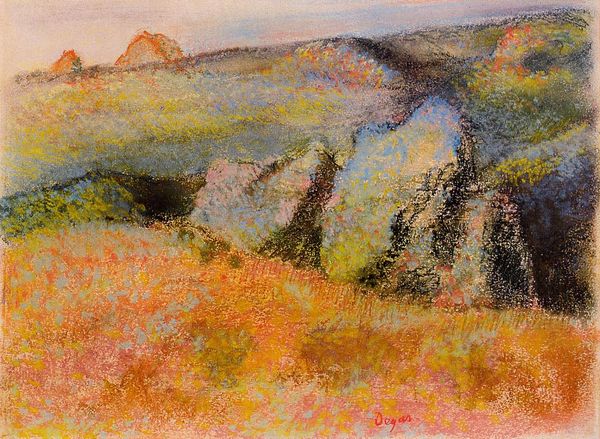
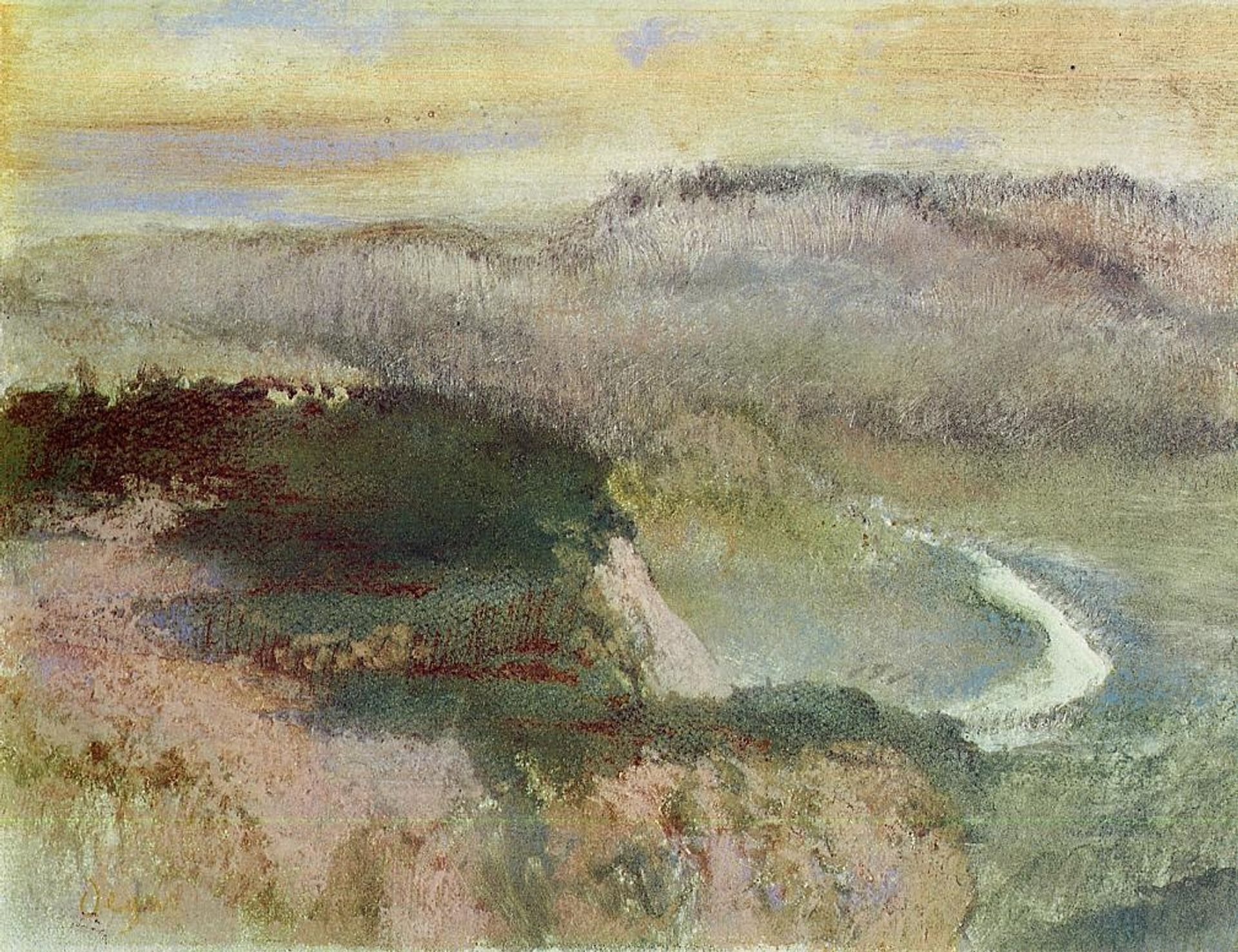
Edgar Degas painted this landscape with hills using oil on paper. Notice the dominating presence of the landscape, shrouded in a veil of atmospheric perspective, where the hills dissolve into the horizon. The winding road, or perhaps river, acts as a potent symbol – a motif seen across centuries, often representing life’s journey or a path through the unknown. Think of the rivers in classical paintings by Poussin or Lorrain. The curves of the river recall the serpentine forms found in ancient Greek art, symbols of primal energy, constantly transforming. This river, seemingly leading to the beyond, might subconsciously trigger our deepest fears and desires about the unknown and our own mortality. The landscape is not just a view, but a stage for the human soul. This winding path, whether river or road, is not fixed; it evolves and resurfaces through history, echoing our perpetual quest for meaning.
Landscape with Hills
1890

Edgar Degas
1834 - 1917Location
Museum of Fine Arts (MFA), Boston, MA, USArtwork details
- Medium
- painting, plein-air, oil-paint
- Location
- Museum of Fine Arts (MFA), Boston, MA, US
- Copyright
- Public domain
Tags
Comments
Share your thoughts
About this artwork
Edgar Degas painted this landscape with hills using oil on paper. Notice the dominating presence of the landscape, shrouded in a veil of atmospheric perspective, where the hills dissolve into the horizon. The winding road, or perhaps river, acts as a potent symbol – a motif seen across centuries, often representing life’s journey or a path through the unknown. Think of the rivers in classical paintings by Poussin or Lorrain. The curves of the river recall the serpentine forms found in ancient Greek art, symbols of primal energy, constantly transforming. This river, seemingly leading to the beyond, might subconsciously trigger our deepest fears and desires about the unknown and our own mortality. The landscape is not just a view, but a stage for the human soul. This winding path, whether river or road, is not fixed; it evolves and resurfaces through history, echoing our perpetual quest for meaning.
Comments
Share your thoughts