About this artwork
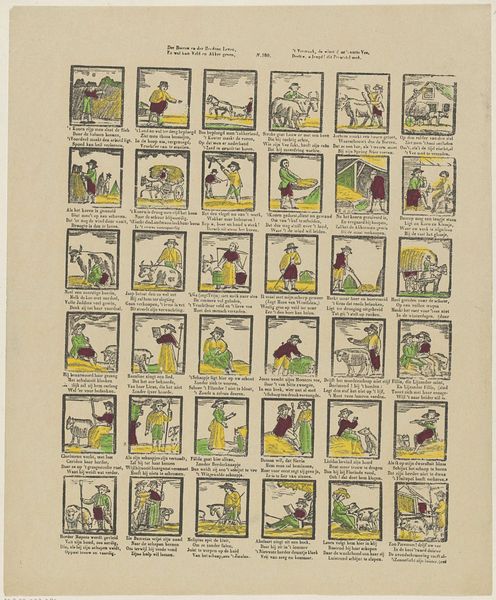
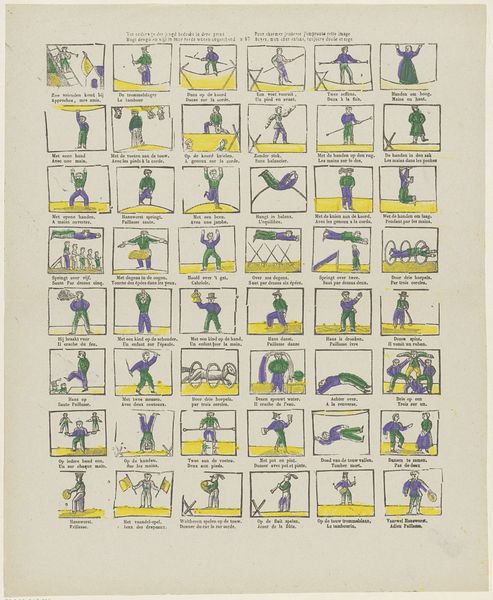
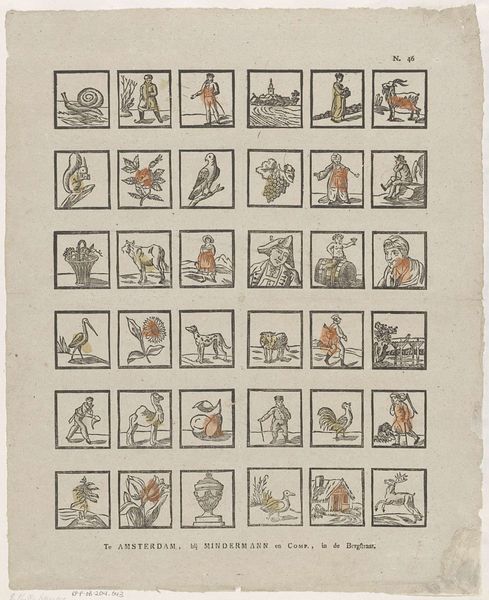
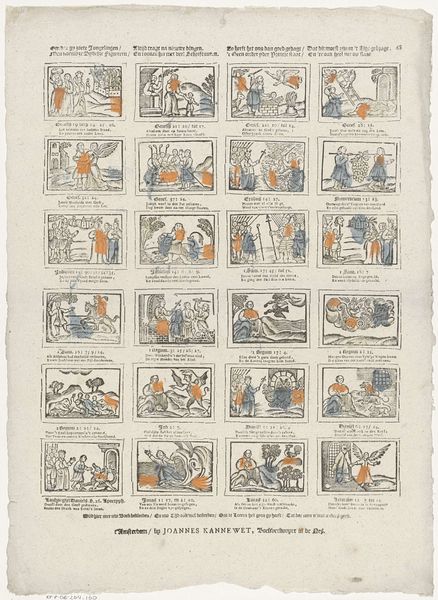
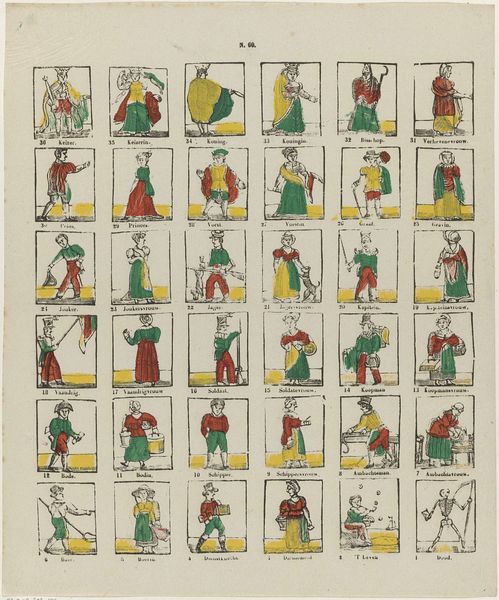
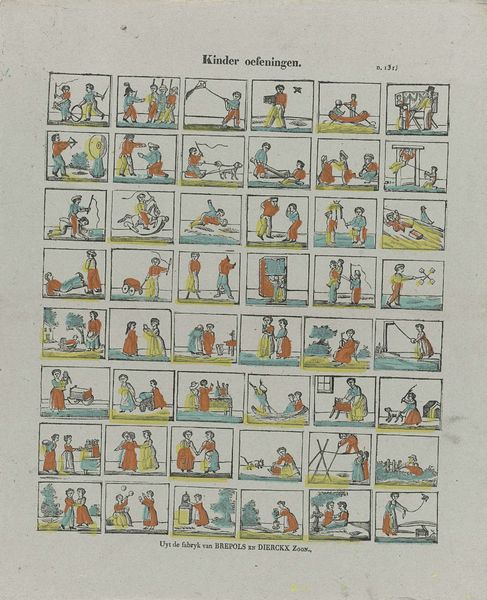
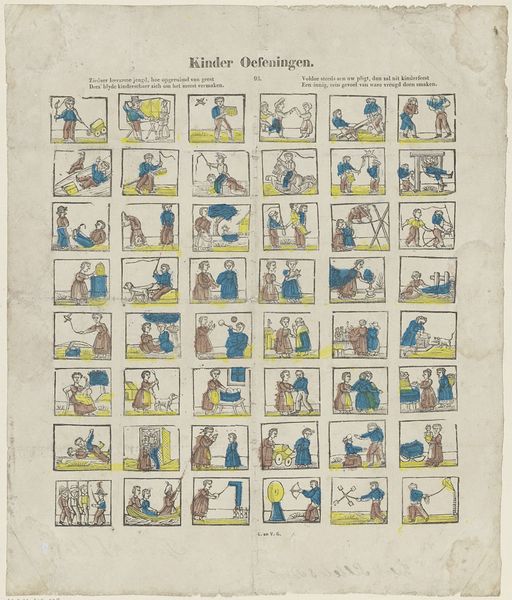
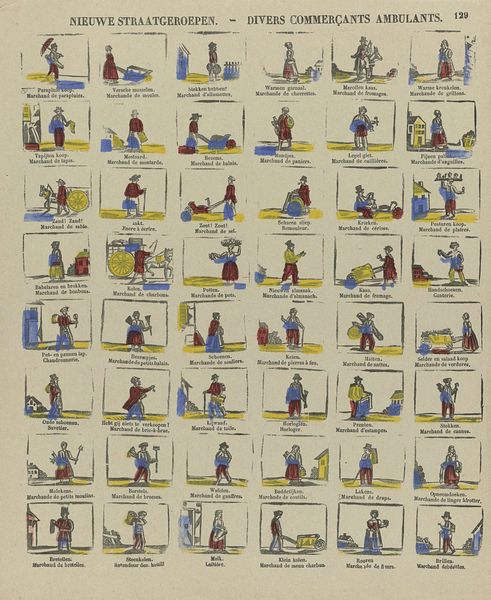
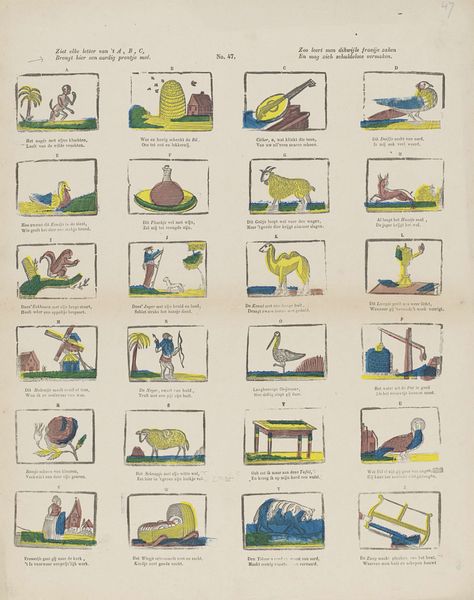
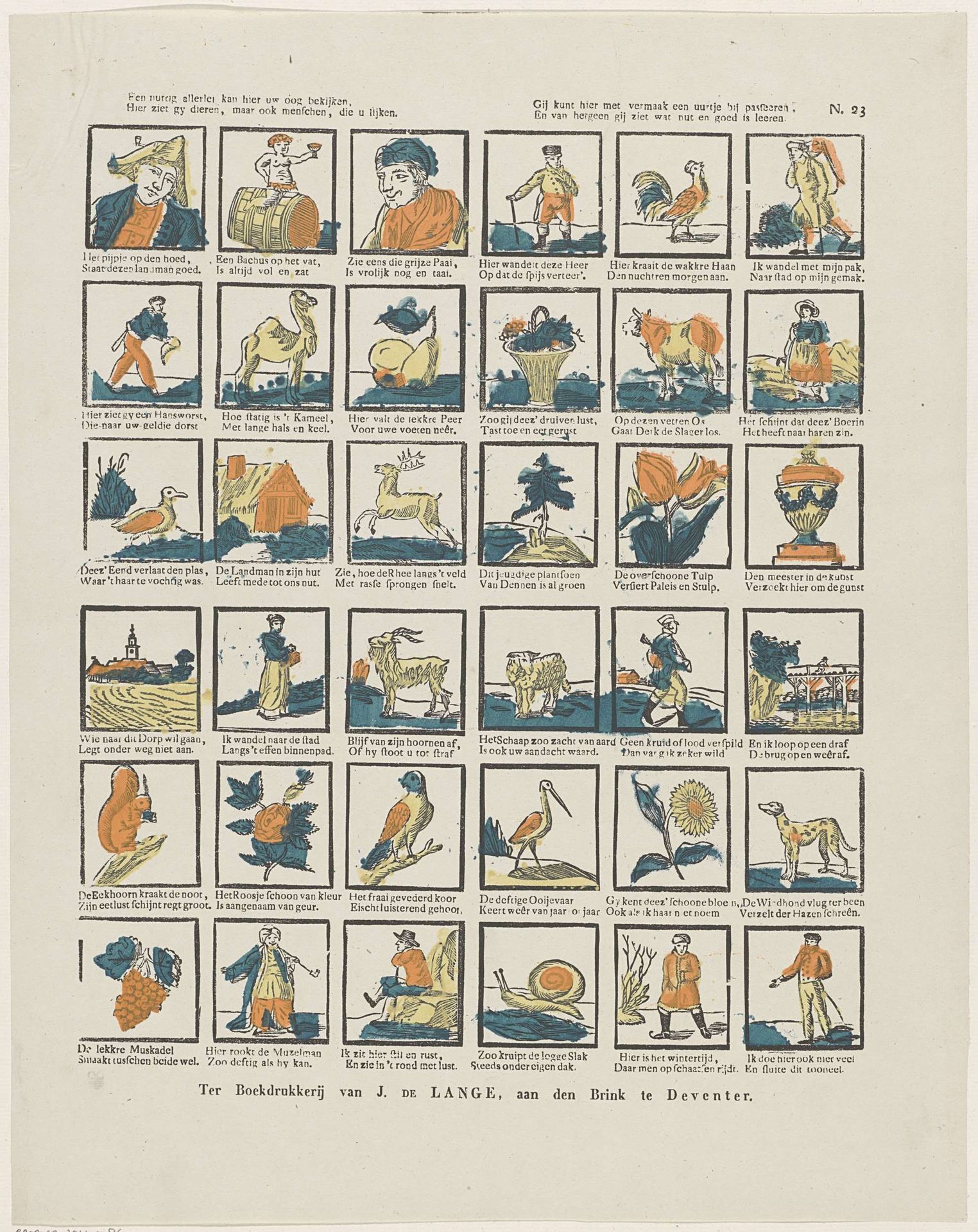
This teaching sheet, made by Jan de Lange II in the early 19th century, is a woodcut printed with two colors on paper. These educational prints were common at the time and used a simple, accessible medium to convey moral messages. The graphic quality of the woodcut—its stark lines and flat blocks of color—belies a labor-intensive process. Each color required a separate block, carefully carved and aligned for printing. The choice of this relatively inexpensive method speaks to a desire to reach a broad audience, using the readily available technology of the printing press. Looking closely, we see a world of familiar objects and figures, each paired with a rhyming couplet. This fusion of image and text reflects a broader cultural impulse to categorize and understand the world through visual and linguistic systems. It's a fascinating example of how art, education, and commerce intertwined in the 19th century. The artist acted as a bridge between the traditions of craftsmanship and the emerging world of mass production and consumerism.
Een nuttig allerlei kan hier uw oog bekijken, / Hier ziet gy dieren, maar ook menschen, die u lijken. / Gij kunt hier met vermaak een uurtje bij passeeren, / En van hetgeen gij ziet wat nut en goed is leeren
c. 1822 - 1849

Jan de (II) Lange
1799 - 1849Location
RijksmuseumArtwork details
- Medium
- print, engraving
- Dimensions
- height 395 mm, width 312 mm
- Location
- Rijksmuseum
- Copyright
- Rijks Museum: Open Domain
Tags
Comments
Share your thoughts
About this artwork
This teaching sheet, made by Jan de Lange II in the early 19th century, is a woodcut printed with two colors on paper. These educational prints were common at the time and used a simple, accessible medium to convey moral messages. The graphic quality of the woodcut—its stark lines and flat blocks of color—belies a labor-intensive process. Each color required a separate block, carefully carved and aligned for printing. The choice of this relatively inexpensive method speaks to a desire to reach a broad audience, using the readily available technology of the printing press. Looking closely, we see a world of familiar objects and figures, each paired with a rhyming couplet. This fusion of image and text reflects a broader cultural impulse to categorize and understand the world through visual and linguistic systems. It's a fascinating example of how art, education, and commerce intertwined in the 19th century. The artist acted as a bridge between the traditions of craftsmanship and the emerging world of mass production and consumerism.
Comments
Share your thoughts