About this artwork
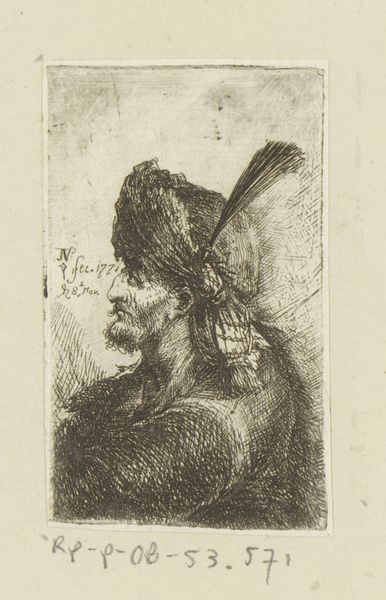
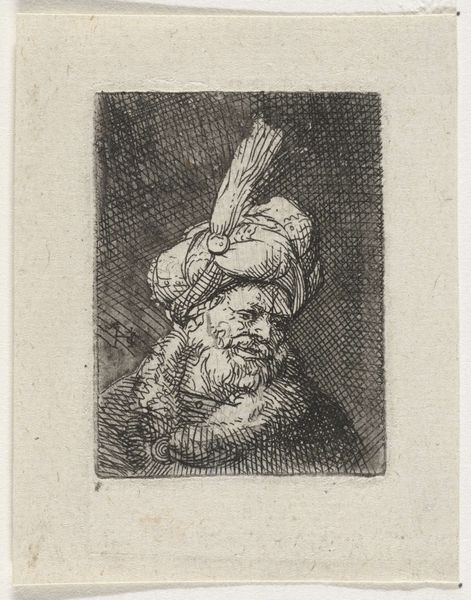
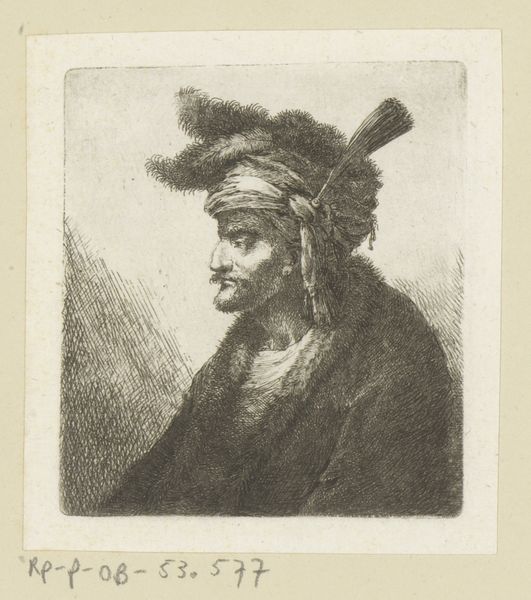
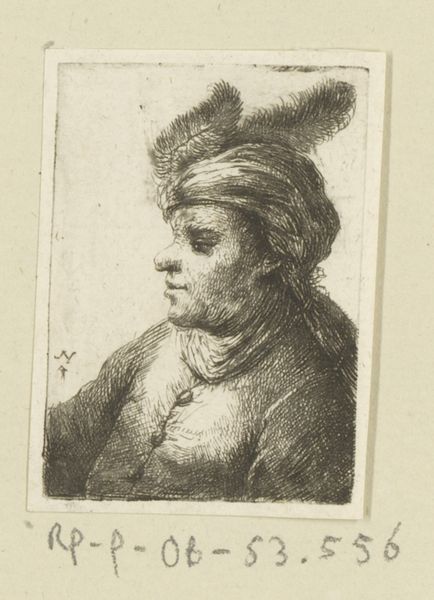
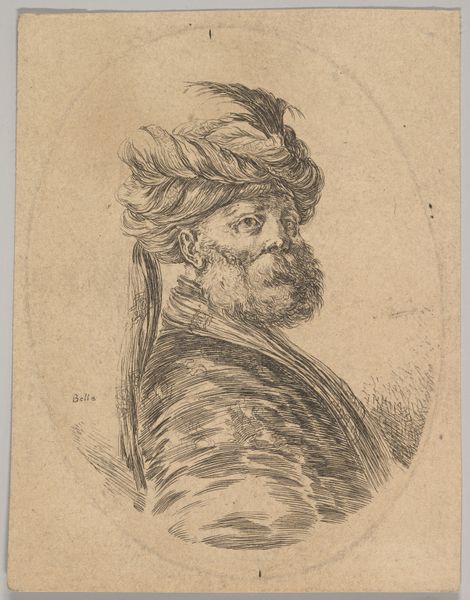
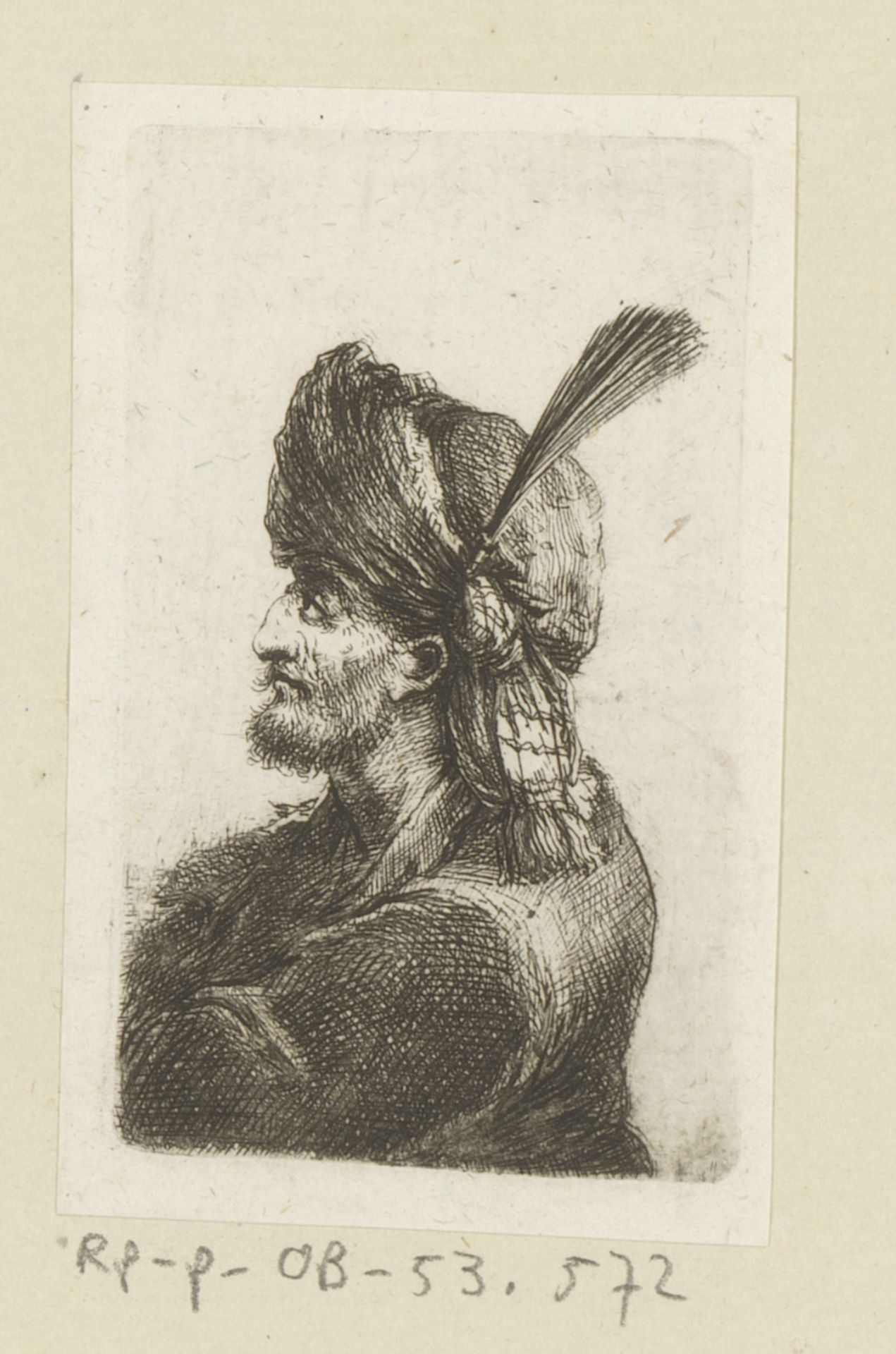
Johann Andreas Benjamin Nothnagel created this etching, titled *Man met tulband met pluim*, meaning *Man with turban with plume,* in the 18th century. This small, detailed portrait invites us to consider the European fascination with the ‘Orient’ during this period. The man’s turban and plume mark him as ‘Other’, exoticizing him, reducing him to elements of costume. The image is not simply a portrait, but also an expression of cultural difference. What did it mean for Nothnagel, a European artist, to represent a man from a different cultural background? What assumptions and stereotypes might have influenced his depiction? The gaze of the man is also interesting. He looks away, perhaps suggesting a sense of detachment or a refusal to meet the viewer's eye. The image prompts questions about representation, cultural exchange, and the power dynamics inherent in portraiture.

Artwork details
- Medium
- print, engraving
- Dimensions
- height 76 mm, width 45 mm
- Copyright
- Rijks Museum: Open Domain
Tags
portrait
old engraving style
line
genre-painting
academic-art
engraving
realism
Comments
Be the first to share your thoughts about this work.
About this artwork
Johann Andreas Benjamin Nothnagel created this etching, titled *Man met tulband met pluim*, meaning *Man with turban with plume,* in the 18th century. This small, detailed portrait invites us to consider the European fascination with the ‘Orient’ during this period. The man’s turban and plume mark him as ‘Other’, exoticizing him, reducing him to elements of costume. The image is not simply a portrait, but also an expression of cultural difference. What did it mean for Nothnagel, a European artist, to represent a man from a different cultural background? What assumptions and stereotypes might have influenced his depiction? The gaze of the man is also interesting. He looks away, perhaps suggesting a sense of detachment or a refusal to meet the viewer's eye. The image prompts questions about representation, cultural exchange, and the power dynamics inherent in portraiture.
Comments
Be the first to share your thoughts about this work.