About this artwork
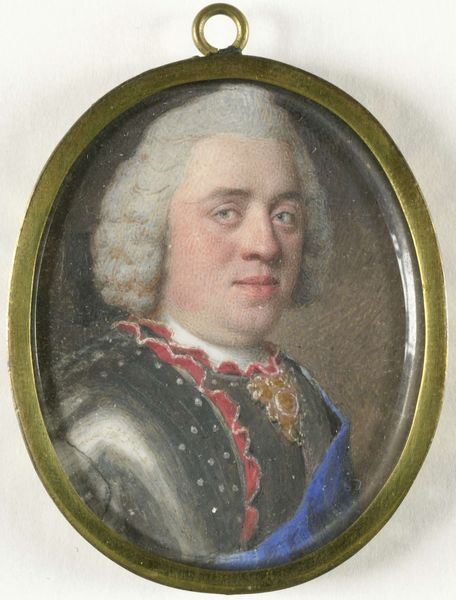
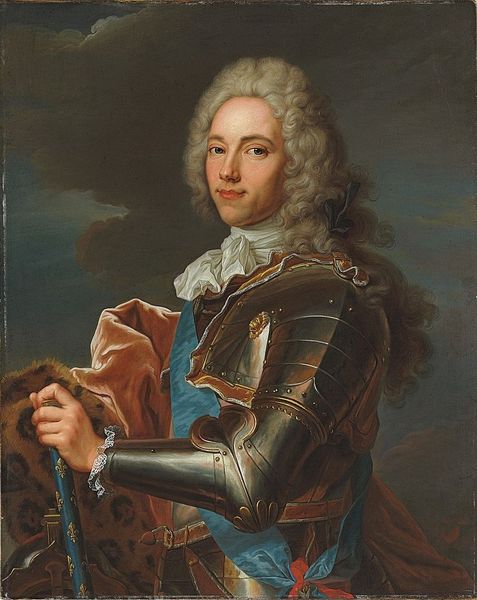
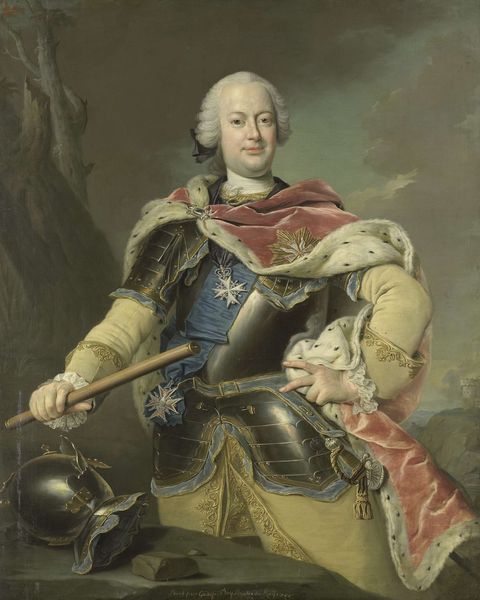
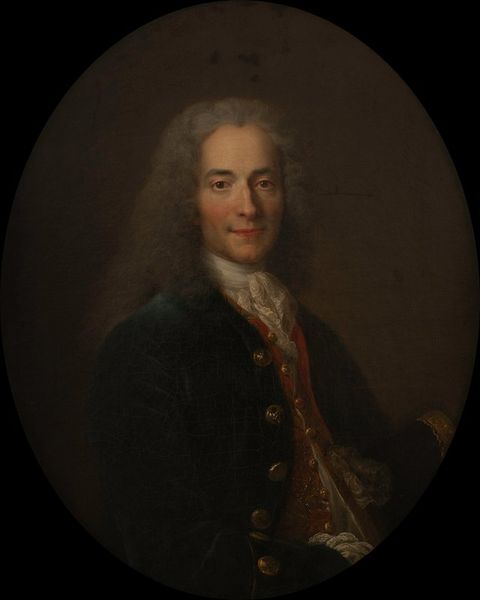
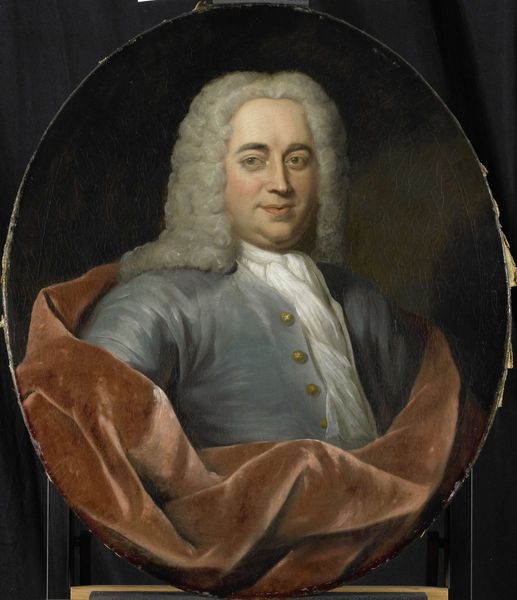
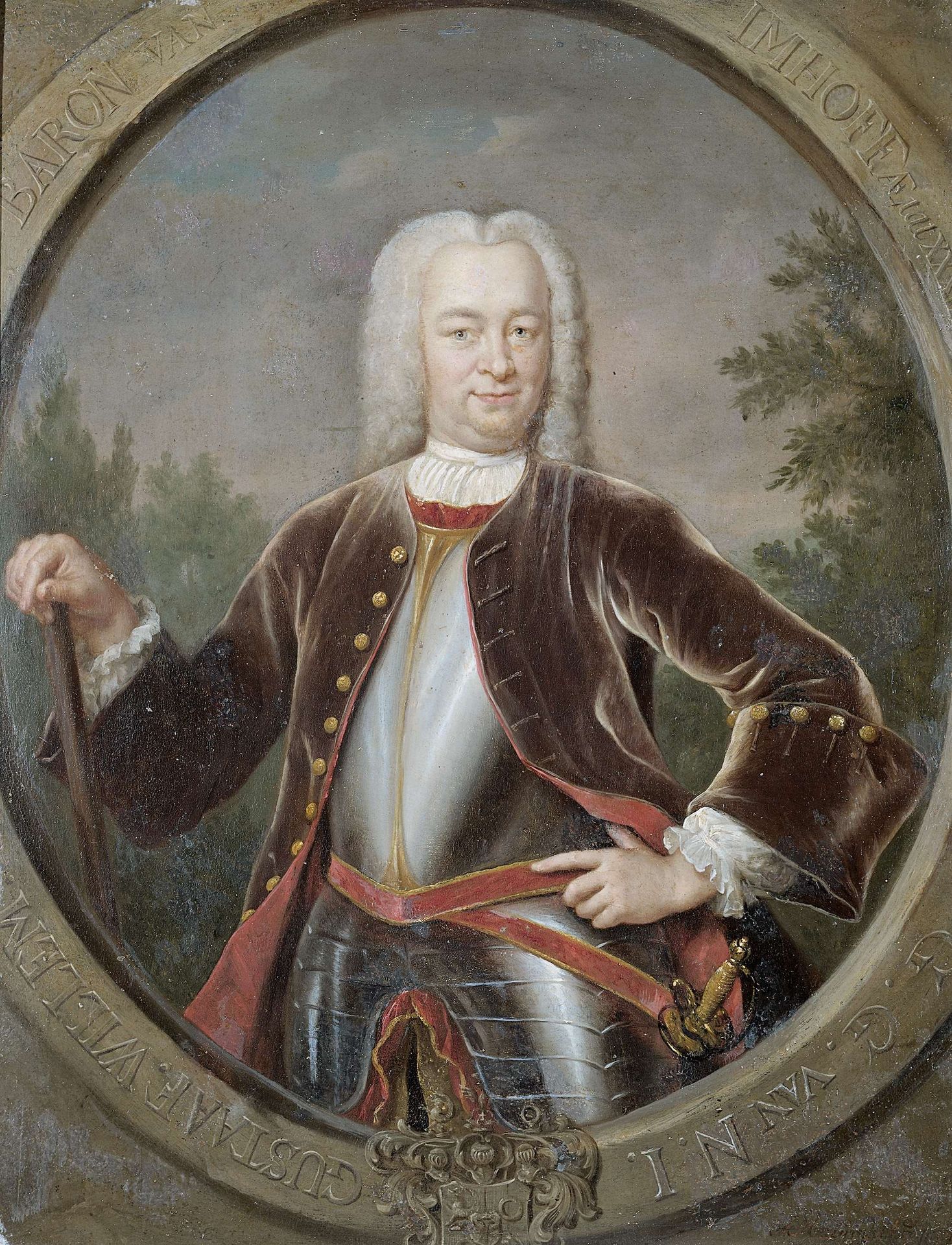
Jan Maurits Quinkhard painted this oval portrait of Gustaaf Willem, Baron van Imhoff in oil on panel. The composition centres on van Imhoff's poised figure, half in shadow, set against a muted, classical backdrop. Notice the crisp detail of his armour and the soft rendering of his powdered wig, elements which create a contrast between the man and the office. The formal elements create a tension that invites us to decode the visual signs of power and status encoded in this image. His direct gaze and the subtle gesture of his hand resting on his hip speak of authority, yet the overall impression is one of restrained elegance rather than overt display. The cool palette and smooth finish reflect the aesthetic preferences of the period. The use of light and shadow serves to emphasize the sitter's features, enhancing the sense of presence. Consider how Quinkhard uses colour and form to convey not just an image of a man, but an idea of leadership and governance during a complex period in history.
Portrait of Gustaaf Willem, Baron van Imhoff, Governor-General of the Dutch East India Company
1742

Artwork details
- Medium
- oil-paint
- Dimensions
- height 34 cm, width 27 cm, depth 3.8 cm
- Copyright
- Rijks Museum: Open Domain
Tags
Comments
Share your thoughts
About this artwork
Jan Maurits Quinkhard painted this oval portrait of Gustaaf Willem, Baron van Imhoff in oil on panel. The composition centres on van Imhoff's poised figure, half in shadow, set against a muted, classical backdrop. Notice the crisp detail of his armour and the soft rendering of his powdered wig, elements which create a contrast between the man and the office. The formal elements create a tension that invites us to decode the visual signs of power and status encoded in this image. His direct gaze and the subtle gesture of his hand resting on his hip speak of authority, yet the overall impression is one of restrained elegance rather than overt display. The cool palette and smooth finish reflect the aesthetic preferences of the period. The use of light and shadow serves to emphasize the sitter's features, enhancing the sense of presence. Consider how Quinkhard uses colour and form to convey not just an image of a man, but an idea of leadership and governance during a complex period in history.
Comments
Share your thoughts