About this artwork
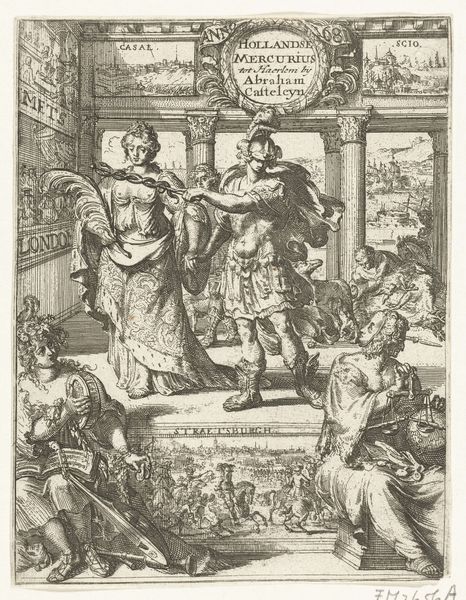
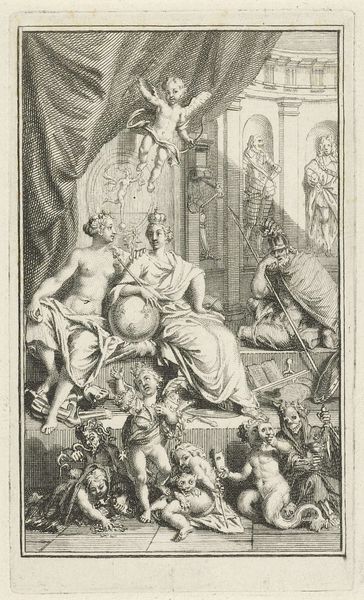
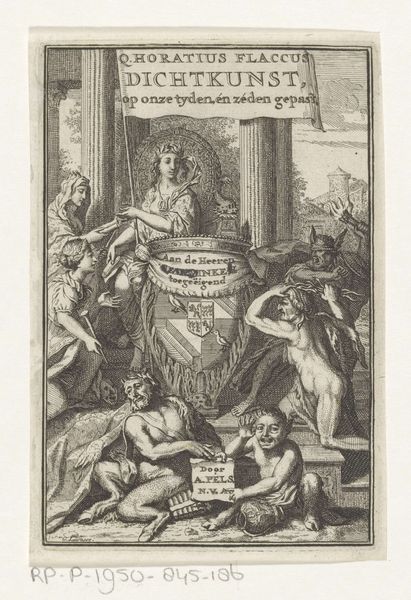
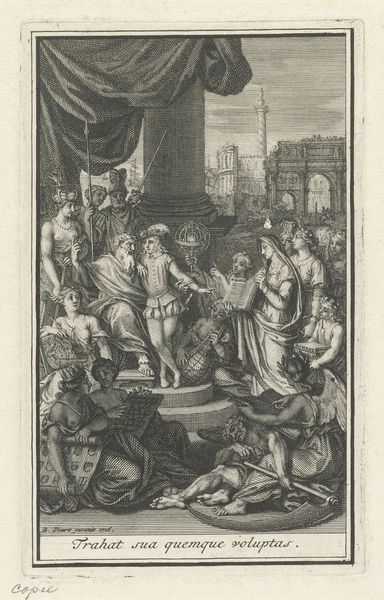
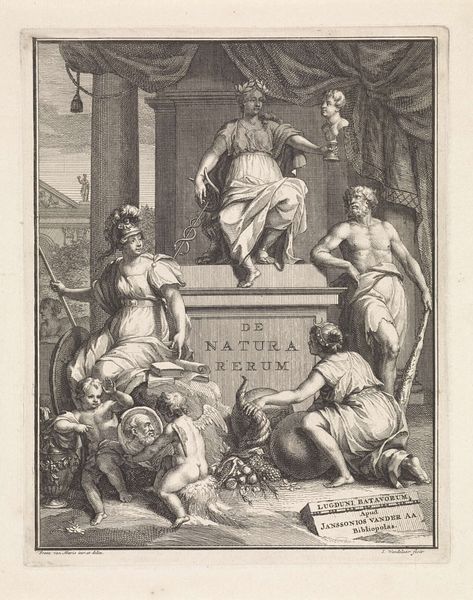
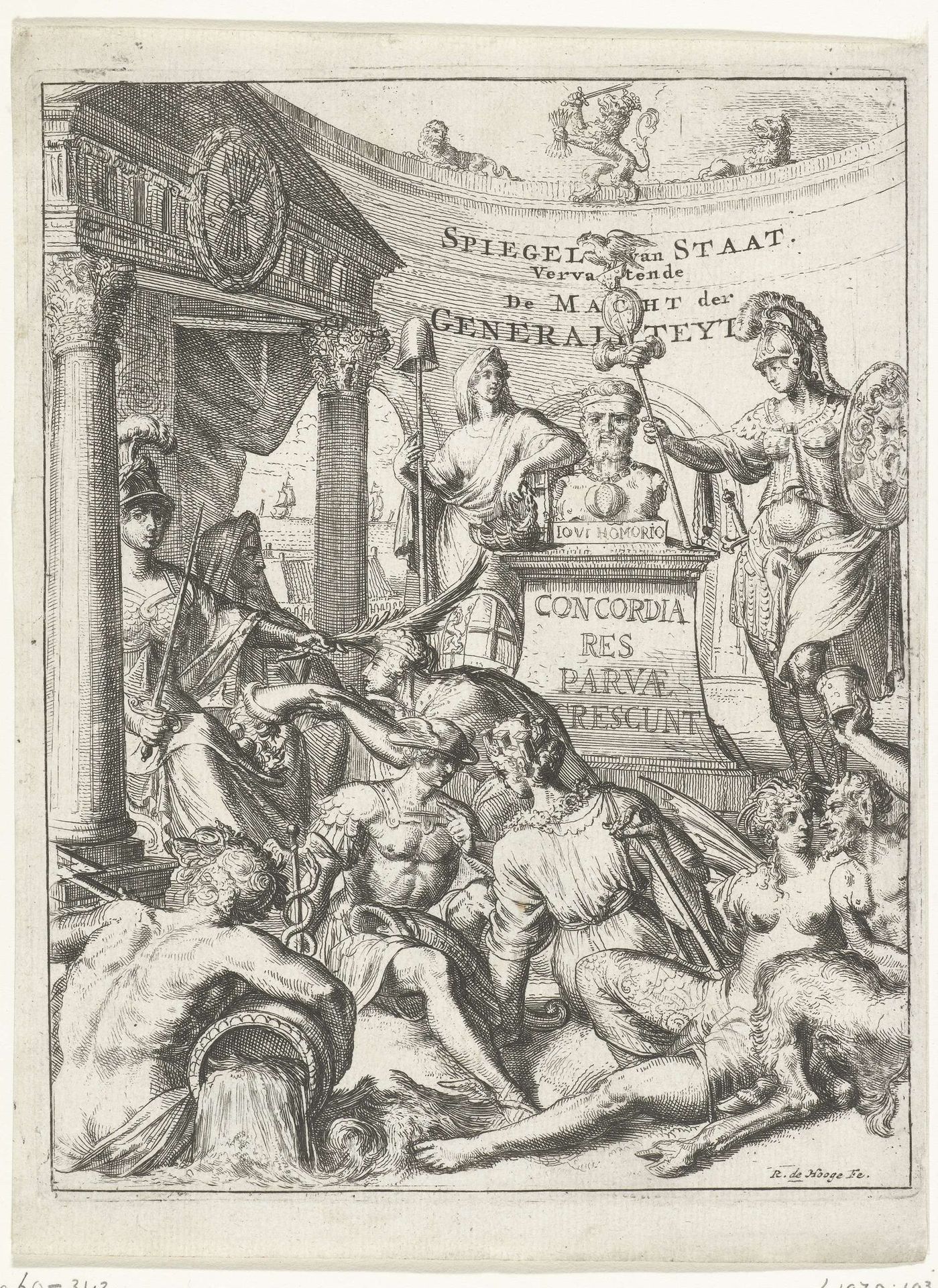
This is the title page for part two of 'Mirror of the State' by Romeyn de Hooghe. The etching is teeming with symbols, motifs, and iconography that are characteristic of its time. Take, for instance, the figure of Concordia at the heart of the composition. This ancient Roman goddess embodies harmony and agreement, and she appears here as a cornerstone of the state. From antiquity through the Renaissance, Concordia has been invoked to ensure peace in times of civil strife. The caduceus held by Mercury, who can be seen in the lower part of the composition, typically signifies commerce and negotiation. Here, though, one might question whether it speaks to a deeper desire for reconciliation. Note also, how in different epochs, the image of Concordia, much like a restless spirit, resurfaces amidst social and political turbulence, seeking to bind together what has been torn asunder. This deeply rooted longing for order and unity engages viewers on a subconscious level. It is a visual echo that resonates through time, reminding us of humanity’s eternal quest for balance.
Titelprent voor deel 2 van 'Spiegel van Staat' van Romeyn de Hooghe
1707

Romeyn de Hooghe
1645 - 1708Location
RijksmuseumArtwork details
- Medium
- graphic-art, print, etching
- Dimensions
- height 192 mm, width 149 mm
- Location
- Rijksmuseum
- Copyright
- Rijks Museum: Open Domain
Tags
Comments
Share your thoughts
About this artwork
This is the title page for part two of 'Mirror of the State' by Romeyn de Hooghe. The etching is teeming with symbols, motifs, and iconography that are characteristic of its time. Take, for instance, the figure of Concordia at the heart of the composition. This ancient Roman goddess embodies harmony and agreement, and she appears here as a cornerstone of the state. From antiquity through the Renaissance, Concordia has been invoked to ensure peace in times of civil strife. The caduceus held by Mercury, who can be seen in the lower part of the composition, typically signifies commerce and negotiation. Here, though, one might question whether it speaks to a deeper desire for reconciliation. Note also, how in different epochs, the image of Concordia, much like a restless spirit, resurfaces amidst social and political turbulence, seeking to bind together what has been torn asunder. This deeply rooted longing for order and unity engages viewers on a subconscious level. It is a visual echo that resonates through time, reminding us of humanity’s eternal quest for balance.
Comments
Share your thoughts