About this artwork
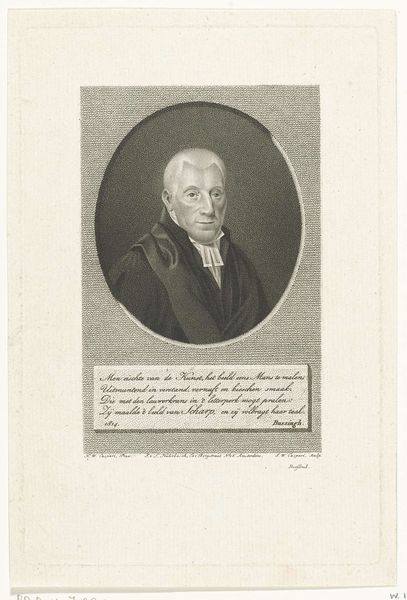
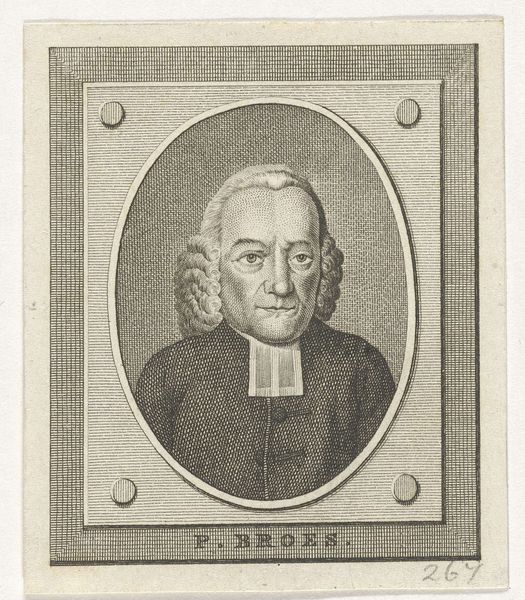
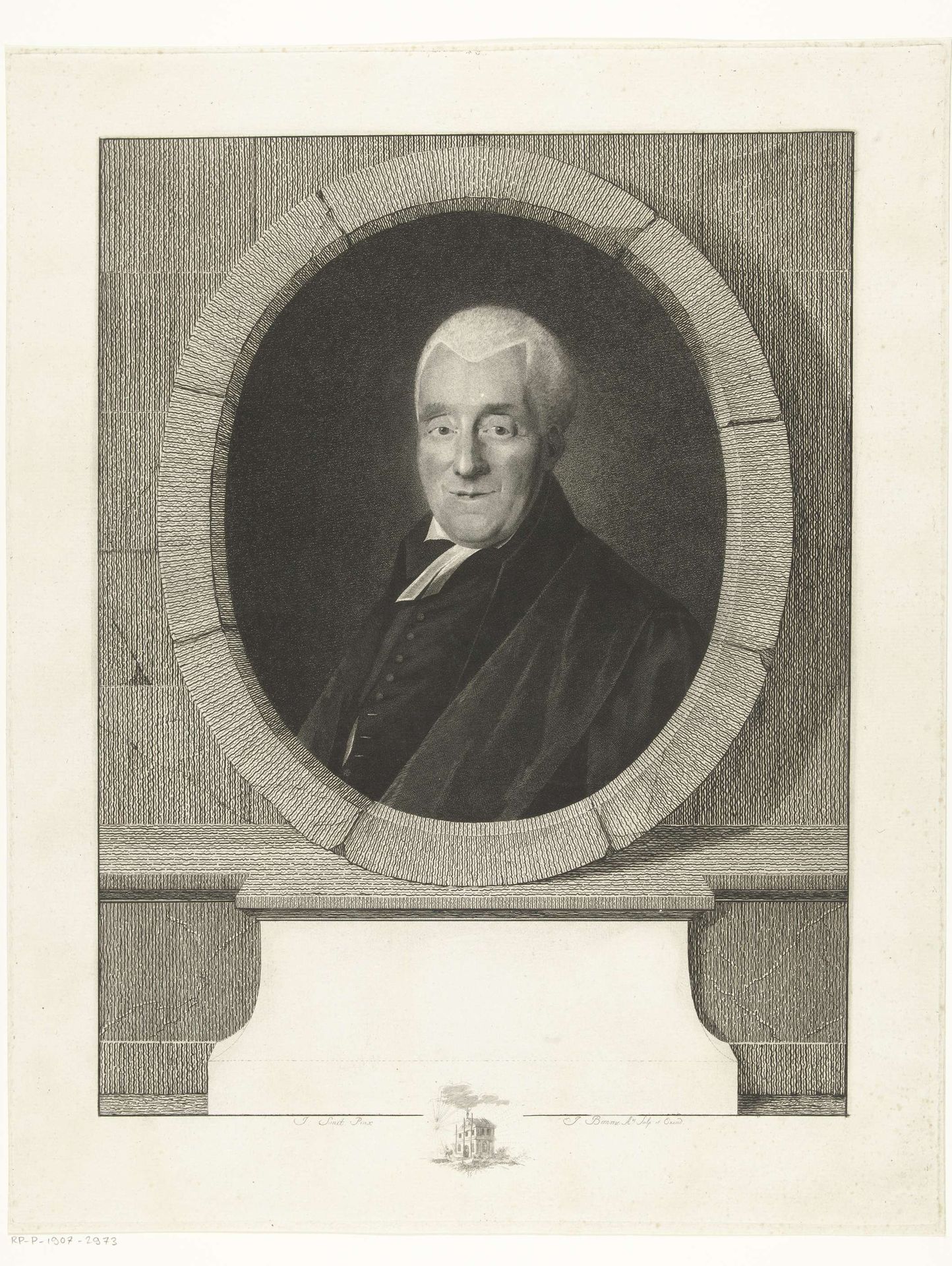
Joannes Bemme captured Jan Scharp at age 58 in this engraving. Framed within a stone oculus, Scharp's likeness is presented with a direct gaze. This oval frame, a motif echoing ancient Roman portraiture, evokes ideas of timelessness and authority. The oculus as a symbolic form resonates through history, from the Pantheon's open eye to Renaissance paintings. In each iteration, it serves as a window—onto the divine, the past, or, in this case, the individual’s soul. Here, the stone border contrasts with the softness of Scharp's expression, suggesting a tension between the immutable structure of societal roles and the fluid, human emotions contained within. The gaze, a powerful force, meets ours across the ages. It's a reminder of our shared humanity and the enduring quest to capture and preserve a moment in time. It speaks to the cyclical nature of representation, where the past continually informs the present, and the human spirit persists.
Portret van Jan Scharp op 58-jarige leeftijd after 1814

Joannes Bemme
1775 - 1841Location
RijksmuseumArtwork details
- Medium
- drawing, pencil
- Dimensions
- height 465 mm, width 365 mm
- Location
- Rijksmuseum
- Copyright
- Rijks Museum: Open Domain
Tags
portrait
drawing
neoclacissism
pencil
academic-art
realism
Comments
No comments
About this artwork
Joannes Bemme captured Jan Scharp at age 58 in this engraving. Framed within a stone oculus, Scharp's likeness is presented with a direct gaze. This oval frame, a motif echoing ancient Roman portraiture, evokes ideas of timelessness and authority. The oculus as a symbolic form resonates through history, from the Pantheon's open eye to Renaissance paintings. In each iteration, it serves as a window—onto the divine, the past, or, in this case, the individual’s soul. Here, the stone border contrasts with the softness of Scharp's expression, suggesting a tension between the immutable structure of societal roles and the fluid, human emotions contained within. The gaze, a powerful force, meets ours across the ages. It's a reminder of our shared humanity and the enduring quest to capture and preserve a moment in time. It speaks to the cyclical nature of representation, where the past continually informs the present, and the human spirit persists.
Comments
No comments