About this artwork
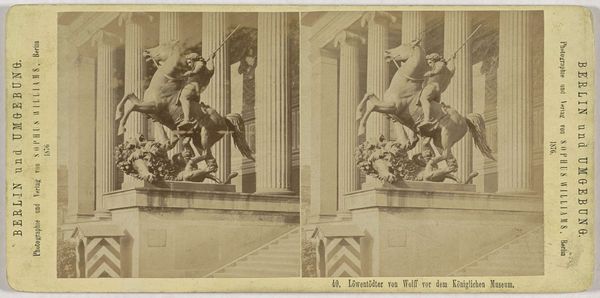
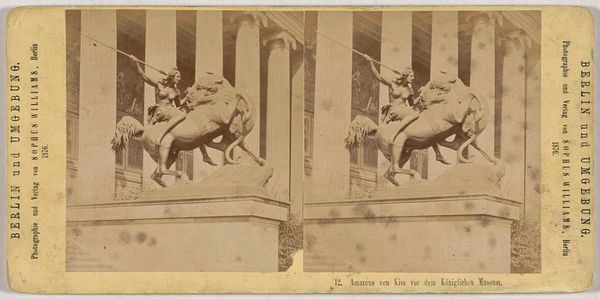
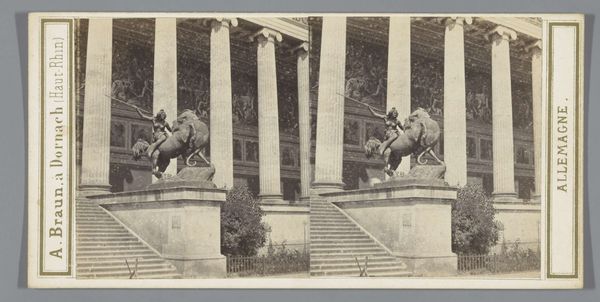
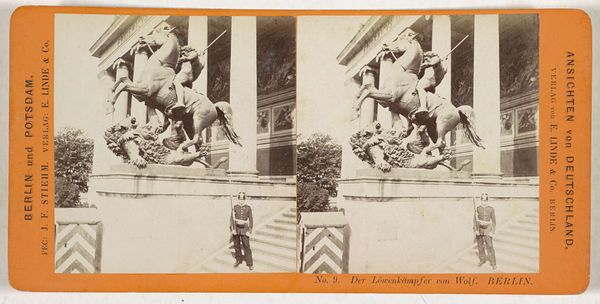
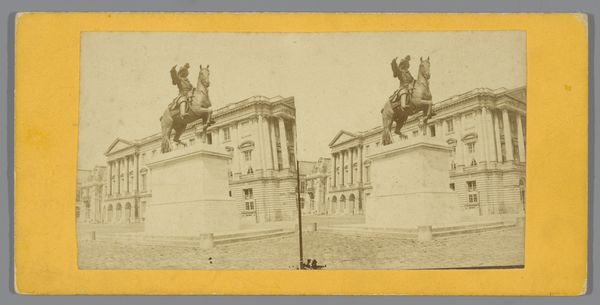
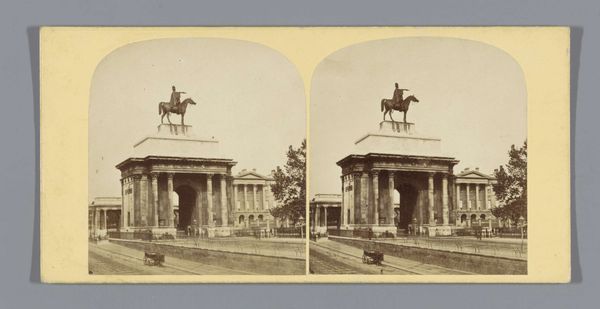
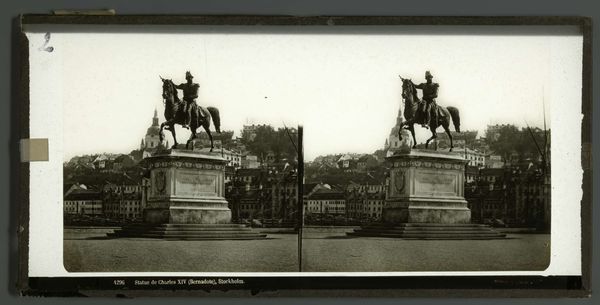
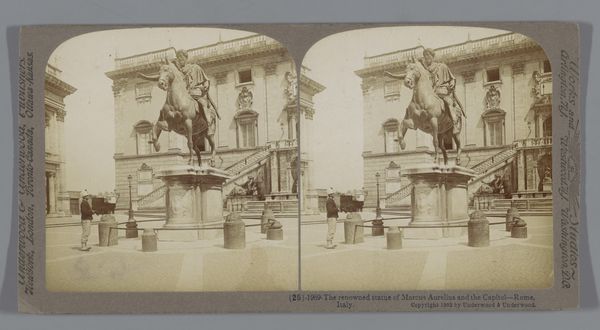
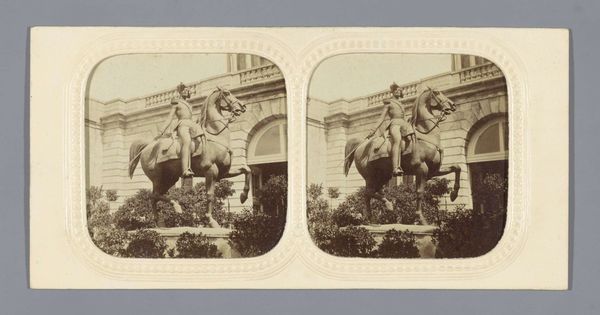
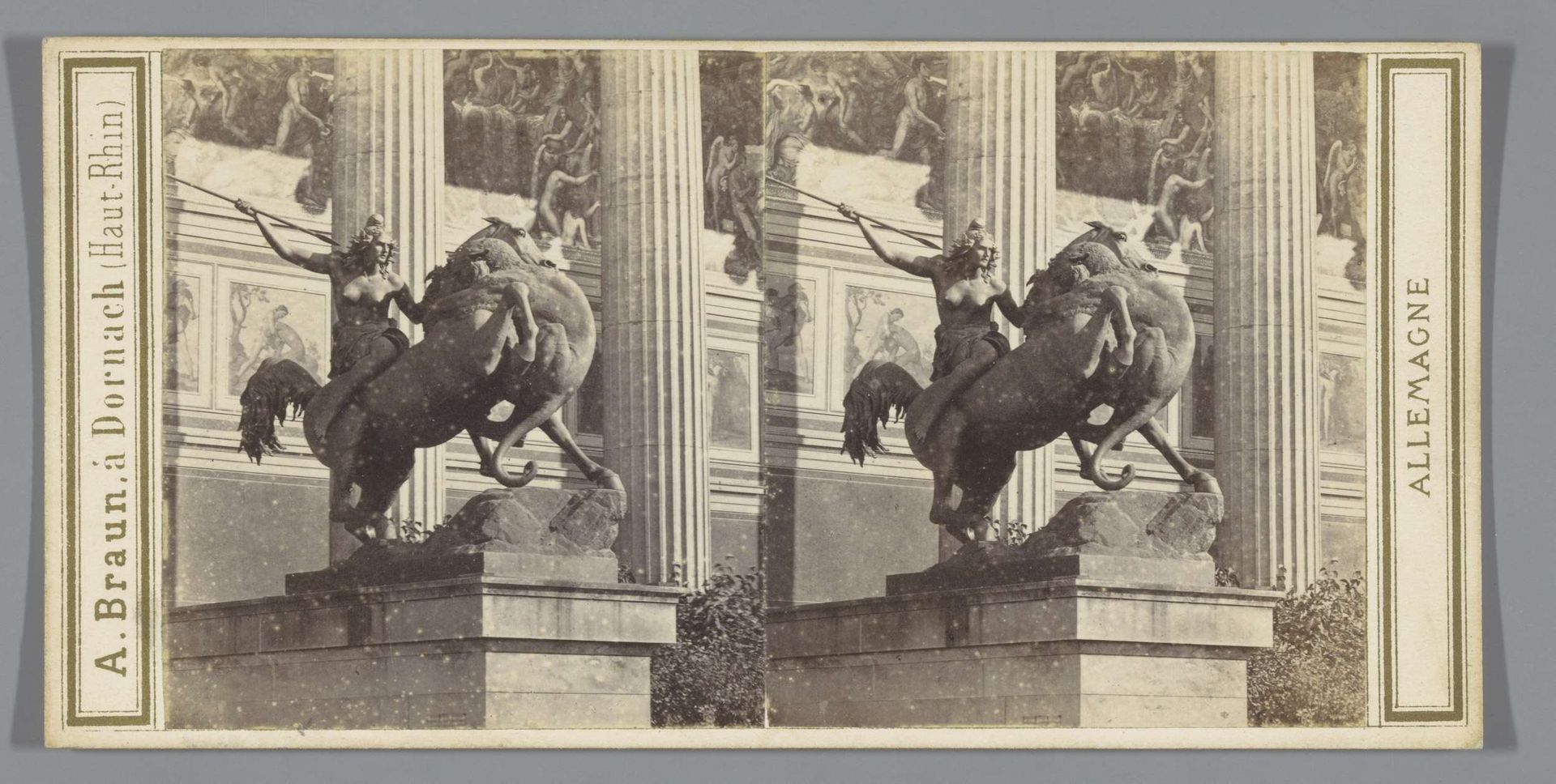
This photograph, an albumen print, captures the bronze sculpture, "Amazone zu Pferde" at the Altes Museum in Berlin. The image itself, produced by an anonymous photographer, highlights the relationship between art, commerce, and the burgeoning tourism industry. The process of albumen printing, popular in the mid-19th century, involved coating paper with egg white to create a glossy surface for capturing fine details. Here, the bronze sculptures are rendered with precision, emphasizing their classical form and dynamic pose. The photograph's materiality—the smooth albumen surface, the sepia tones—adds to its aesthetic appeal as a collectible memento. Consider the labor involved: from the skilled artisans who cast the sculptures to the photographer, to the workers who mass-produced these prints. The photograph transformed a unique artwork into a readily available commodity, blurring the lines between art, craft, and commercial enterprise. It democratized access to art while also commodifying it, reflecting the complex social and economic transformations of the era.
Amazone zu Pferde bij de entree van het Altes Museum in Berlijn
1860 - 1866

Artwork details
- Dimensions
- height 85 mm, width 175 mm
- Copyright
- Rijks Museum: Open Domain
Tags
Comments
Share your thoughts
About this artwork
This photograph, an albumen print, captures the bronze sculpture, "Amazone zu Pferde" at the Altes Museum in Berlin. The image itself, produced by an anonymous photographer, highlights the relationship between art, commerce, and the burgeoning tourism industry. The process of albumen printing, popular in the mid-19th century, involved coating paper with egg white to create a glossy surface for capturing fine details. Here, the bronze sculptures are rendered with precision, emphasizing their classical form and dynamic pose. The photograph's materiality—the smooth albumen surface, the sepia tones—adds to its aesthetic appeal as a collectible memento. Consider the labor involved: from the skilled artisans who cast the sculptures to the photographer, to the workers who mass-produced these prints. The photograph transformed a unique artwork into a readily available commodity, blurring the lines between art, craft, and commercial enterprise. It democratized access to art while also commodifying it, reflecting the complex social and economic transformations of the era.
Comments
Share your thoughts