About this artwork
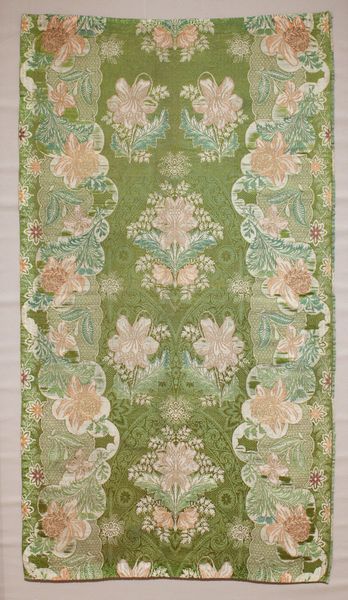
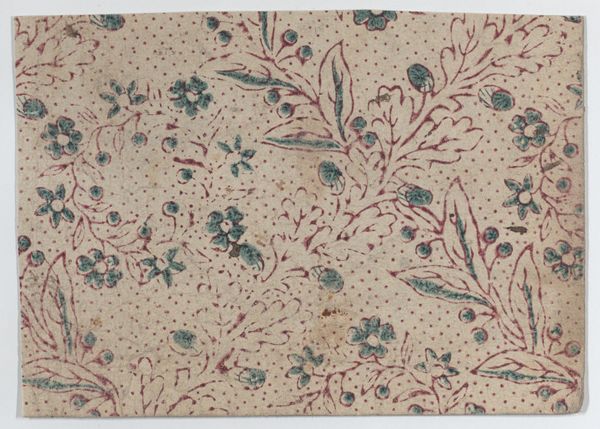
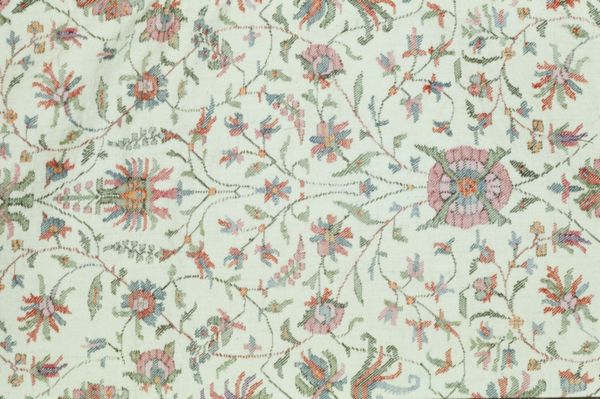
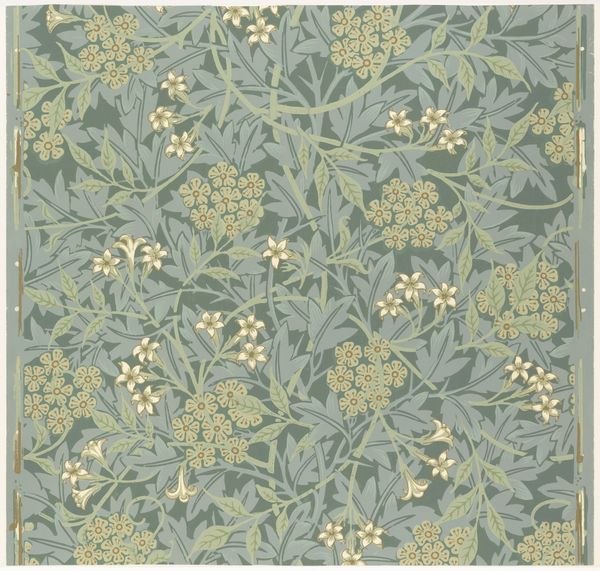
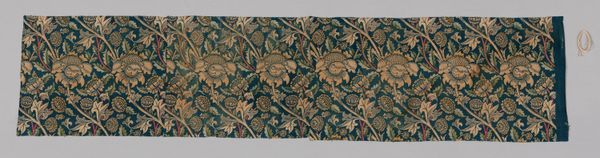
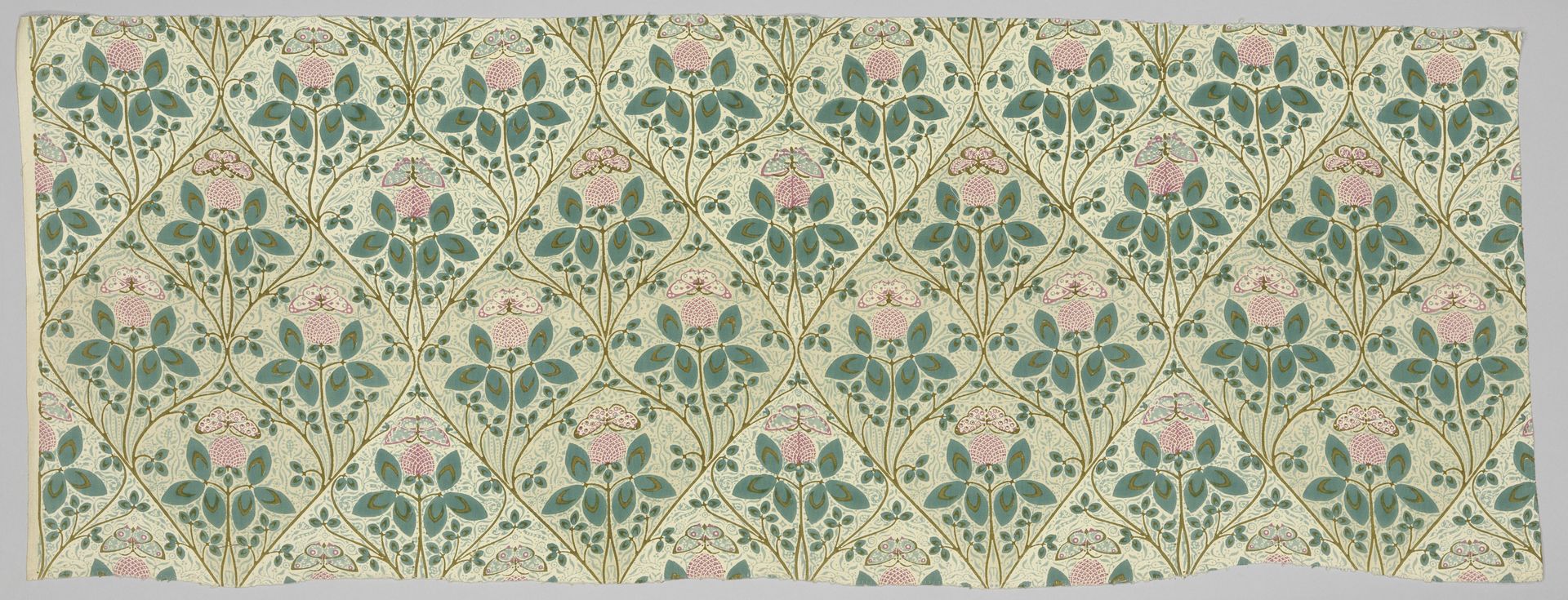
This fragment of printed cotton cretonne, featuring a clover and butterfly motif within pointed ovals, was designed by Theo Nieuwenhuis. The process involves printing, layering color and texture onto the fabric, much like building up layers in a painting. Look closely, and you can see the delicate balance between control and chance in the way the pattern repeats. The soft greens and pinks create a calming effect, but it's the subtle variations in each oval that catch my eye. It's like each one has its own little story to tell. Notice the details in the leaves, how they differ slightly from each other? It reminds me a bit of William Morris's designs, but with a lighter, more playful touch. Ultimately, it's a reminder that art is all about how we see and experience the world around us, open to interpretation and personal connection.
Fragment bedrukte cretonne met patroon van klaver met vlinder binnen spitsovalen
1900 - 1925

Theo Nieuwenhuis
1866 - 1951Location
RijksmuseumArtwork details
- Medium
- textile
- Dimensions
- height 45.0 cm, width 123.0 cm
- Location
- Rijksmuseum
- Copyright
- Rijks Museum: Open Domain
Tags
natural stone pattern
organic
art-nouveau
textile
fashion and textile design
geometric pattern
abstract pattern
organic pattern
repetition of pattern
pattern repetition
textile design
decorative-art
imprinted textile
layered pattern
Comments
Be the first to share your thoughts about this work.
About this artwork
This fragment of printed cotton cretonne, featuring a clover and butterfly motif within pointed ovals, was designed by Theo Nieuwenhuis. The process involves printing, layering color and texture onto the fabric, much like building up layers in a painting. Look closely, and you can see the delicate balance between control and chance in the way the pattern repeats. The soft greens and pinks create a calming effect, but it's the subtle variations in each oval that catch my eye. It's like each one has its own little story to tell. Notice the details in the leaves, how they differ slightly from each other? It reminds me a bit of William Morris's designs, but with a lighter, more playful touch. Ultimately, it's a reminder that art is all about how we see and experience the world around us, open to interpretation and personal connection.
Comments
Be the first to share your thoughts about this work.