1600 - 1610
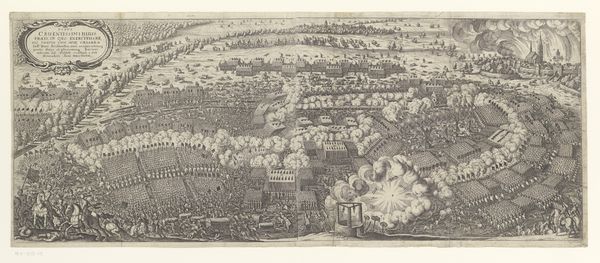
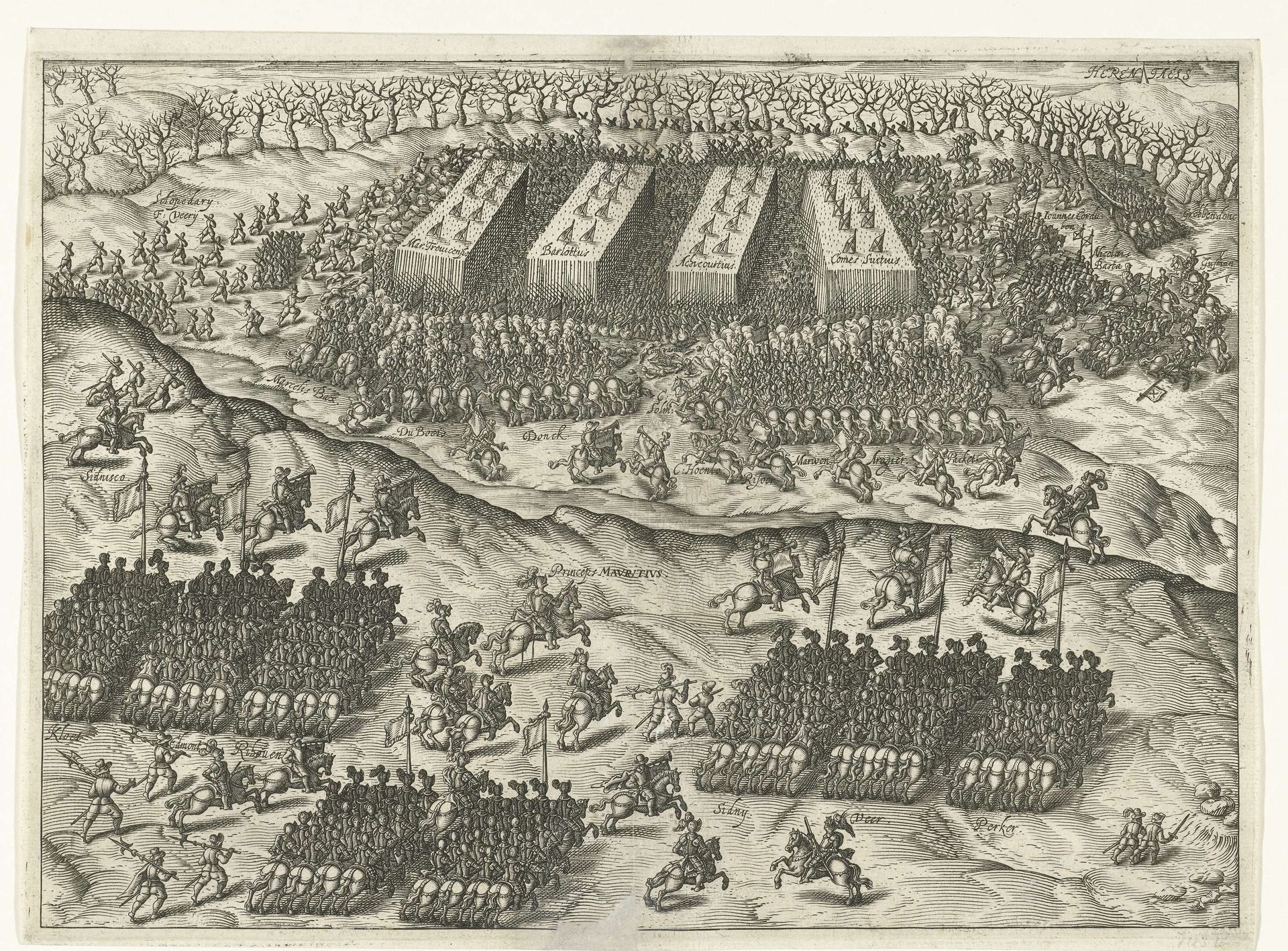
Slag bij Turnhout, 1597

Bartholomeus Willemsz. Dolendo
1572 - 1626Location
RijksmuseumListen to curator's interpretation
Curatorial notes
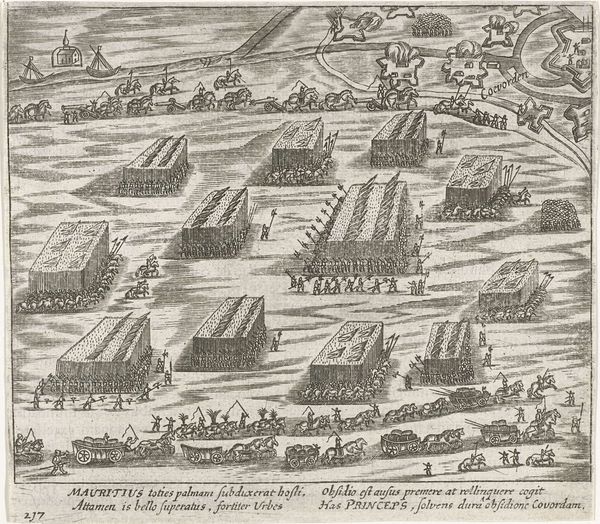
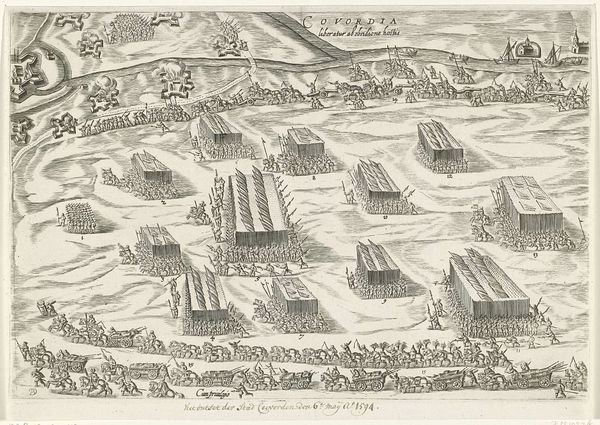
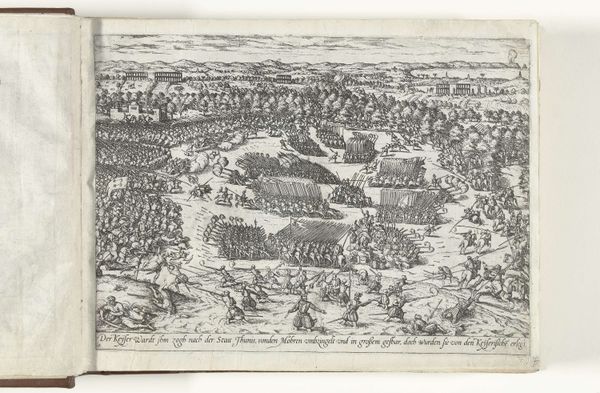
Editor: This print, titled "Slag bij Turnhout, 1597", was created by Bartholomeus Willemsz. Dolendo sometime between 1600 and 1610 using etching, engraving, pen, and ink. It depicts a battle scene...it’s quite detailed. How would you interpret this work within its historical context? Curator: Well, given my perspective, the 'Slag bij Turnhout' offers a fascinating lens through which to examine the politicized visual culture of the Dutch Revolt. How do you think it served a purpose beyond just documenting the event? Editor: I guess it could be used for propaganda, but that's just a guess. Curator: Exactly! Think about the power of printmaking at the time. This image, circulated widely, helped construct a narrative around the Dutch struggle for independence. What visual cues suggest a particular viewpoint or bias? Editor: Maybe the way the different armies are organized so neatly, the perfect shapes for each battalion… almost geometric. It feels very… curated. Curator: Good eye! The clear organization, the emphasis on the scale of the forces… it’s all carefully designed to project strength and order, contributing to a specific, perhaps idealized, image of the Dutch forces. Consider the role the Rijksmuseum plays now in showing this artwork and, as a consequence, in promoting that specific interpretation of history. Editor: That’s a perspective I hadn’t considered – the artwork actively shaping, or even skewing, how history is understood. So museums become places that shape historical memory and political identity, right? Curator: Precisely! And artworks like this engraving become powerful tools within those institutions. Editor: That's… a lot to think about. I will certainly have to reflect on what is behind the curation. Curator: I encourage you to always question what is being presented and, more importantly, what's omitted, whether in art or history.