About this artwork
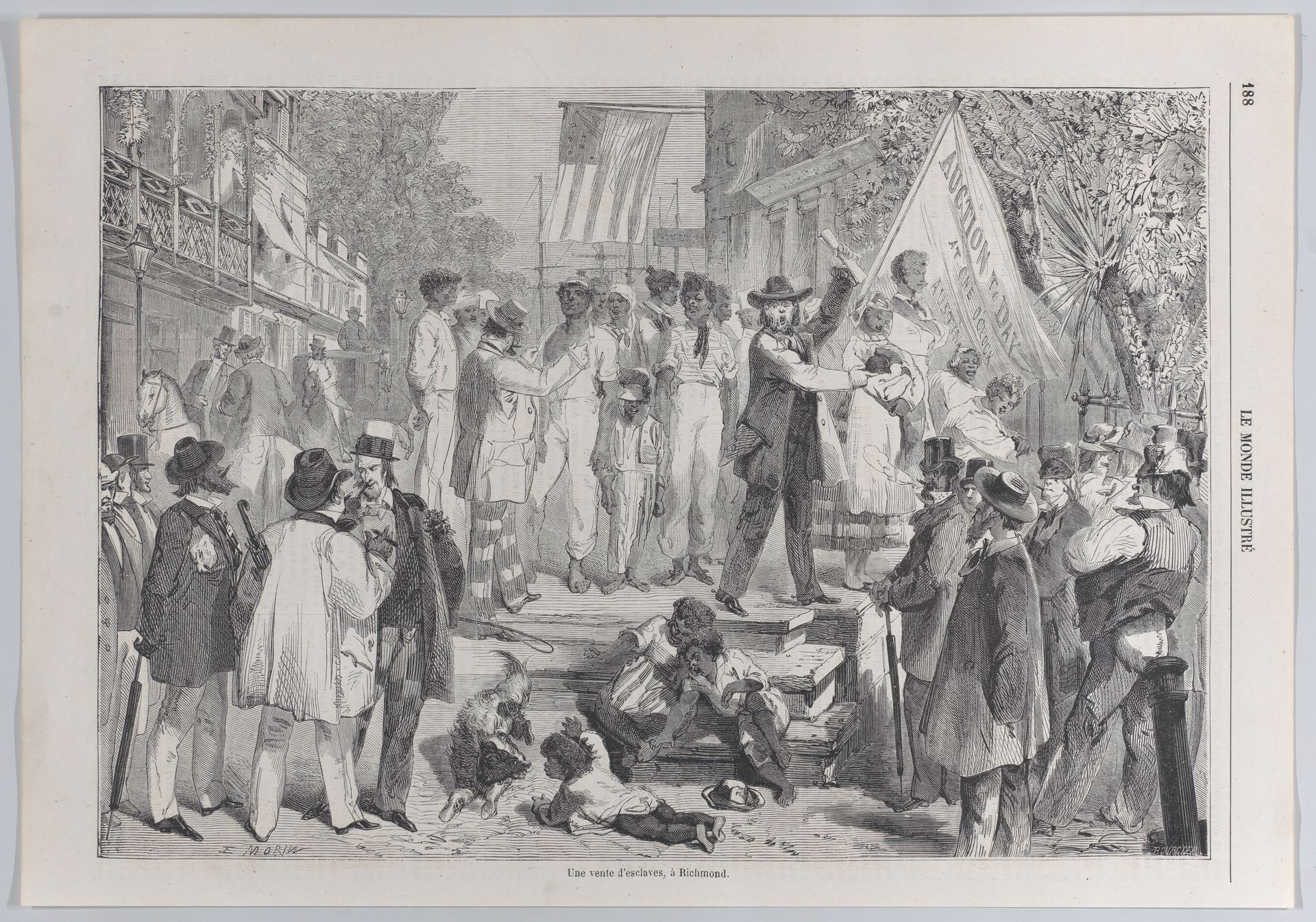
This print from "Le Monde Illustré" by Bourcier depicts an auction of enslaved people in Richmond. Created during a time of intense social and political upheaval in America, this piece offers a glimpse into the brutal reality of slavery. Bourcier, a French artist, captures the dehumanization inherent in the practice, showing families torn apart and individuals reduced to commodities. The presence of the American flag in the background adds a layer of irony, highlighting the hypocrisy of a nation that professed freedom while perpetuating slavery. What strikes me most is the emotional toll etched on the faces of the enslaved, their expressions a mixture of fear, resignation, and quiet defiance. The image forces us to confront the uncomfortable truths about our history and the legacy of racial injustice that continues to shape our present. It serves as a stark reminder of the human cost of slavery and the urgent need for continued dialogue and action towards a more equitable future.
An Auction of Enslaved People in Richmond, from "Le Monde Illustré"
1861


Artwork details
- Dimensions
- Sheet: 10 1/16 × 14 1/2 in. (25.5 × 36.8 cm) Image: 8 3/4 × 12 5/8 in. (22.2 × 32 cm)
- Location
- Metropolitan Museum of Art, New York, NY
- Copyright
- Public Domain
Comments
Share your thoughts
About this artwork
This print from "Le Monde Illustré" by Bourcier depicts an auction of enslaved people in Richmond. Created during a time of intense social and political upheaval in America, this piece offers a glimpse into the brutal reality of slavery. Bourcier, a French artist, captures the dehumanization inherent in the practice, showing families torn apart and individuals reduced to commodities. The presence of the American flag in the background adds a layer of irony, highlighting the hypocrisy of a nation that professed freedom while perpetuating slavery. What strikes me most is the emotional toll etched on the faces of the enslaved, their expressions a mixture of fear, resignation, and quiet defiance. The image forces us to confront the uncomfortable truths about our history and the legacy of racial injustice that continues to shape our present. It serves as a stark reminder of the human cost of slavery and the urgent need for continued dialogue and action towards a more equitable future.
Comments
Share your thoughts