About this artwork
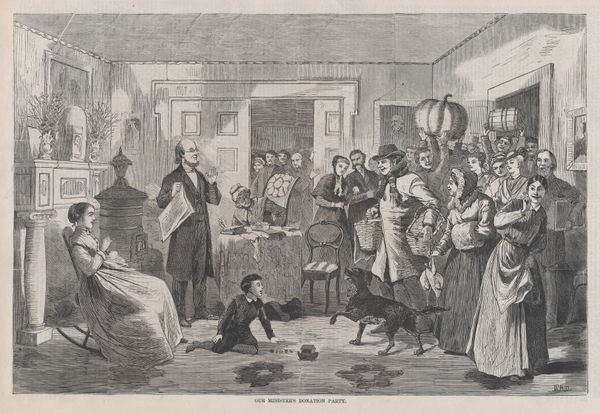
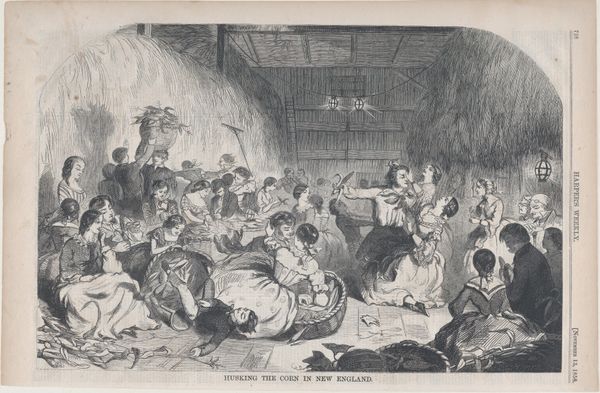
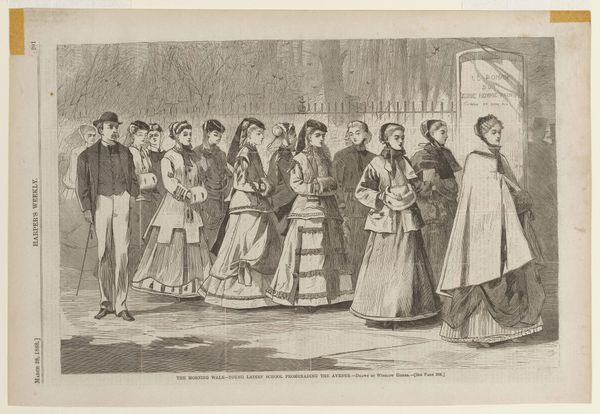
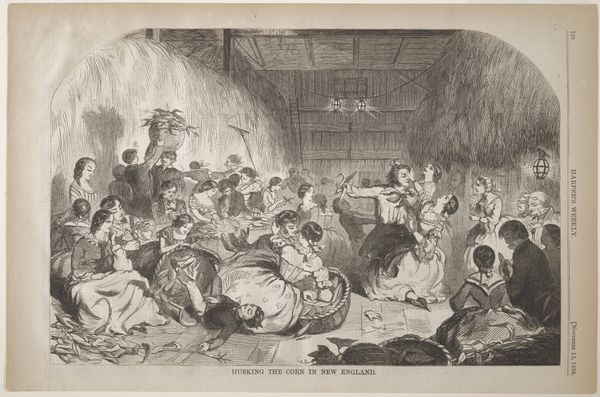
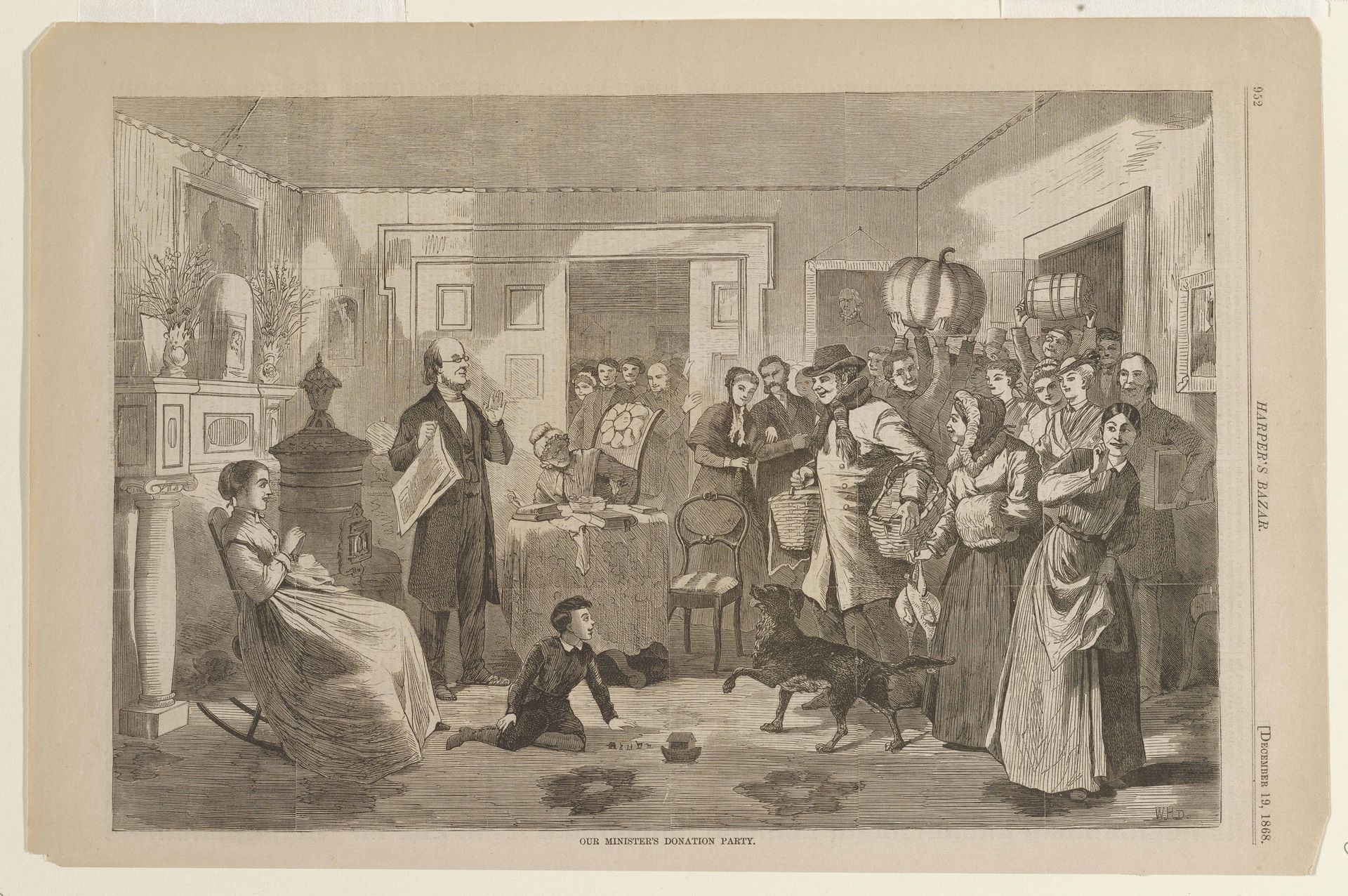
Winslow Homer created "Our Minister's Donation Party," an engraving, around the year 1869. The composition is carefully organized, dividing the scene into distinct spatial zones, and each zone highlights different aspects of community life. Homer employs a complex interplay of lines, forms, and textures to depict the scene. Sharp, precise lines define the figures, while softer textures suggest the material of clothing and domestic interiors. This contrast creates a dynamic visual field, where the eye is led through a narrative rich in cultural and social meaning. The spatial arrangement within the engraving functions as a semiotic system, reflecting the social hierarchy and the interactions within the community. The structured composition invites us to consider how social roles and communal values are represented through visual signs, prompting us to decipher the cultural codes embedded in Homer's detailed depiction of rural life. In this way the print prompts us to look at the way rural America was changing during the Reconstruction era.
Our Minister's Donation Party 1868


Artwork details
- Medium
- drawing, print, woodcut, pen, wood-engraving, engraving
- Dimensions
- 9 1/8 x 13 5/8 in. (23.2 x 34.6 cm)
- Location
- Minneapolis Institute of Art
- Copyright
- Public Domain
Tags
drawing
woodcut
united-states
pen
genre-painting
history-painting
wood-engraving
engraving
realism
Comments
No comments
About this artwork
Winslow Homer created "Our Minister's Donation Party," an engraving, around the year 1869. The composition is carefully organized, dividing the scene into distinct spatial zones, and each zone highlights different aspects of community life. Homer employs a complex interplay of lines, forms, and textures to depict the scene. Sharp, precise lines define the figures, while softer textures suggest the material of clothing and domestic interiors. This contrast creates a dynamic visual field, where the eye is led through a narrative rich in cultural and social meaning. The spatial arrangement within the engraving functions as a semiotic system, reflecting the social hierarchy and the interactions within the community. The structured composition invites us to consider how social roles and communal values are represented through visual signs, prompting us to decipher the cultural codes embedded in Homer's detailed depiction of rural life. In this way the print prompts us to look at the way rural America was changing during the Reconstruction era.
Comments
No comments