About this artwork
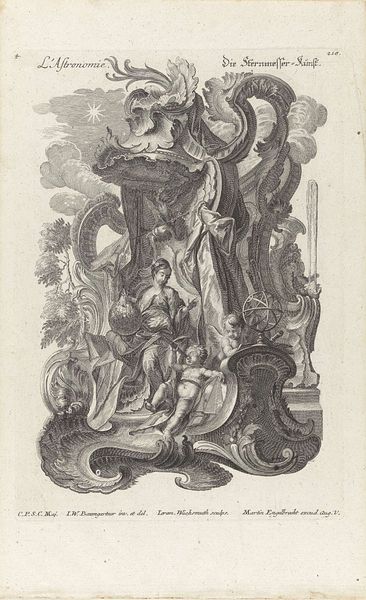
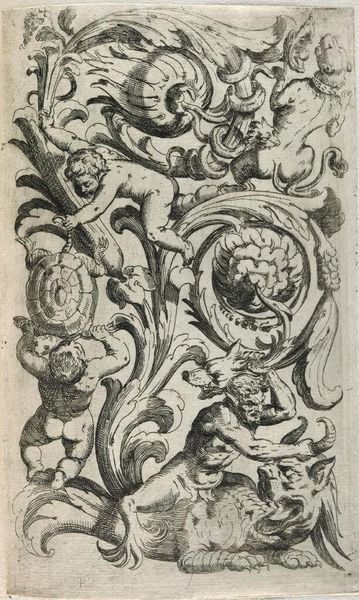
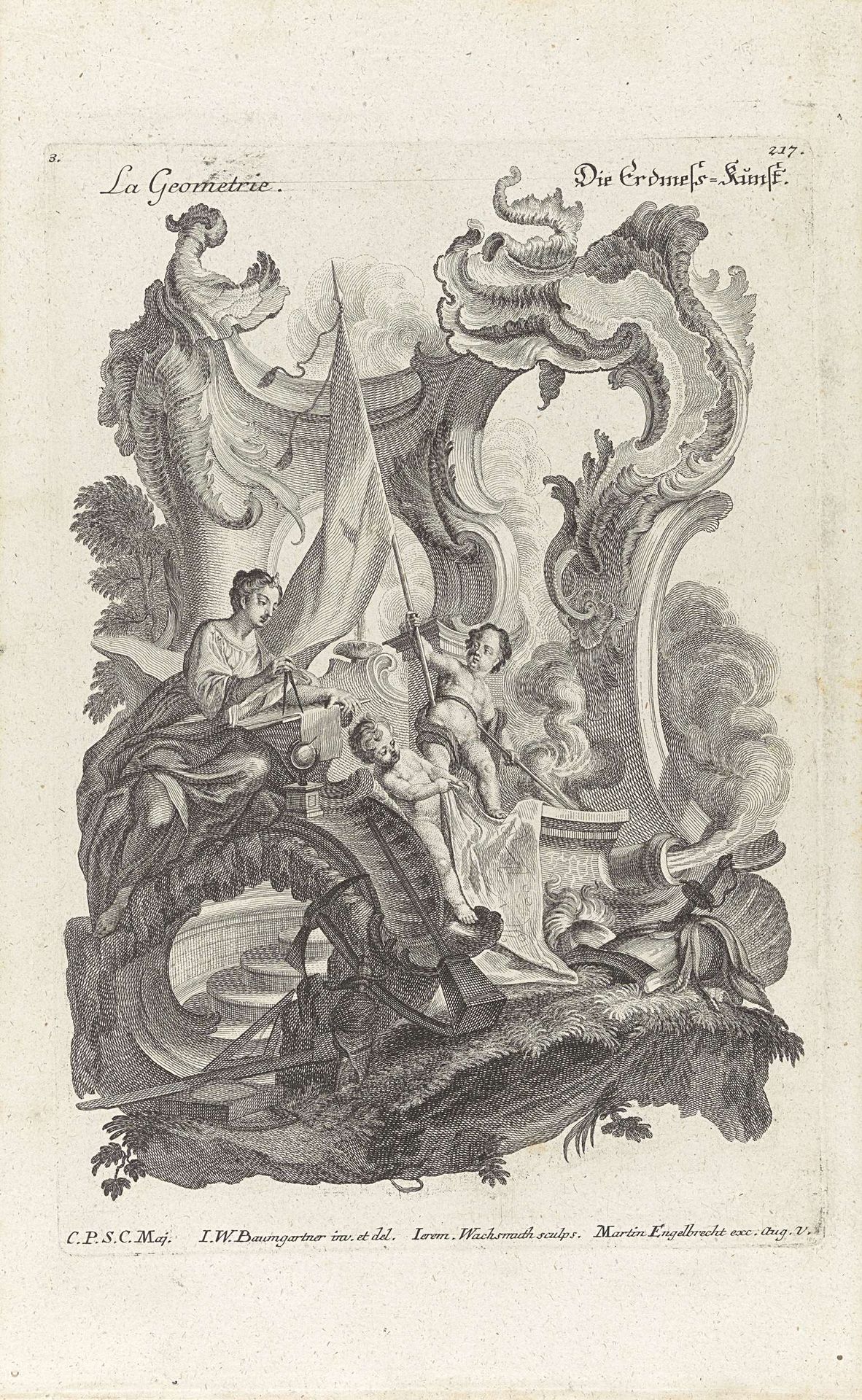
Jeremias Wachsmuth created this print of rocaille with the personification of geometry. It is currently in the Rijksmuseum collection. Geometry, as imagined here, is hardly separate from the social and institutional forces shaping artistic production in 18th-century Europe. The print, made in Germany, presents geometry allegorically, complete with putti, scrolls, and cartouches. Look closely, and you’ll notice the artist gives geometry the face of a woman. She holds a compass and looks at a globe. This iconography signals the importance of geometry in the education of artists and architects in the eighteenth century. Art academies across Europe, including the German-speaking lands, trained students in geometry as a foundational skill for representing the world accurately. The study of prints like this, along with archival research into the history of art education, can tell us a great deal about the social function of art at a particular historical moment.
Rocaille met de personificatie van de Meetkunde (Geometrie)
1719 - 1749

Jeremias Wachsmuth
1712 - 1771Location
RijksmuseumArtwork details
- Medium
- print, engraving
- Dimensions
- height 282 mm, width 200 mm
- Location
- Rijksmuseum
- Copyright
- Rijks Museum: Open Domain
Tags
Comments
Share your thoughts
About this artwork
Jeremias Wachsmuth created this print of rocaille with the personification of geometry. It is currently in the Rijksmuseum collection. Geometry, as imagined here, is hardly separate from the social and institutional forces shaping artistic production in 18th-century Europe. The print, made in Germany, presents geometry allegorically, complete with putti, scrolls, and cartouches. Look closely, and you’ll notice the artist gives geometry the face of a woman. She holds a compass and looks at a globe. This iconography signals the importance of geometry in the education of artists and architects in the eighteenth century. Art academies across Europe, including the German-speaking lands, trained students in geometry as a foundational skill for representing the world accurately. The study of prints like this, along with archival research into the history of art education, can tell us a great deal about the social function of art at a particular historical moment.
Comments
Share your thoughts