About this artwork
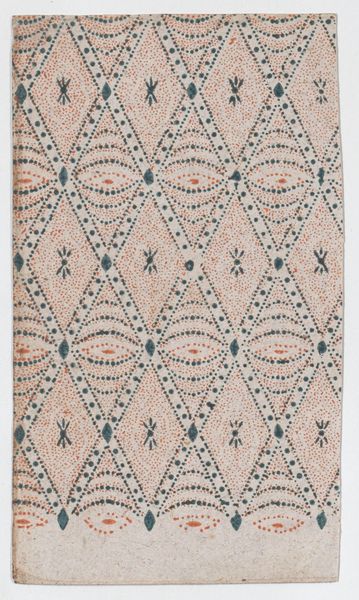
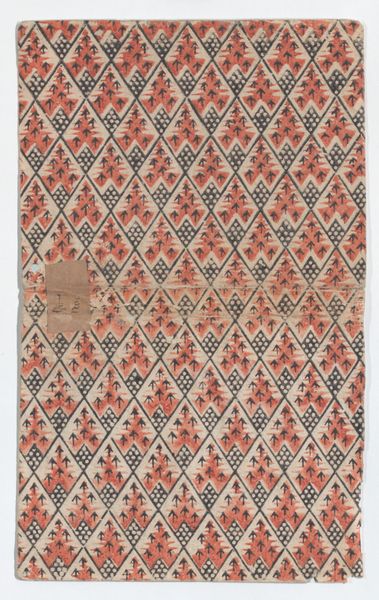
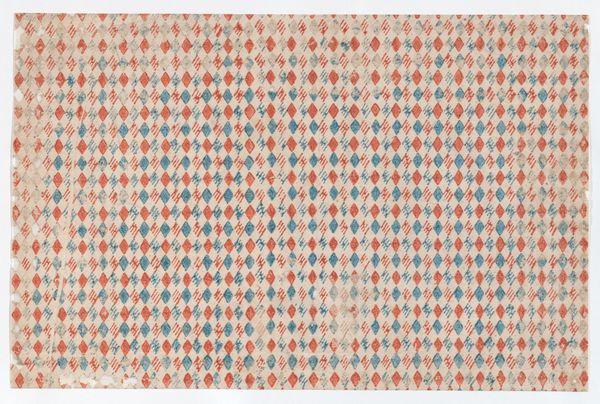
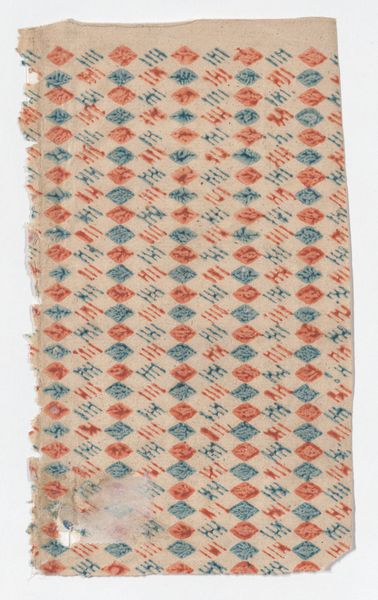
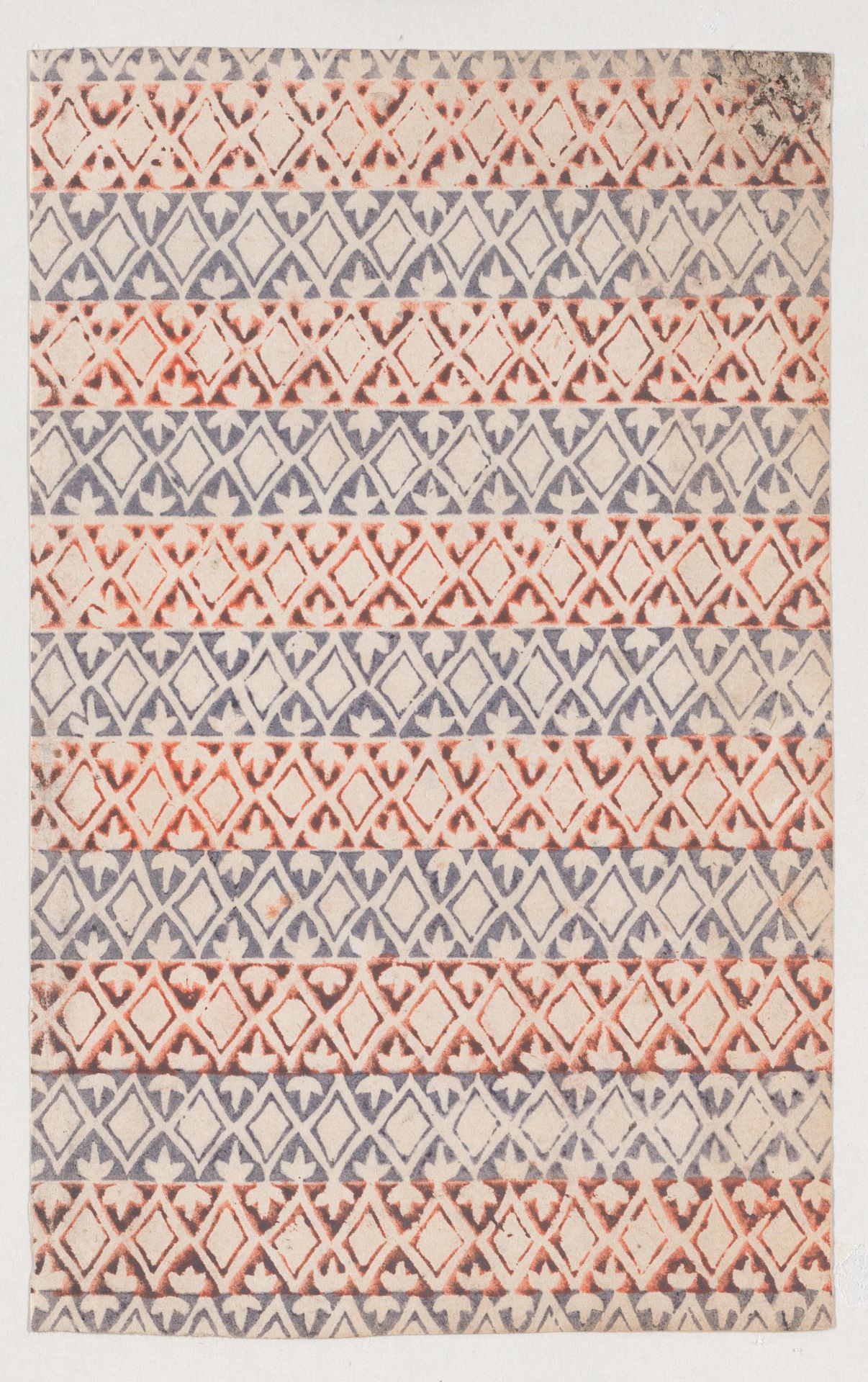
This sheet with an overall pattern of diamond shapes was made by an anonymous artist. The visual experience of this piece is dominated by a repetitive sequence of geometric forms arranged in horizontal registers. The diamond motif, rendered in alternating rows of muted red and blue-grey, creates a structured yet visually dynamic surface. The composition invites a structuralist analysis. The regular repetition of shapes and colors establishes a binary opposition, a fundamental element of structuralist thought. Each diamond can be seen as a sign, its meaning derived from its relationship to the other signs within the pattern. The alternation of colors reinforces this, setting up a system of differences that define the work's aesthetic. The artwork seems to challenge fixed meanings. The subtle irregularities in the hand-printed diamonds destabilize any sense of perfect order, hinting at the inherent imperfections within any system. This tension between order and disorder highlights how the artwork's formal qualities extend into a broader engagement with cultural codes and philosophical ideas about structure.
Sheet with overall pattern of diamond shapes
1800 - 1900


Artwork details
- Medium
- Dimensions
- Sheet: 5 15/16 × 3 3/4 in. (15.1 × 9.5 cm)
- Location
- Metropolitan Museum of Art, New York, NY
- Copyright
- Public Domain
Tags
fashion and textile design
pattern design
organic pattern
geometric
repetition of pattern
vertical pattern
regular pattern
pattern repetition
textile design
imprinted textile
layered pattern
Comments
Be the first to share your thoughts about this work.
About this artwork
This sheet with an overall pattern of diamond shapes was made by an anonymous artist. The visual experience of this piece is dominated by a repetitive sequence of geometric forms arranged in horizontal registers. The diamond motif, rendered in alternating rows of muted red and blue-grey, creates a structured yet visually dynamic surface. The composition invites a structuralist analysis. The regular repetition of shapes and colors establishes a binary opposition, a fundamental element of structuralist thought. Each diamond can be seen as a sign, its meaning derived from its relationship to the other signs within the pattern. The alternation of colors reinforces this, setting up a system of differences that define the work's aesthetic. The artwork seems to challenge fixed meanings. The subtle irregularities in the hand-printed diamonds destabilize any sense of perfect order, hinting at the inherent imperfections within any system. This tension between order and disorder highlights how the artwork's formal qualities extend into a broader engagement with cultural codes and philosophical ideas about structure.
Comments
Be the first to share your thoughts about this work.