before 1585
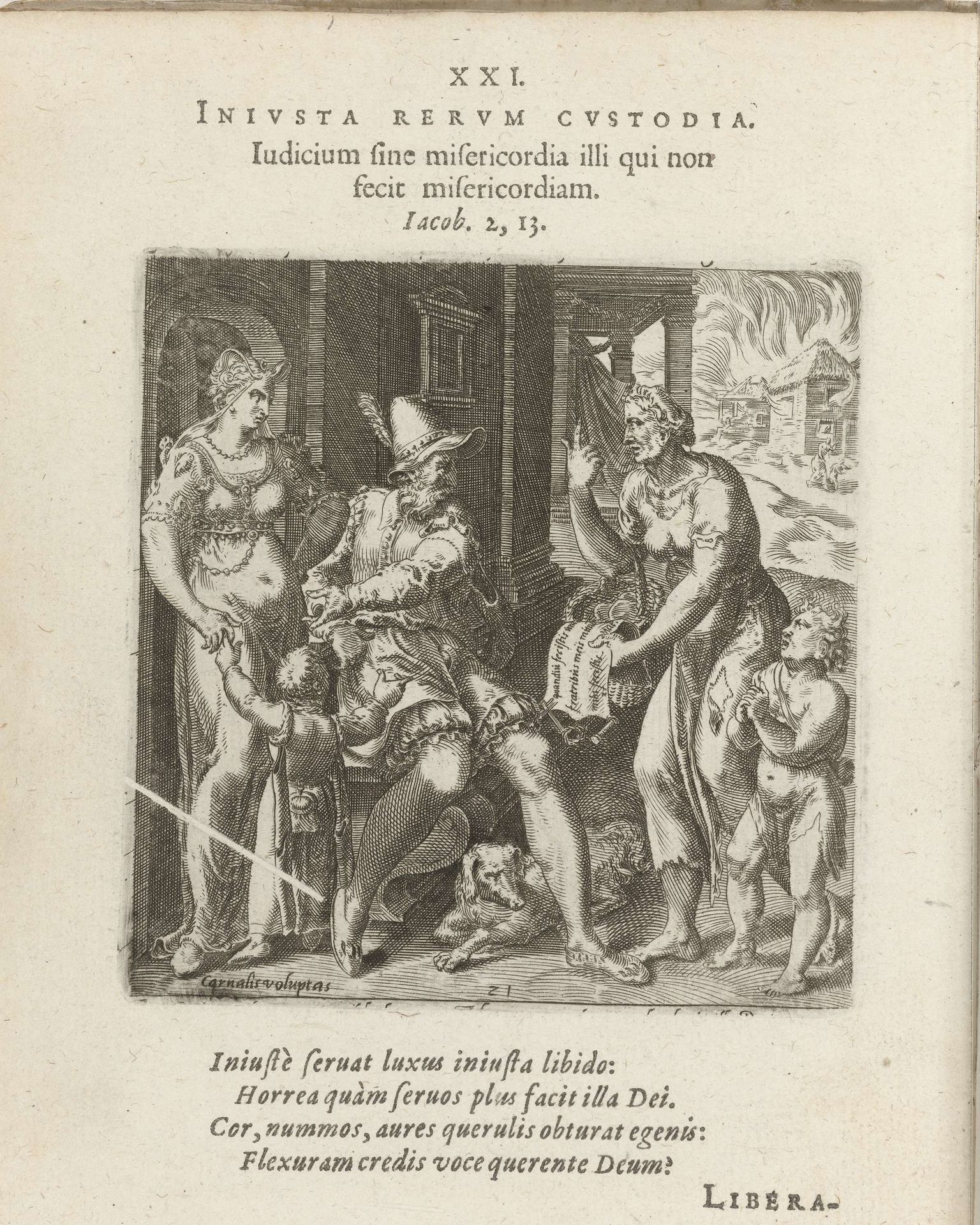
The abusive retention of goods

Wierix
1550 - 1620Location
RijksmuseumListen to curator's interpretation
Curatorial notes
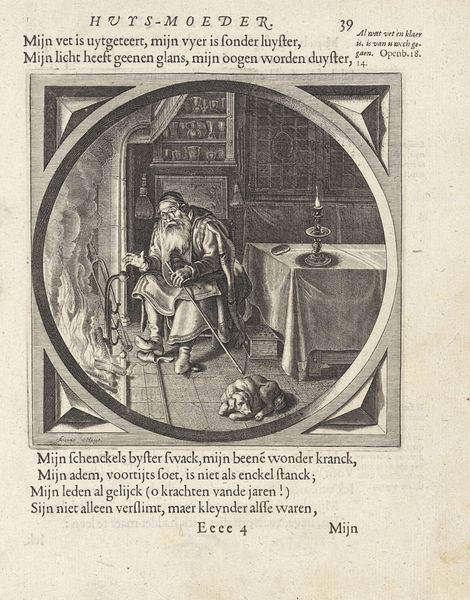
This engraving, made by Wierix around the turn of the 17th century, uses stark imagery to tackle issues of social injustice. At its heart, the artwork presents a critique of wealth accumulation in the face of poverty. The image visually contrasts the opulence of a wealthy household with the destitution of the poor, whose homes are burning in the background. This juxtaposition is a powerful indictment of the social and economic disparities prevalent in the Netherlands at the time. The choice of biblical text, referencing a judgement without mercy, drives home the idea that wealth without compassion is a sin. Such art often served a didactic purpose, aiming to critique the excesses of the wealthy merchant class in a rapidly changing society. To fully understand the artwork’s message, scholars delve into period texts such as religious sermons, moral treatises, and economic reports. Art like this reflects the era's anxieties about social inequality and the moral responsibilities of affluence.