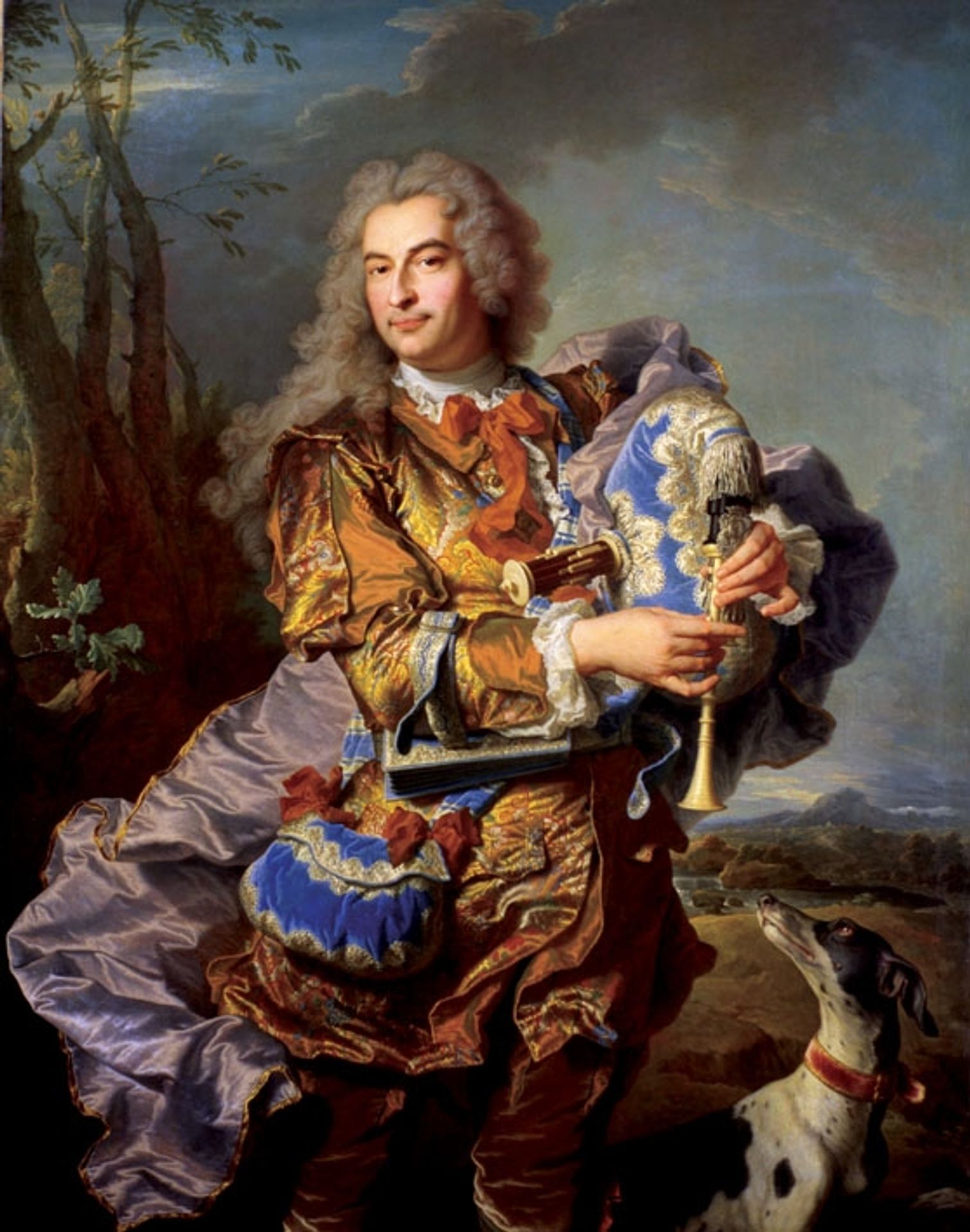
1738
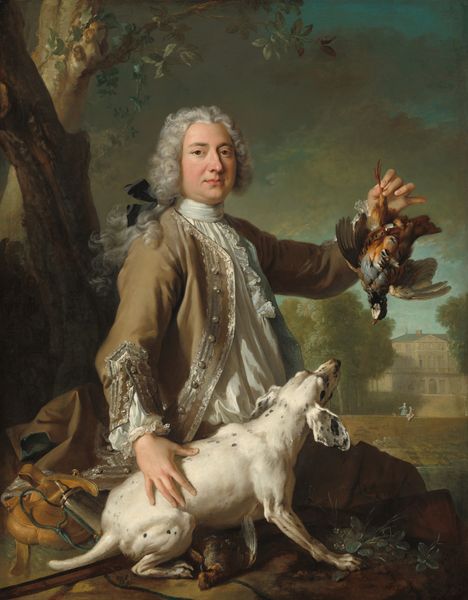
Gueidan

Hyacinthe Rigaud
1659 - 1743Location
Musée Granet, Aix-en-Provence, FranceListen to curator's interpretation
Curatorial notes
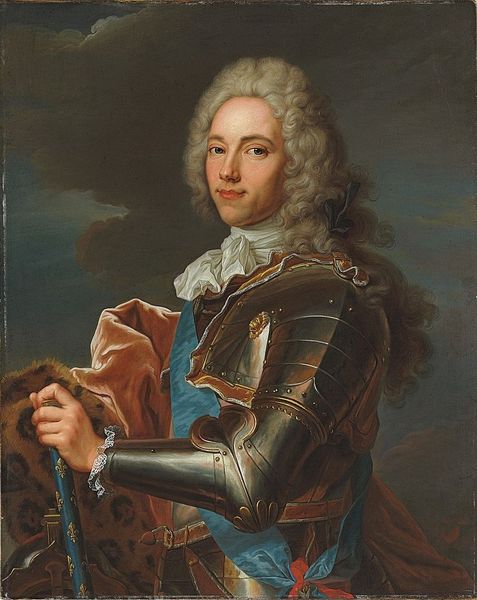
Hyacinthe Rigaud painted this portrait of Gueidan, immortalizing a member of the French aristocracy amidst the backdrop of what seems to be his land. It is a window into the world of privilege during the height of the French monarchy. This painting tells us so much about identity and status in the 18th century, where clothing, leisure, and even the presence of a loyal dog, were markers of social position. A bagpipe suggests an appreciation for culture and the arts, signaling refined sensibilities. But it is also telling of the complex relationship between art and power. Rigaud, as a portraitist of the elite, was instrumental in shaping the image of the ruling class, yet he also captured the subtle vulnerabilities and performative aspects of their identities. How might we understand this portrait as more than just a representation of wealth and status, but also as a reflection on the construction of identity?