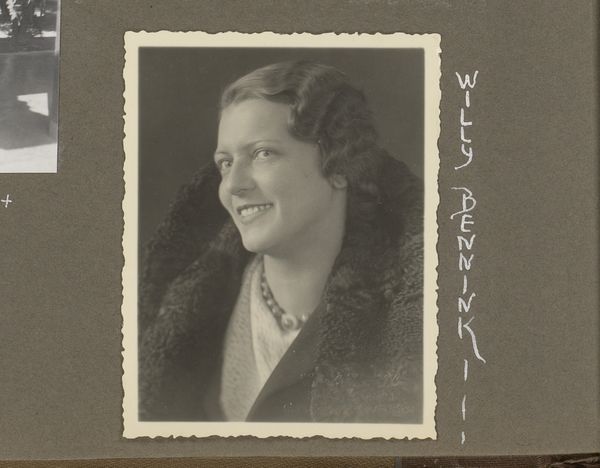
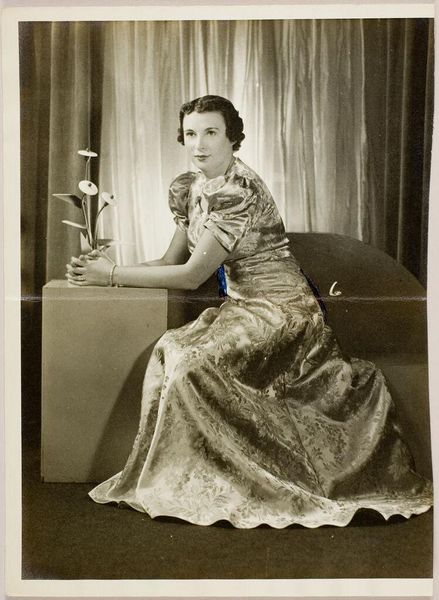
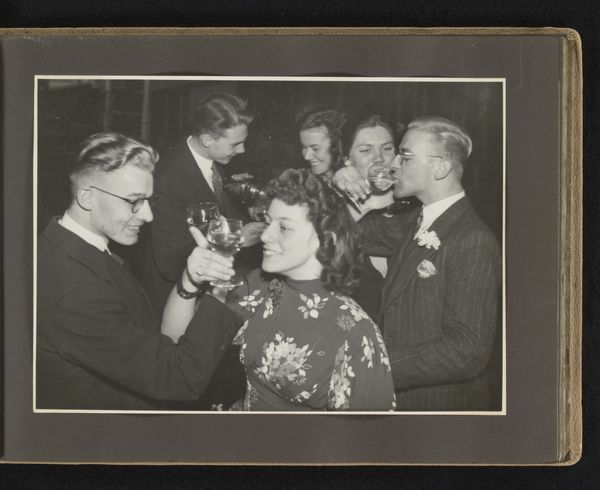
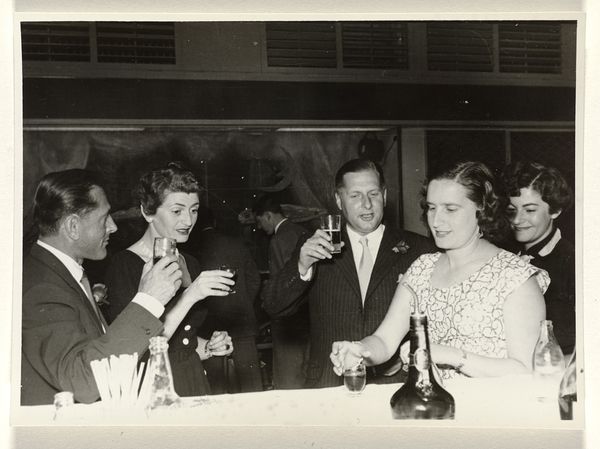
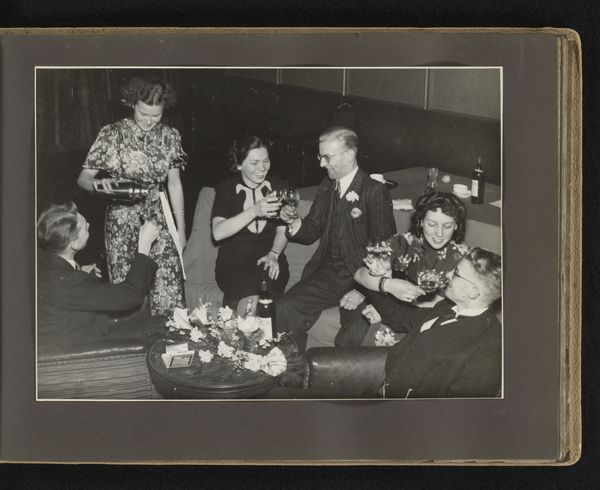
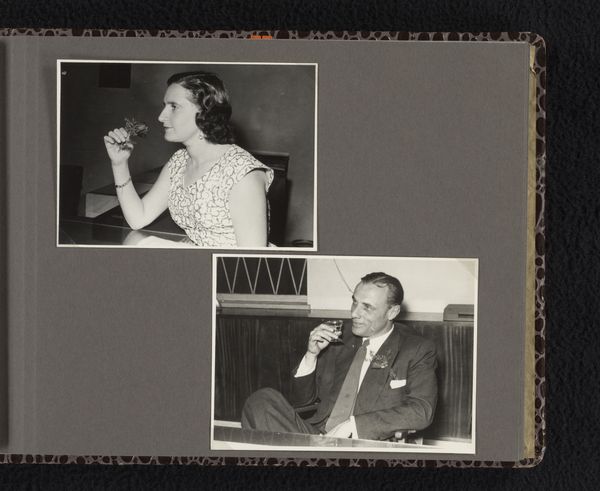
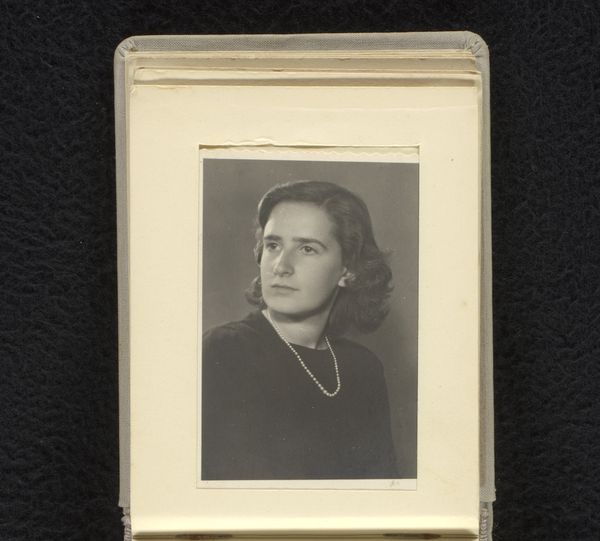
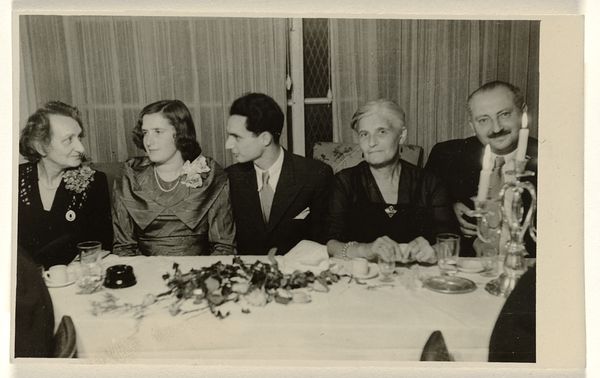
Isabel Wachenheimer in mouwloze jurk met slangenmotief, en profiel met bloem in de hand, tijdens een receptie gedurende haar werkzaamheden voor KLM 1956 - 1973

photography
portrait
still-life-photography
postmodernism
photography
historical photography
realism
Dimensions: height 85 mm, width 120 mm
Copyright: Rijks Museum: Open Domain
This photograph shows Isabel Wachenheimer at a KLM reception, captured by an anonymous photographer. Note the snake motif on her dress, a symbol that has slithered through art history. The serpent, often associated with transformation and primal energy, appears as early as ancient Near Eastern art and is a symbol of healing and medicine, seen on the Rod of Asclepius. Yet, it simultaneously embodies temptation and hidden knowledge, famously in the Garden of Eden. This duality continues to fascinate. The snake’s cyclical shedding of skin mirrors themes of rebirth and renewal, reflecting humanity's enduring fascination with the mysteries of life and death. In modern fashion, the serpent motif might suggest empowerment or allure, a far cry from its ancient associations, but still resonant with the subconscious. It’s this very persistence and evolution of symbols that reveal our collective memory, showing how the past continually resurfaces and is reinterpreted in the present.
Comments
No comments
Be the first to comment and join the conversation on the ultimate creative platform.
 React
React Comment