About this artwork
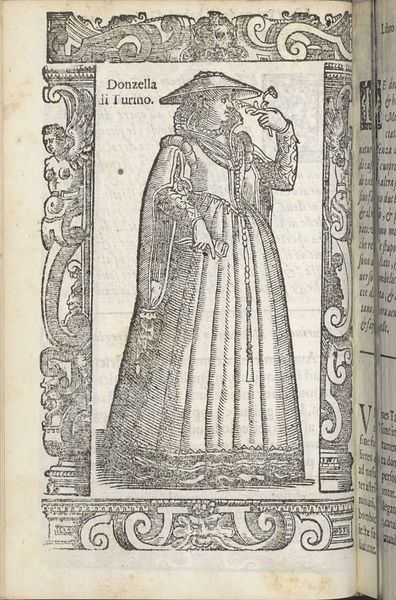
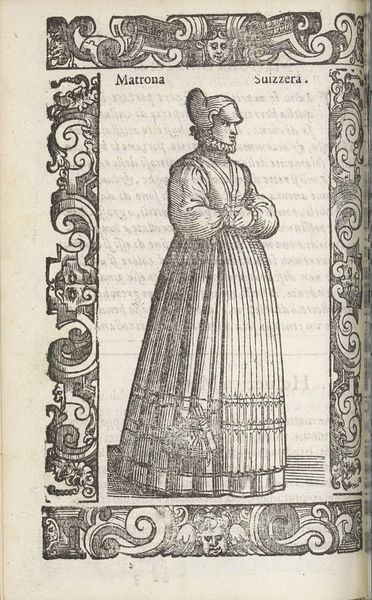
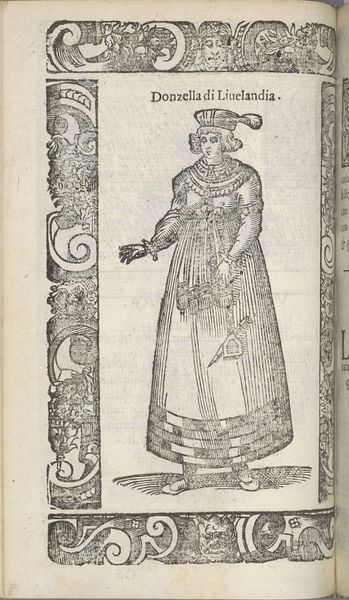
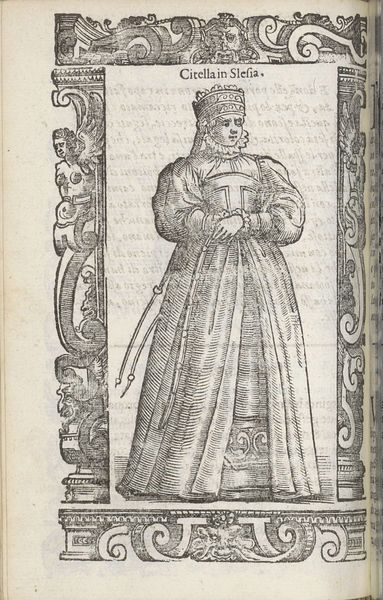
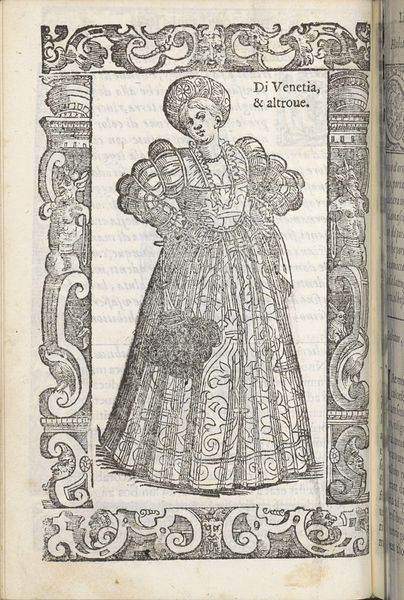
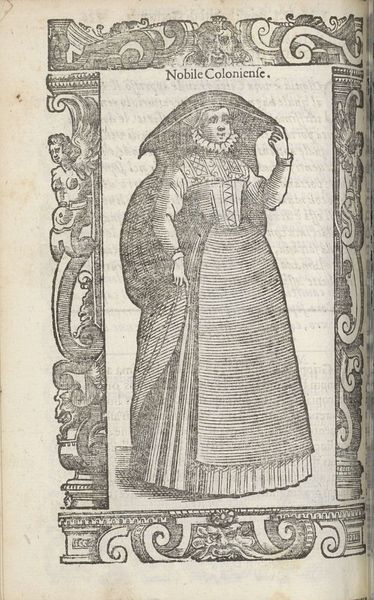
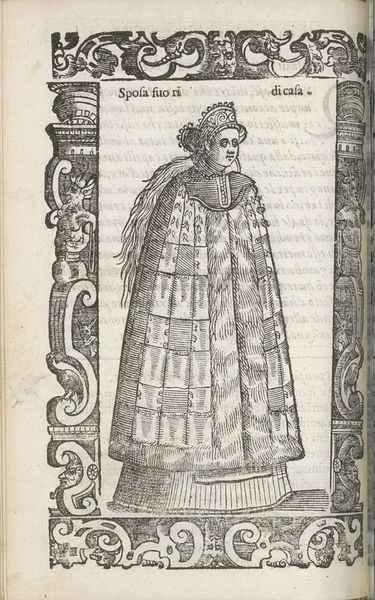
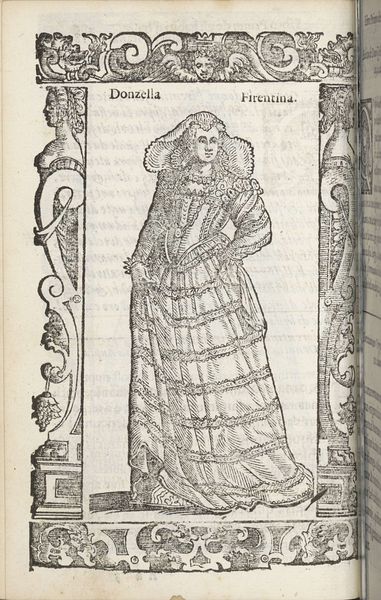
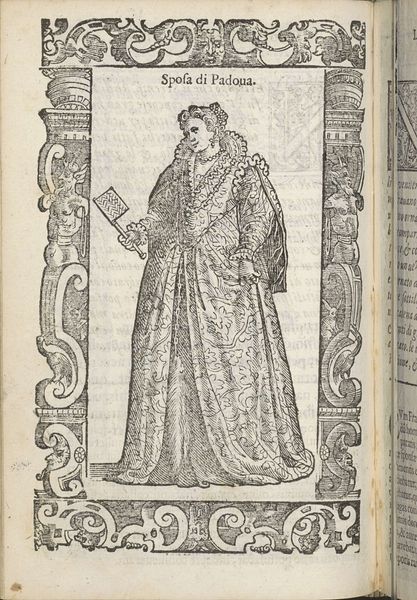
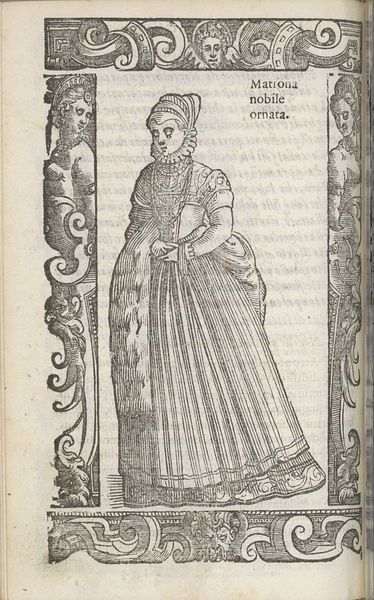
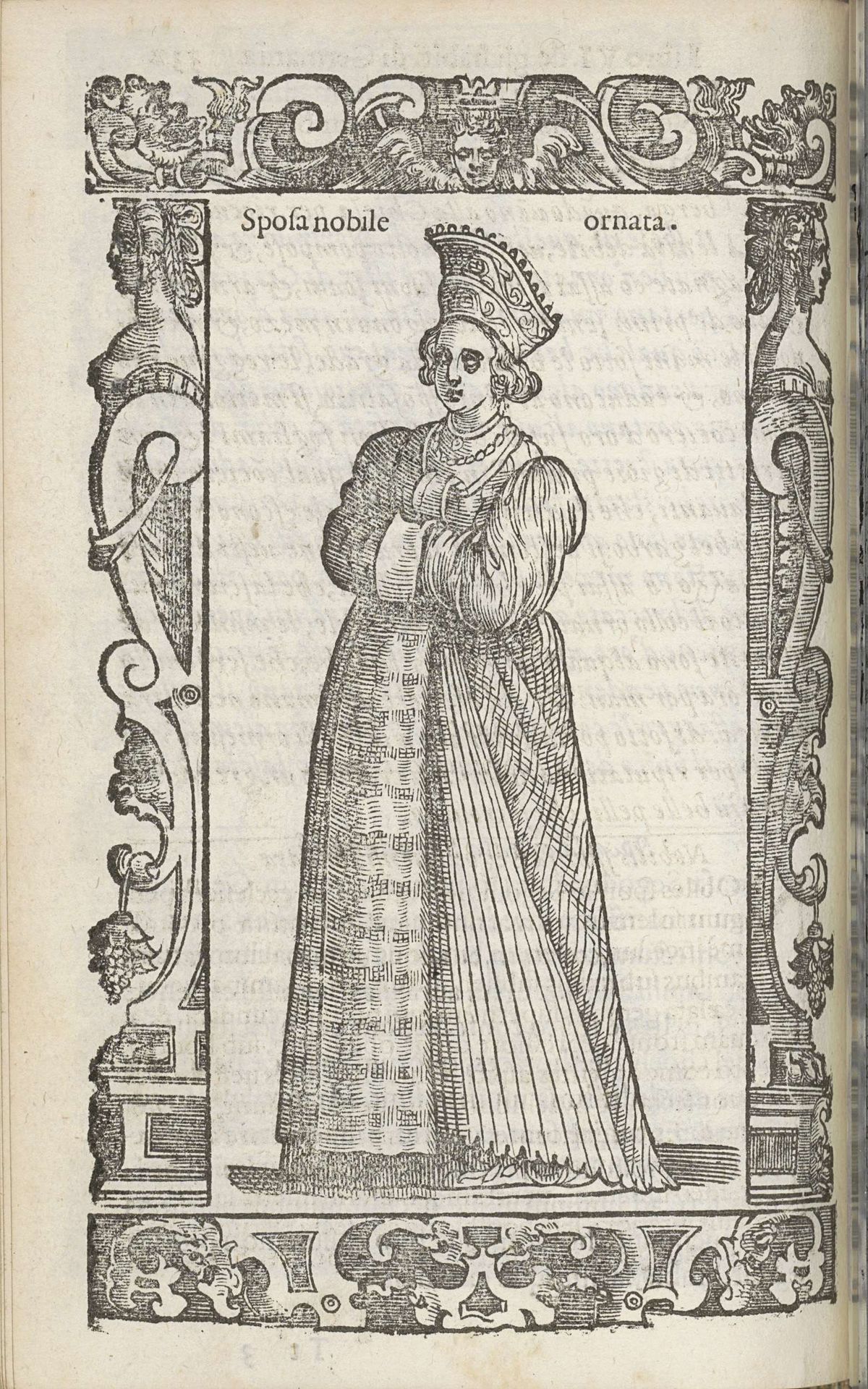
This is an engraving by Christoph Krieger, titled "Sposa nobile ornata," meaning "nobly adorned bride." It’s a fascinating image, because it tells us so much about the social conventions of dress and status in its time. Looking at the image, one is struck by the elaborate ornamentation that defines nobility. Made in Europe, it depicts a noble woman dressed in ceremonial attire, which communicates her status and wealth. We see puffed sleeves, an elaborate dress and decorative headwear. All these features emphasize the importance of outward appearance in signifying social standing. The image is framed with equally ornate decorations that remind us of the highly codified, formal nature of social representation at the time. Understanding such images requires careful historical research into clothing trends, sumptuary laws, and the symbolic language of adornment within specific cultural and historical contexts. This is where the art historian comes in. By consulting period documents, fashion plates, and social histories, we can decode the visual cues of class, status, and identity embedded in works like this.

Artwork details
- Dimensions
- height 167 mm, width 125 mm
- Copyright
- Rijks Museum: Open Domain
Tags
comic strip sketch
pen sketch
old engraving style
sketch book
personal sketchbook
sketchwork
pen-ink sketch
pen work
sketchbook drawing
sketchbook art
Comments
No comments
About this artwork
This is an engraving by Christoph Krieger, titled "Sposa nobile ornata," meaning "nobly adorned bride." It’s a fascinating image, because it tells us so much about the social conventions of dress and status in its time. Looking at the image, one is struck by the elaborate ornamentation that defines nobility. Made in Europe, it depicts a noble woman dressed in ceremonial attire, which communicates her status and wealth. We see puffed sleeves, an elaborate dress and decorative headwear. All these features emphasize the importance of outward appearance in signifying social standing. The image is framed with equally ornate decorations that remind us of the highly codified, formal nature of social representation at the time. Understanding such images requires careful historical research into clothing trends, sumptuary laws, and the symbolic language of adornment within specific cultural and historical contexts. This is where the art historian comes in. By consulting period documents, fashion plates, and social histories, we can decode the visual cues of class, status, and identity embedded in works like this.
Comments
No comments