About this artwork
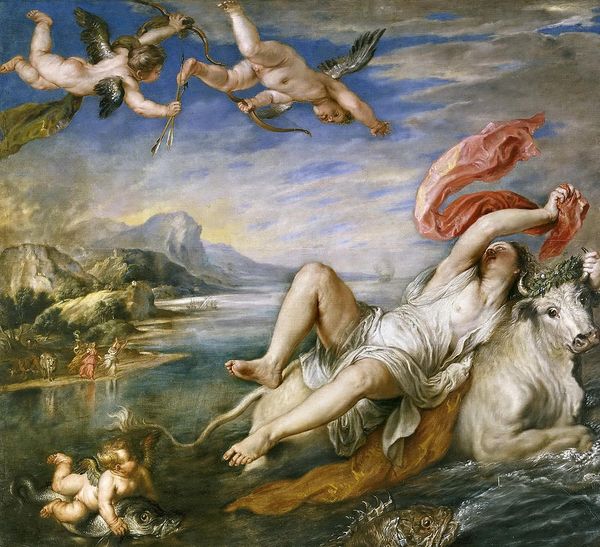
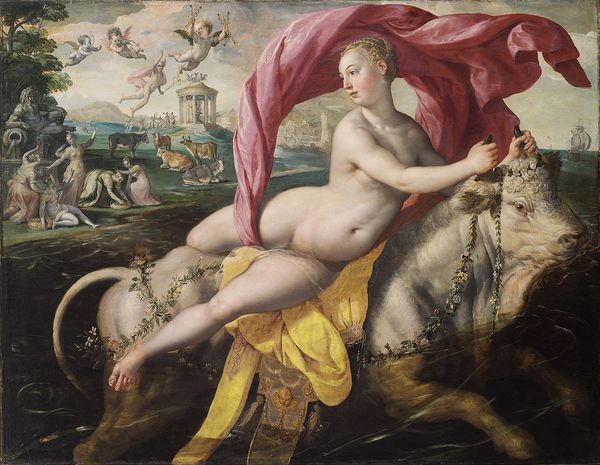
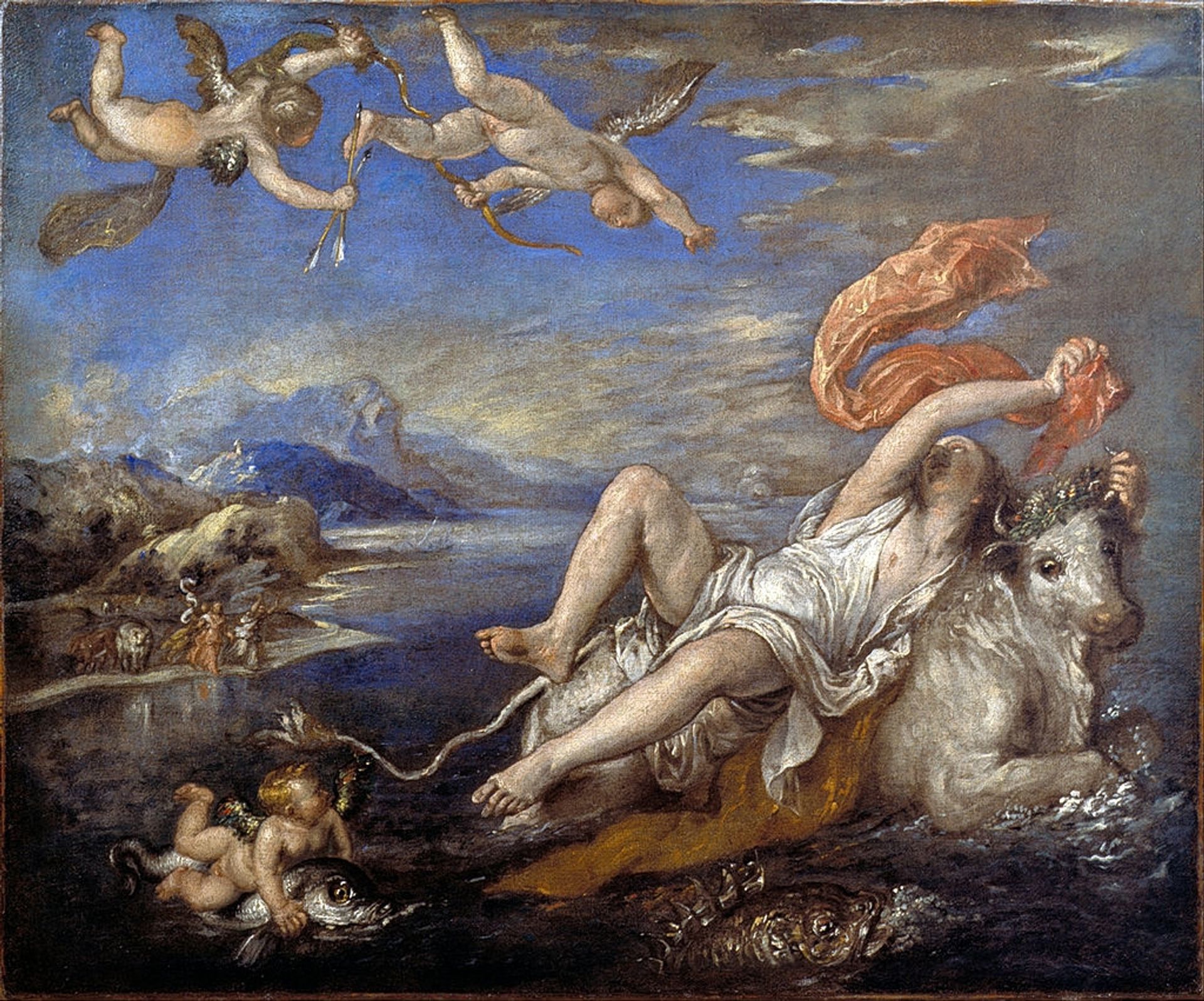
Titian painted this “Abduction of Europa” some time in the mid-16th century, during the height of the Venetian Renaissance. At this time, wealthy families across Europe were busy collecting classical artworks and commissioning new paintings based on the stories of Greek and Roman mythology. Here, Titian shows us the tale of the princess Europa being carried off by Zeus in the guise of a bull. The image has all the hallmarks of its period: bright colors, dynamic movement and an idealized female figure. But this is no simple illustration of a classical myth. In the 16th century, Venice was a center of trade and exchange between Europe and the East. Titian’s painting speaks to that cultural exchange. To learn more, look for books on 16th-century Venetian painting in the museum library. Consider also the history of the family that commissioned the painting, and you will better understand what this kind of artwork meant in its own time.
Abduction of Europa
1562

Titian
1488 - 1576
Isabella Stewart Gardner Museum
Isabella Stewart Gardner Museum (Fenway Court), Boston, MA, USArtwork details
- Dimensions
- 185 x 205 cm
- Location
- Isabella Stewart Gardner Museum (Fenway Court), Boston, MA, US
- Copyright
- Public domain
Tags
Comments
Share your thoughts
About this artwork
Titian painted this “Abduction of Europa” some time in the mid-16th century, during the height of the Venetian Renaissance. At this time, wealthy families across Europe were busy collecting classical artworks and commissioning new paintings based on the stories of Greek and Roman mythology. Here, Titian shows us the tale of the princess Europa being carried off by Zeus in the guise of a bull. The image has all the hallmarks of its period: bright colors, dynamic movement and an idealized female figure. But this is no simple illustration of a classical myth. In the 16th century, Venice was a center of trade and exchange between Europe and the East. Titian’s painting speaks to that cultural exchange. To learn more, look for books on 16th-century Venetian painting in the museum library. Consider also the history of the family that commissioned the painting, and you will better understand what this kind of artwork meant in its own time.
Comments
Share your thoughts