About this artwork
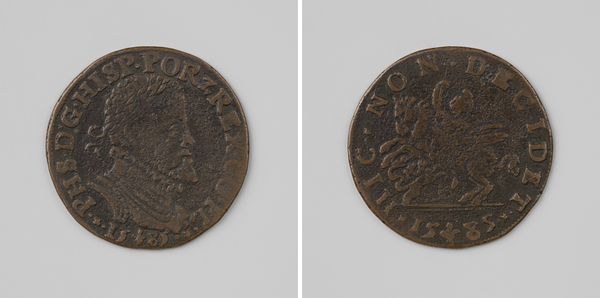
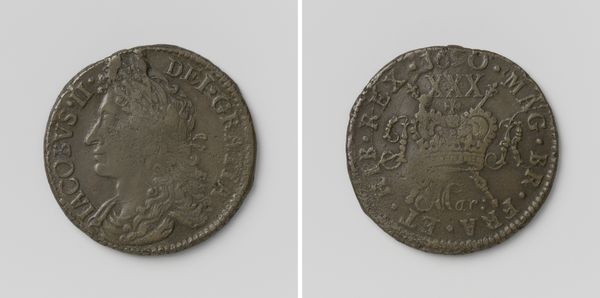
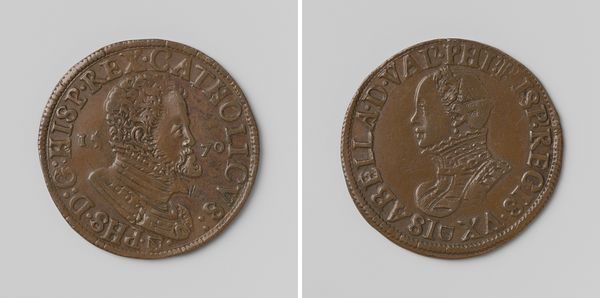
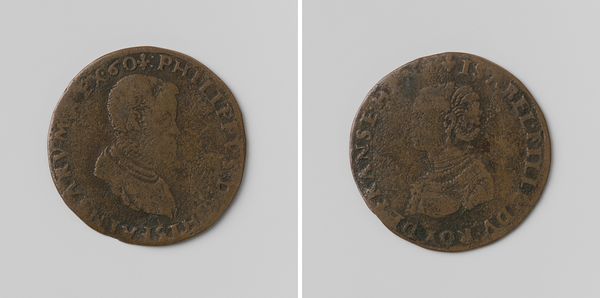
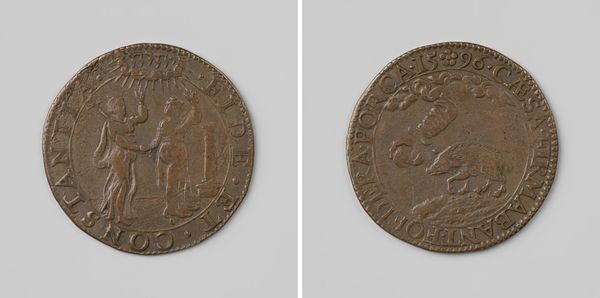
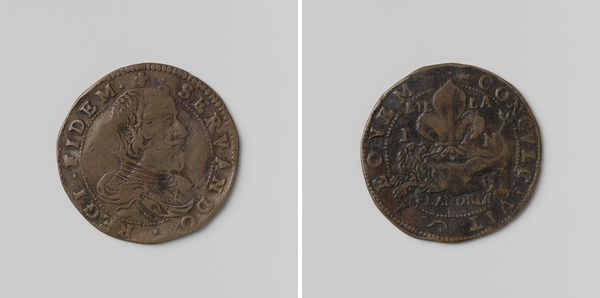
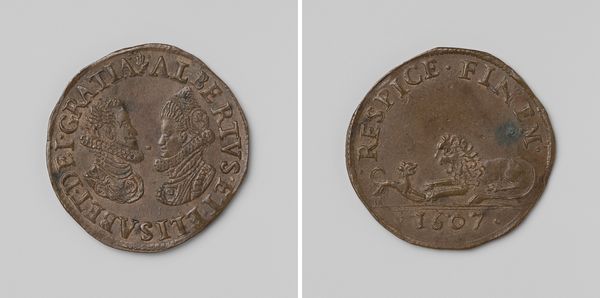
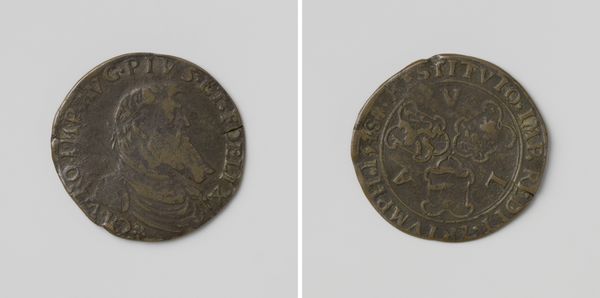
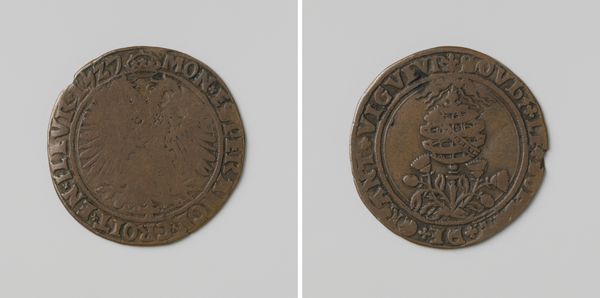
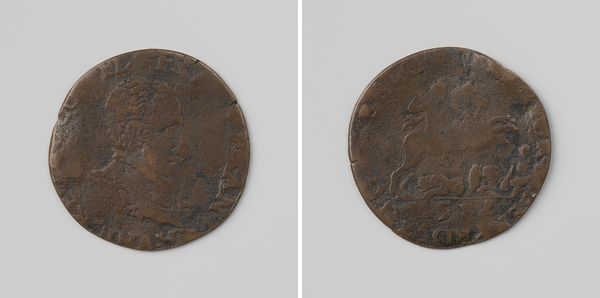
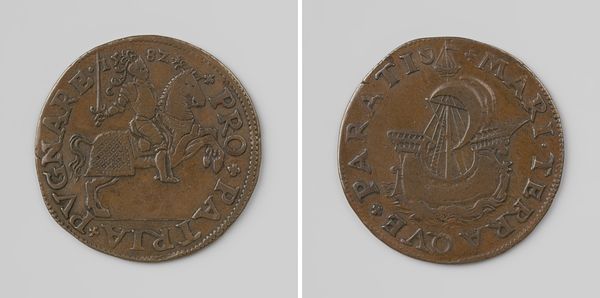
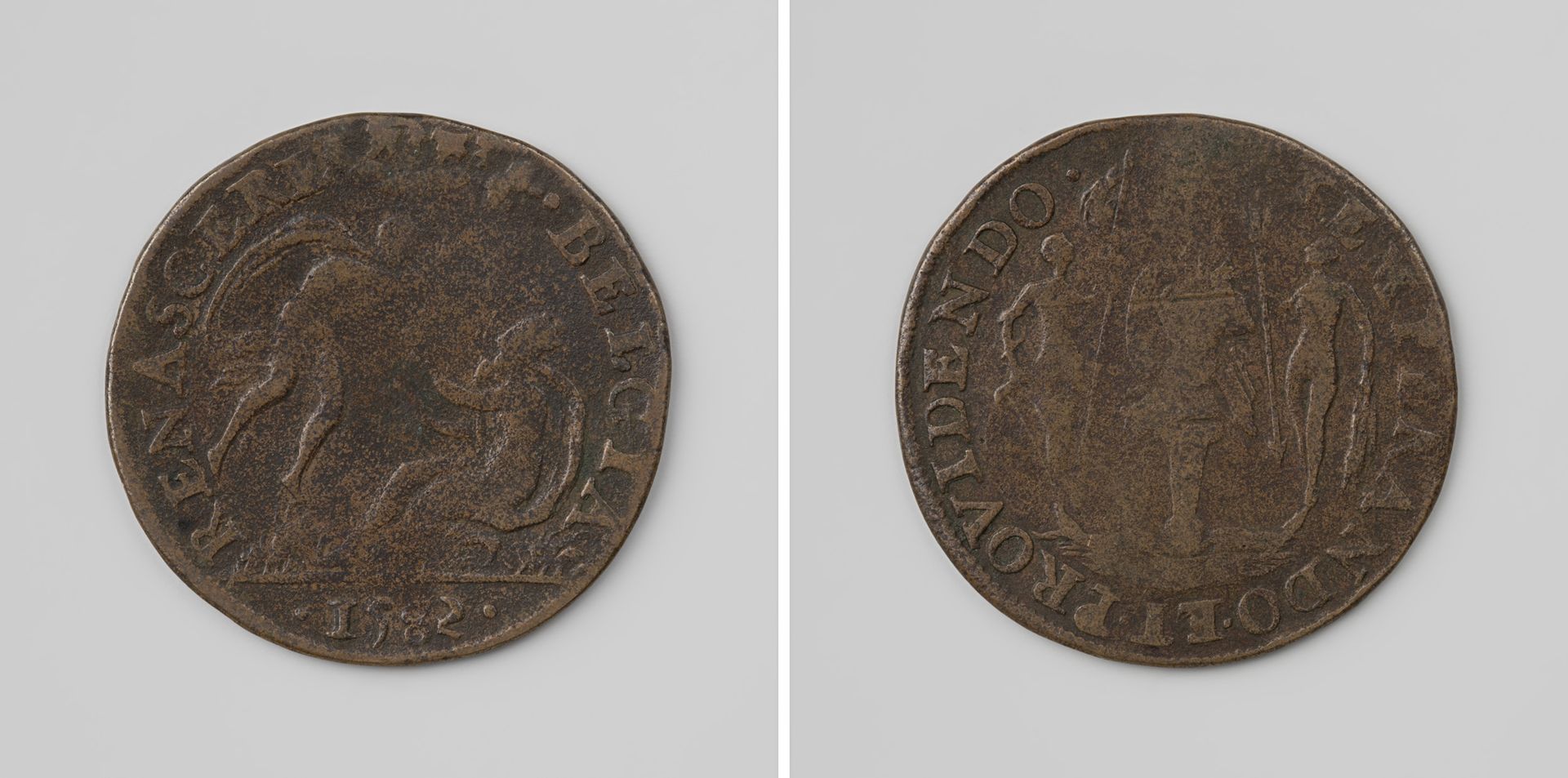
This copper medal commemorates the arrival of François-Hercule, Duke of Anjou, in the Netherlands. The composition is split across both faces of the coin, offering a contrasting view of power and allegorical representation. One side depicts a dynamic scene of figures, deeply etched. Notice the winged figure, possibly an angel or symbolic representation of victory, poised over a kneeling figure. The texture and line work here suggest movement and perhaps a divine blessing upon the Duke's arrival. Flipping the coin, we see a more static scene: standing figures alongside an heraldic symbol or column. The starkness of the imagery implies a sense of order and the formal establishment of power. The inscriptions encircling each side, in a semiotic system, frame the imagery and root it within a specific historical context. The coin’s design balances dynamism with static authority. It provides insight into the early modern European symbolic language of political power.
Allegorie op de aankomst van Francois-Hercule, hertog van Anjou in de Nederlanden 1582

Anonymous
@anonymousLocation
RijksmuseumArtwork details
- Medium
- metal, relief, bronze, sculpture
- Dimensions
- diameter 2.9 cm, weight 5.90 gr
- Location
- Rijksmuseum
- Copyright
- Rijks Museum: Open Domain
Tags
portrait
metal
sculpture
relief
bronze
sculpture
carved
history-painting
Comments
No comments
About this artwork
This copper medal commemorates the arrival of François-Hercule, Duke of Anjou, in the Netherlands. The composition is split across both faces of the coin, offering a contrasting view of power and allegorical representation. One side depicts a dynamic scene of figures, deeply etched. Notice the winged figure, possibly an angel or symbolic representation of victory, poised over a kneeling figure. The texture and line work here suggest movement and perhaps a divine blessing upon the Duke's arrival. Flipping the coin, we see a more static scene: standing figures alongside an heraldic symbol or column. The starkness of the imagery implies a sense of order and the formal establishment of power. The inscriptions encircling each side, in a semiotic system, frame the imagery and root it within a specific historical context. The coin’s design balances dynamism with static authority. It provides insight into the early modern European symbolic language of political power.
Comments
No comments