About this artwork
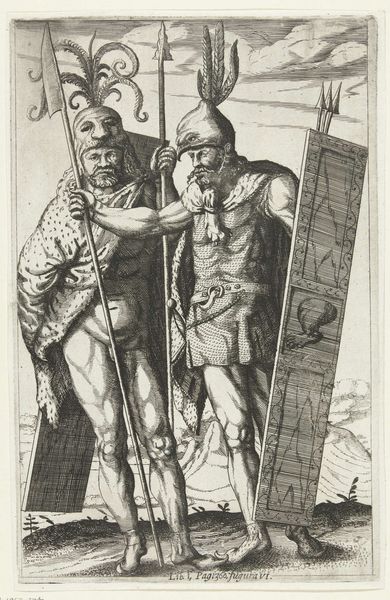
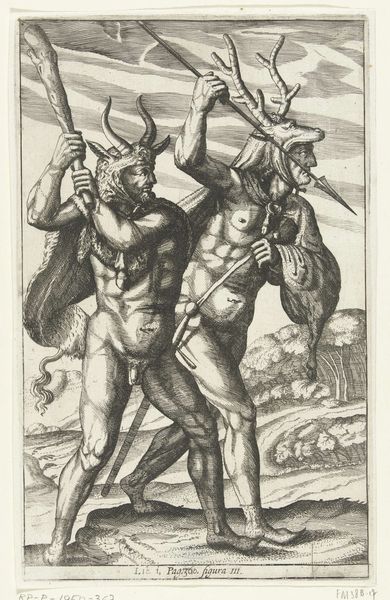
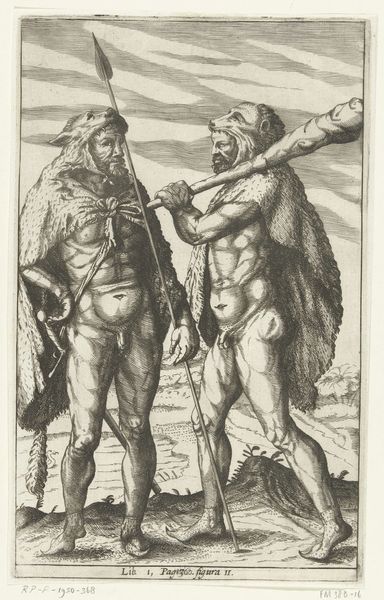
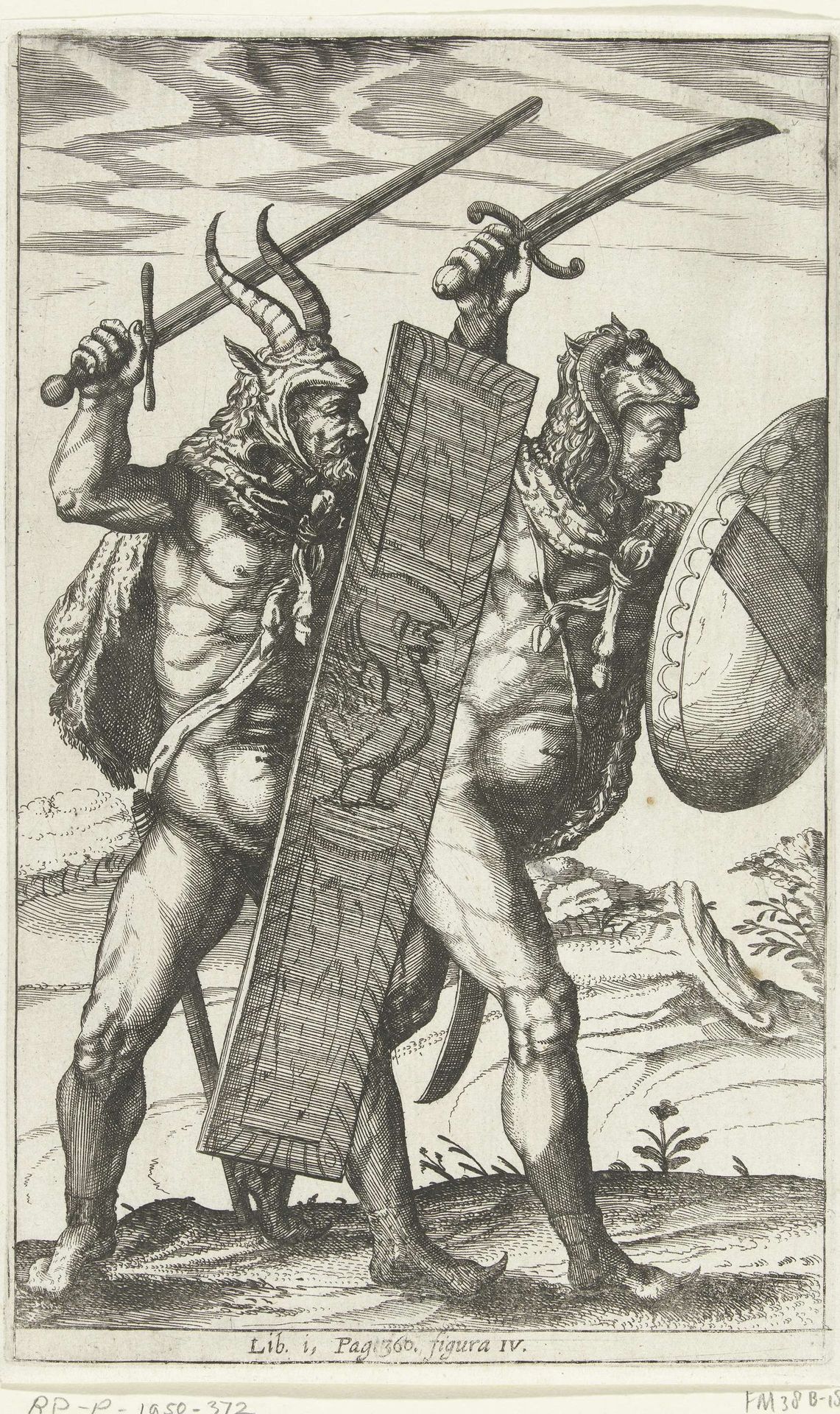
This print of two Germanic warriors was produced by Nicolaes van Geelkercken, probably in the first half of the 17th century. It's an etching, meaning that the artist would have covered a metal plate with wax, drawn an image into the wax to expose the metal, and then bathed the plate in acid. The acid bites away at the exposed metal, creating an image that can be inked and printed. Note the relatively primitive quality of the lines. Van Geelkercken has emphasized the raw masculinity of his subjects, and this is echoed in his direct handling of the printmaking process. The warriors are equipped with wooden shields, swords, and animal headdresses, and are ready for battle, symbolizing strength and resilience in the face of adversity. Prints like these were relatively cheap and would have circulated widely. They remind us that even seemingly 'minor' art forms can contribute to a culture's image of itself.
Twee Germaanse krijgers, figura IV 1614 - 1616

Nicolaes van Geelkercken
1586 - 1656Location
RijksmuseumArtwork details
- Medium
- print, engraving
- Dimensions
- height 261 mm, width 162 mm
- Location
- Rijksmuseum
- Copyright
- Rijks Museum: Open Domain
Tags
figuration
line
history-painting
academic-art
engraving
Comments
No comments
About this artwork
This print of two Germanic warriors was produced by Nicolaes van Geelkercken, probably in the first half of the 17th century. It's an etching, meaning that the artist would have covered a metal plate with wax, drawn an image into the wax to expose the metal, and then bathed the plate in acid. The acid bites away at the exposed metal, creating an image that can be inked and printed. Note the relatively primitive quality of the lines. Van Geelkercken has emphasized the raw masculinity of his subjects, and this is echoed in his direct handling of the printmaking process. The warriors are equipped with wooden shields, swords, and animal headdresses, and are ready for battle, symbolizing strength and resilience in the face of adversity. Prints like these were relatively cheap and would have circulated widely. They remind us that even seemingly 'minor' art forms can contribute to a culture's image of itself.
Comments
No comments