About this artwork
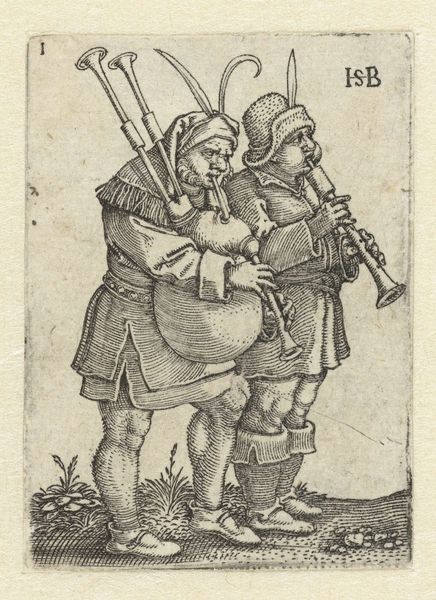
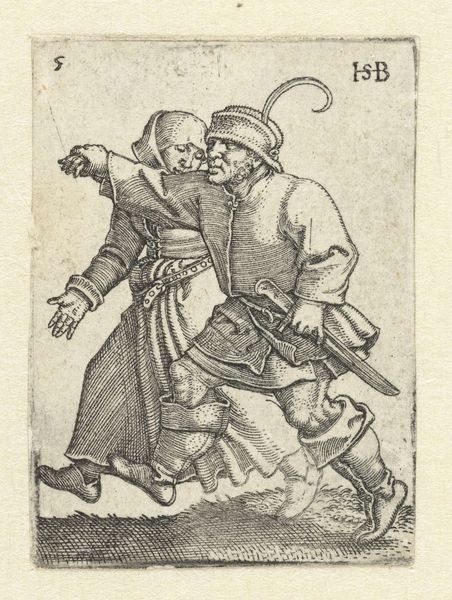
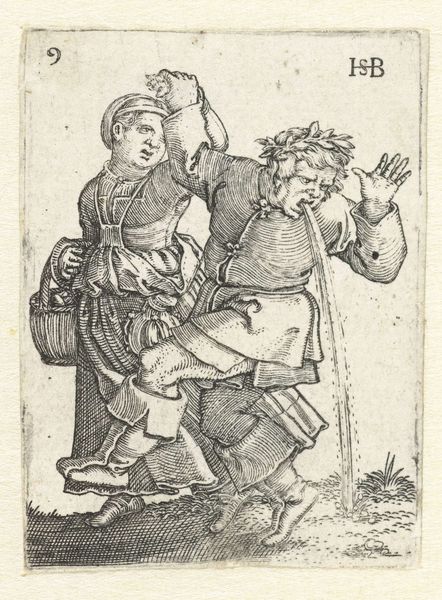
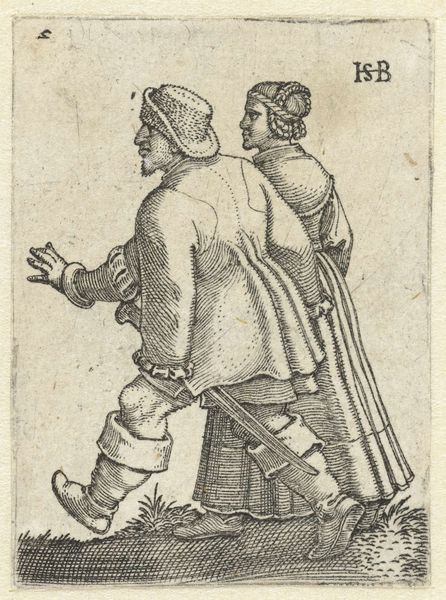
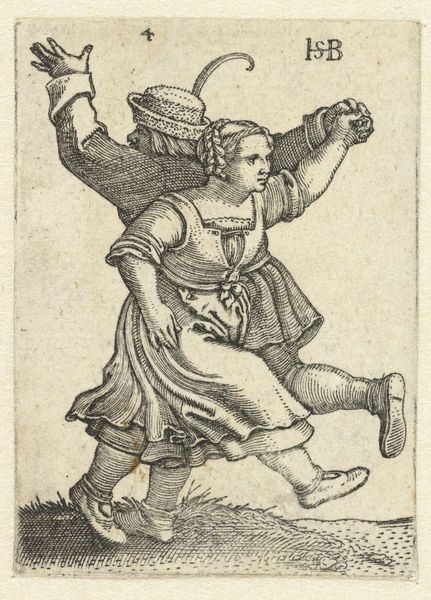
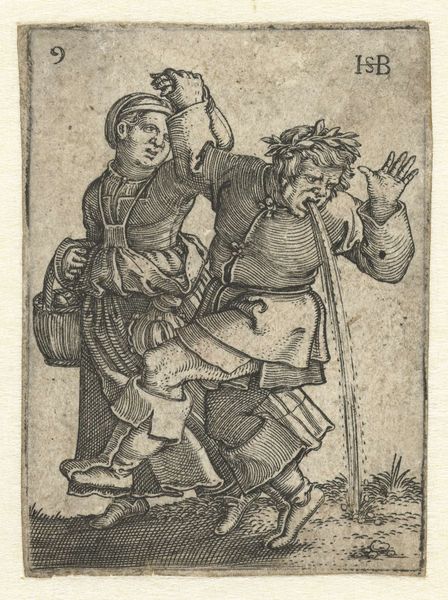
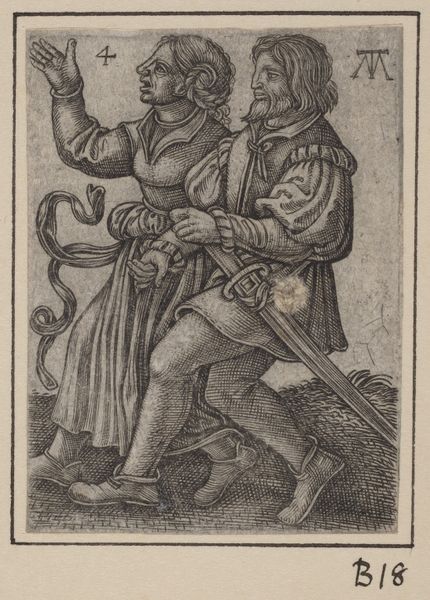
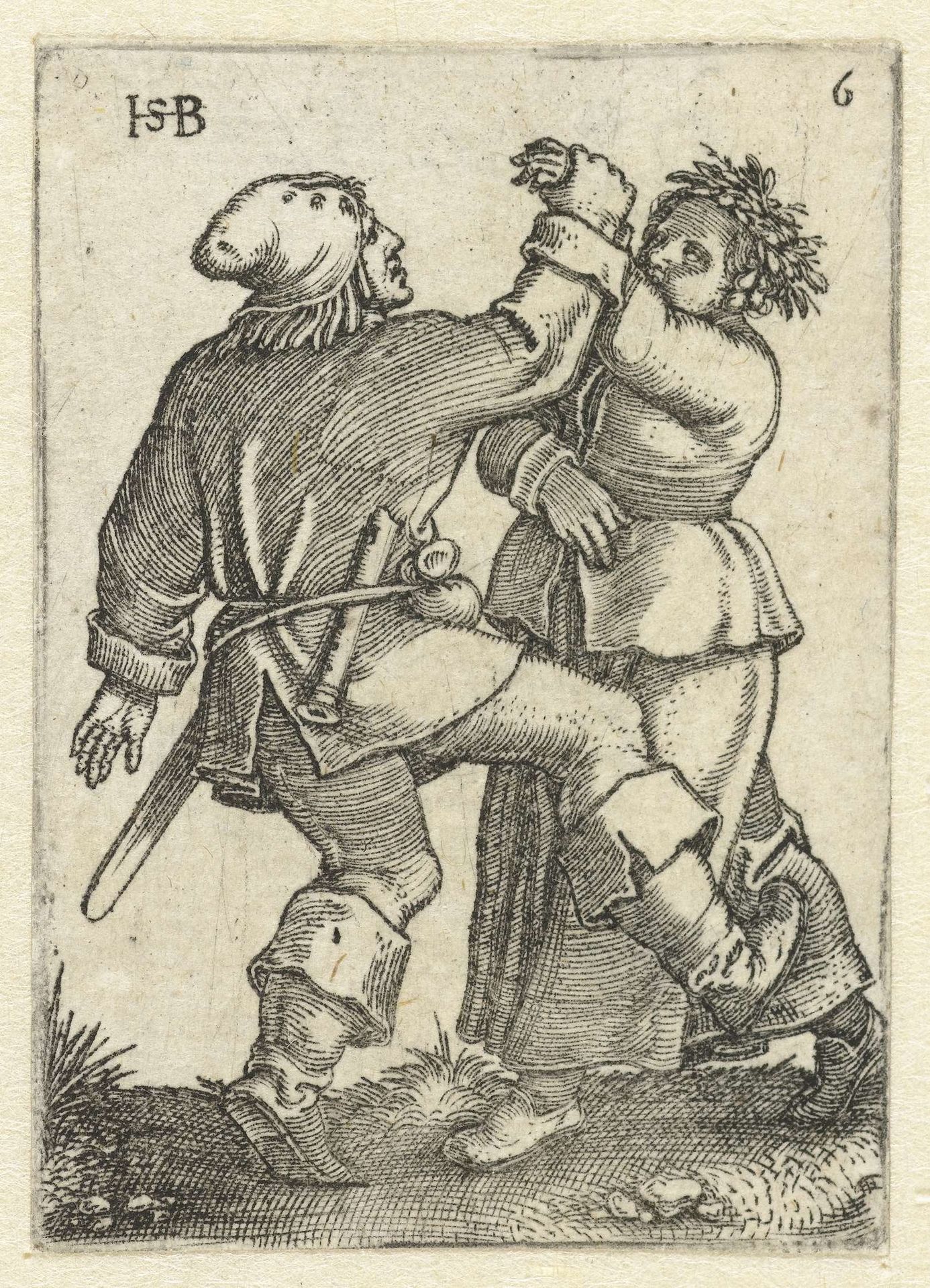
Editor: This is "Dancing Peasants" by Sebald Beham, made in 1537. It's a pen and ink drawing. It looks pretty wild and unrefined; the figures seem off-balance and somewhat cartoonish. What strikes you about the composition? Curator: The artist's control of line is paramount here. Note the aggressive, almost frenetic quality conveyed by the hatching and cross-hatching. It contributes to a sense of dynamism and raw energy despite the work’s small scale. Are these simply ‘dancing peasants,’ or does something else take place in terms of symbolic movement? Editor: That's a good point. I was so focused on the immediate image that I didn't really consider how line could drive that frenetic feeling. But are you suggesting the movements contain hidden symbolic content beyond just showing a couple having a good time? Curator: Observe how Beham manipulates proportion and form. The deliberate distortion creates a kind of hyper-reality; they move with the inflated force of grotesque dance. Note that one figure seizes the other by the throat—but she still wears flowers, so is this ‘dance’ more of a ritual challenge between them? We may consider the deeper currents flowing through the composition and representation of forms here. Editor: A ritual! That gives me a lot to think about regarding the implied narrative of the artwork. It might be more than just a candid moment if that’s so. Curator: Precisely. Beham's use of exaggerated form serves to create a complex tableau—what might appear comical at first, suggests hidden dimensions within its formal structure. Consider Beham’s contemporary viewer, for whom bodily aesthetics conveyed symbolic ideas about what was virtuous, or even vile. How are those qualities evoked here? Editor: This has been very insightful. It shows how attending closely to the structure of a work – line, form, gesture – really enhances what we can take away from it! Curator: Indeed, and it underlines the potent power of artistic choices to elevate a seemingly mundane scene into something of arresting conceptual significance.

Artwork details
- Dimensions
- height 48 mm, width 34 mm
- Location
- Rijksmuseum
- Copyright
- Rijks Museum: Open Domain
Tags
quirky sketch
pen sketch
sketch book
cartoon sketch
personal sketchbook
pen-ink sketch
pen work
sketchbook drawing
storyboard and sketchbook work
sketchbook art
Comments
No comments
About this artwork
Editor: This is "Dancing Peasants" by Sebald Beham, made in 1537. It's a pen and ink drawing. It looks pretty wild and unrefined; the figures seem off-balance and somewhat cartoonish. What strikes you about the composition? Curator: The artist's control of line is paramount here. Note the aggressive, almost frenetic quality conveyed by the hatching and cross-hatching. It contributes to a sense of dynamism and raw energy despite the work’s small scale. Are these simply ‘dancing peasants,’ or does something else take place in terms of symbolic movement? Editor: That's a good point. I was so focused on the immediate image that I didn't really consider how line could drive that frenetic feeling. But are you suggesting the movements contain hidden symbolic content beyond just showing a couple having a good time? Curator: Observe how Beham manipulates proportion and form. The deliberate distortion creates a kind of hyper-reality; they move with the inflated force of grotesque dance. Note that one figure seizes the other by the throat—but she still wears flowers, so is this ‘dance’ more of a ritual challenge between them? We may consider the deeper currents flowing through the composition and representation of forms here. Editor: A ritual! That gives me a lot to think about regarding the implied narrative of the artwork. It might be more than just a candid moment if that’s so. Curator: Precisely. Beham's use of exaggerated form serves to create a complex tableau—what might appear comical at first, suggests hidden dimensions within its formal structure. Consider Beham’s contemporary viewer, for whom bodily aesthetics conveyed symbolic ideas about what was virtuous, or even vile. How are those qualities evoked here? Editor: This has been very insightful. It shows how attending closely to the structure of a work – line, form, gesture – really enhances what we can take away from it! Curator: Indeed, and it underlines the potent power of artistic choices to elevate a seemingly mundane scene into something of arresting conceptual significance.
Comments
No comments