About this artwork
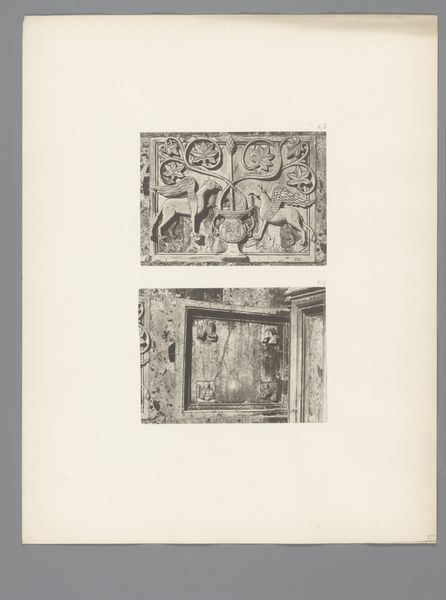
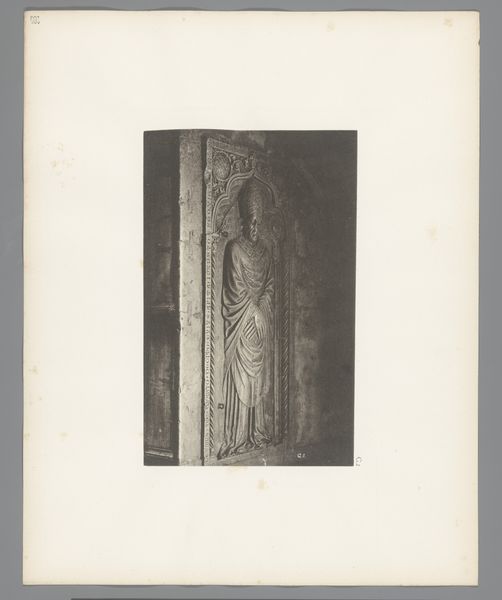
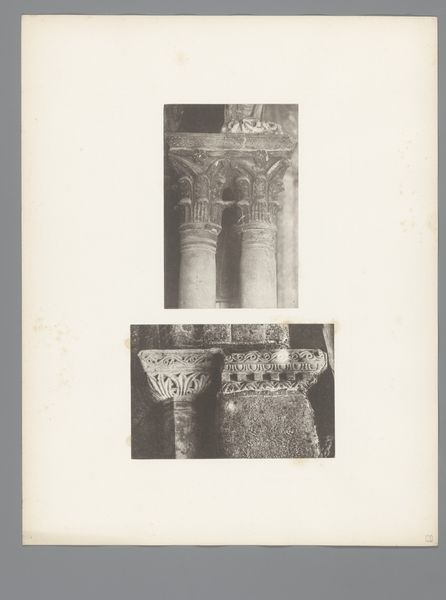
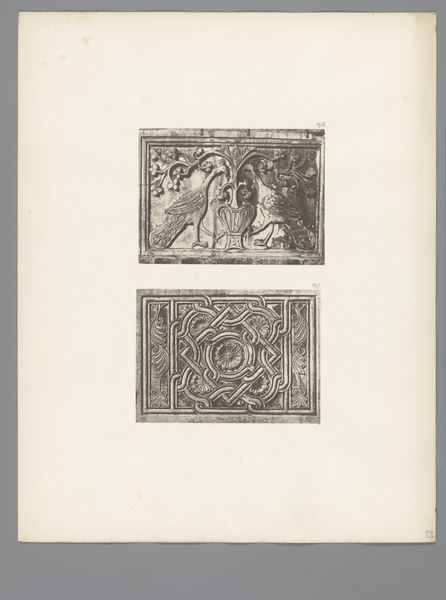
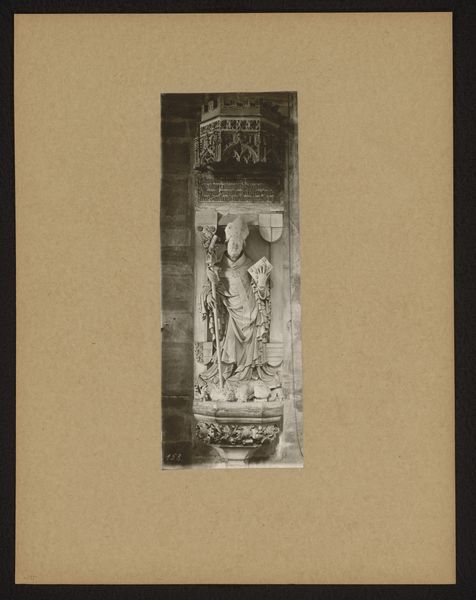
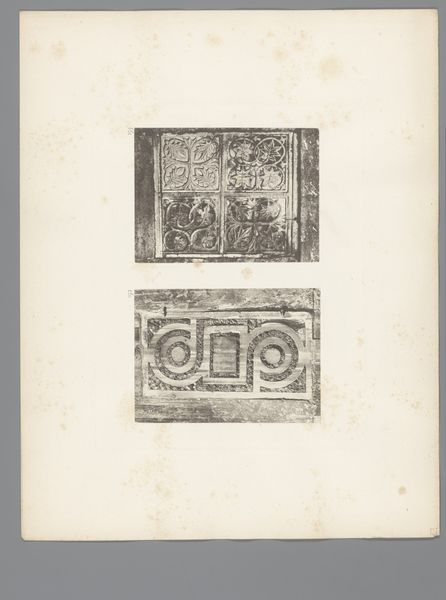
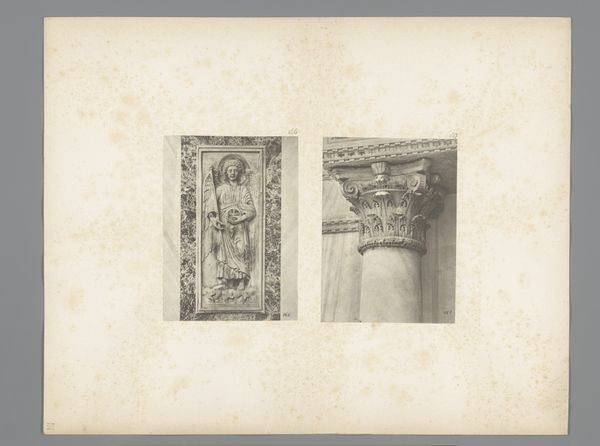
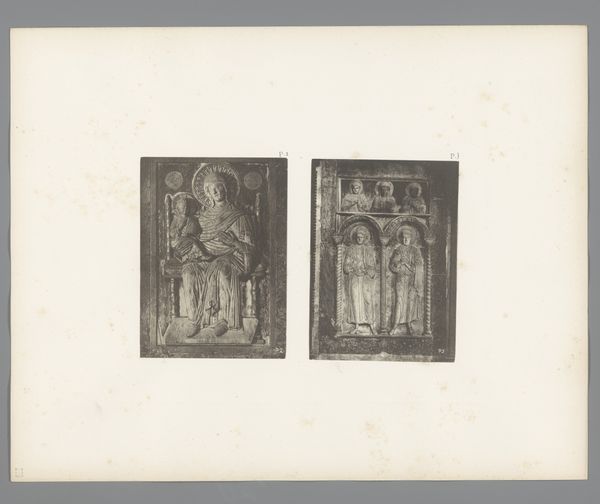
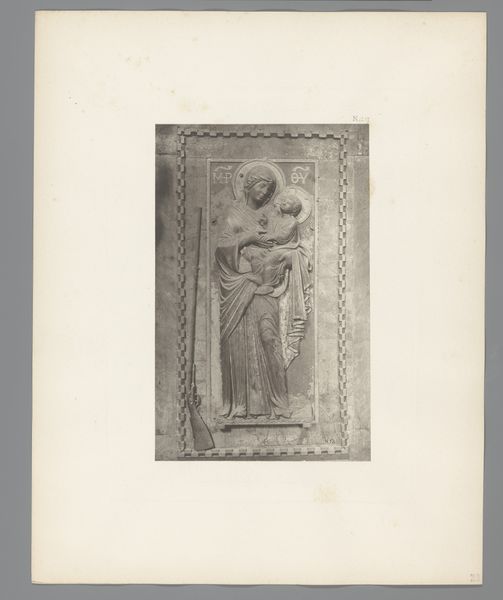
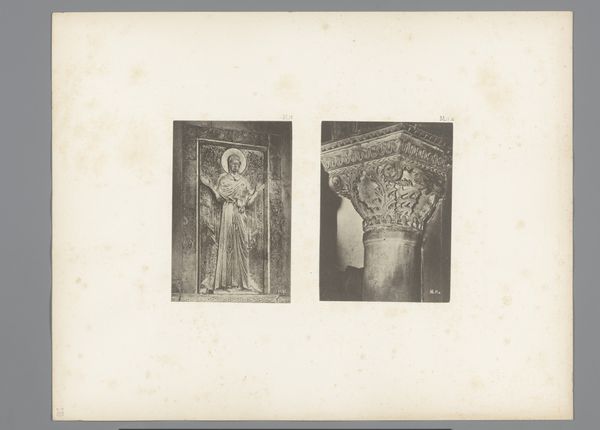
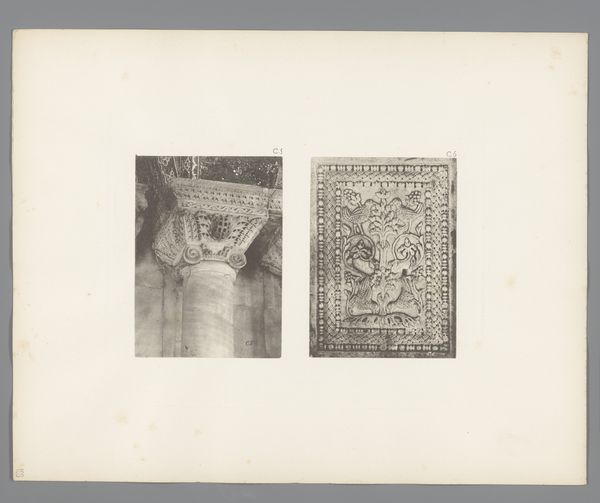
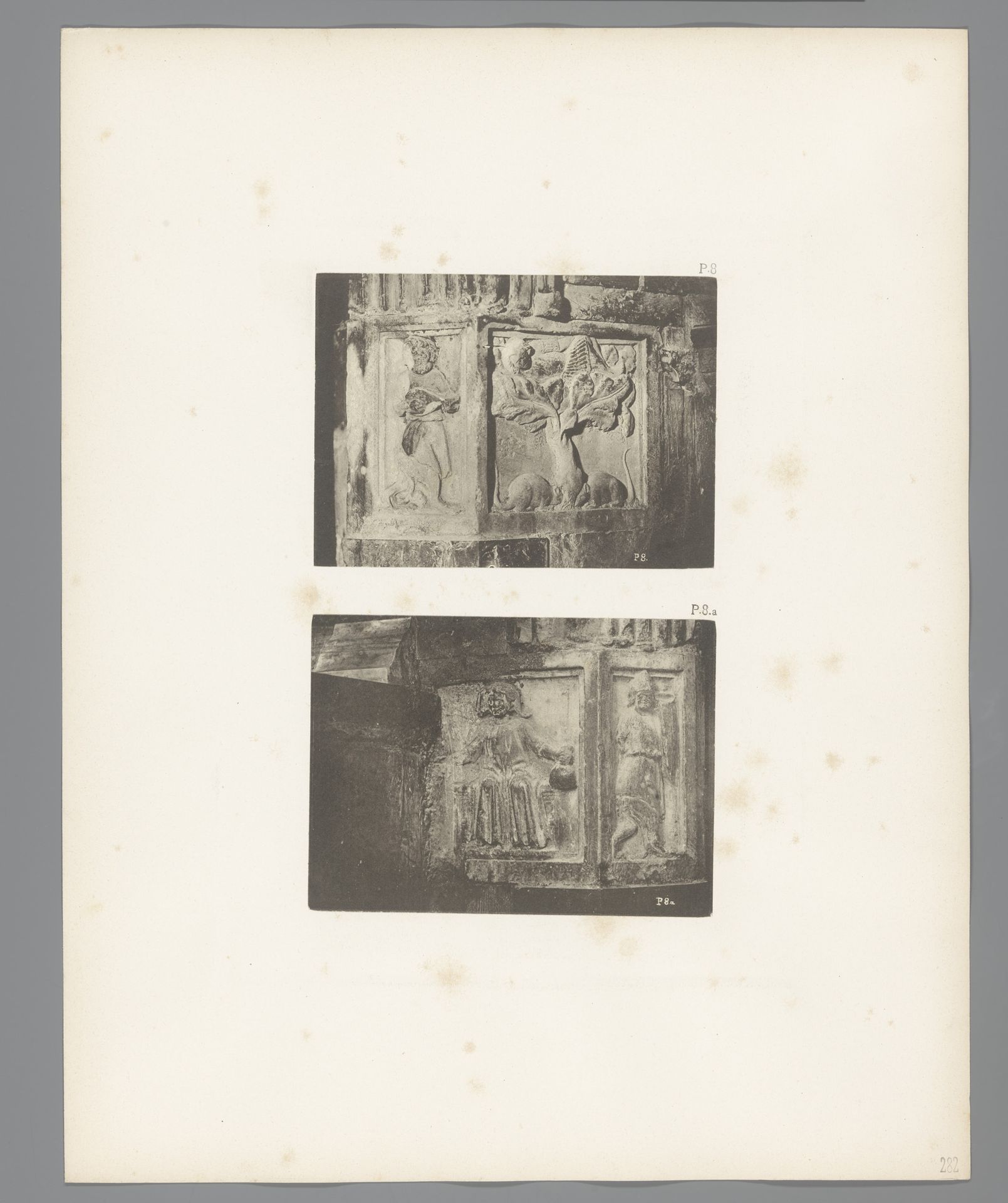
Carl Heinrich Jacobi made this print of two reliefs from the San Marco in Venice sometime in the 19th century. At first glance, the stone carvings might seem like relics of a distant past, yet Jacobi's act of capturing them through the then-emerging medium of photography, layers new meaning onto these historical artifacts. Consider the power dynamics at play. These reliefs, adorning a symbol of Venetian power and wealth, are re-presented through Jacobi's lens, raising questions about who gets to document and interpret history. How does the gaze of a 19th-century artist shape our understanding of medieval craftsmanship? The rigid poses and biblical imagery of the reliefs speak to a specific cultural and religious narrative. Jacobi's photograph invites us to reflect on how these stories were constructed, whose voices they amplified, and whose they silenced. Ultimately, Jacobi's work is not just a documentation, but an interpretation, colored by his own time and perspective. It serves as a reminder that history is not a fixed entity, but a fluid narrative, constantly reshaped by those who engage with it.
Twee afbeeldingen van reliëfs van de San Marco in Venetië
before 1885

Artwork details
- Medium
- print, relief, photography
- Dimensions
- height 395 mm, width 311 mm
- Copyright
- Rijks Museum: Open Domain
Tags
Comments
Share your thoughts
About this artwork
Carl Heinrich Jacobi made this print of two reliefs from the San Marco in Venice sometime in the 19th century. At first glance, the stone carvings might seem like relics of a distant past, yet Jacobi's act of capturing them through the then-emerging medium of photography, layers new meaning onto these historical artifacts. Consider the power dynamics at play. These reliefs, adorning a symbol of Venetian power and wealth, are re-presented through Jacobi's lens, raising questions about who gets to document and interpret history. How does the gaze of a 19th-century artist shape our understanding of medieval craftsmanship? The rigid poses and biblical imagery of the reliefs speak to a specific cultural and religious narrative. Jacobi's photograph invites us to reflect on how these stories were constructed, whose voices they amplified, and whose they silenced. Ultimately, Jacobi's work is not just a documentation, but an interpretation, colored by his own time and perspective. It serves as a reminder that history is not a fixed entity, but a fluid narrative, constantly reshaped by those who engage with it.
Comments
Share your thoughts