About this artwork
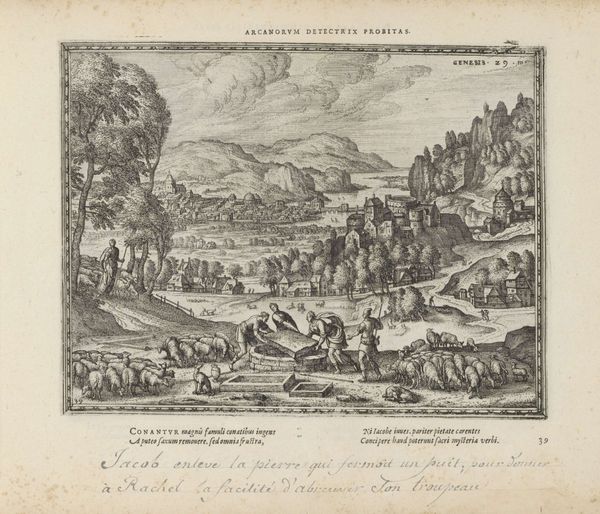
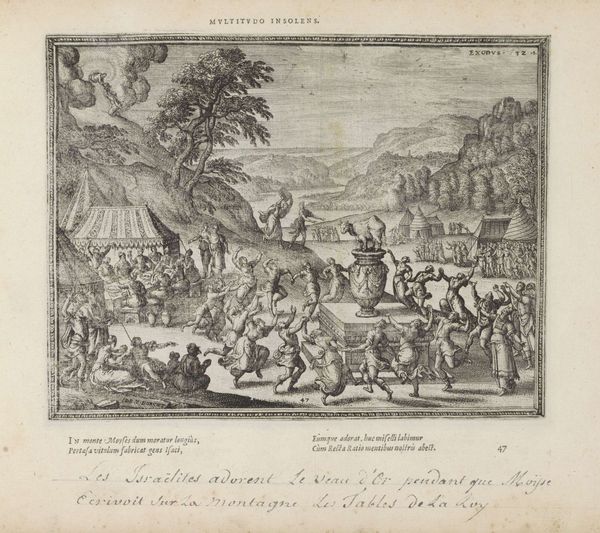
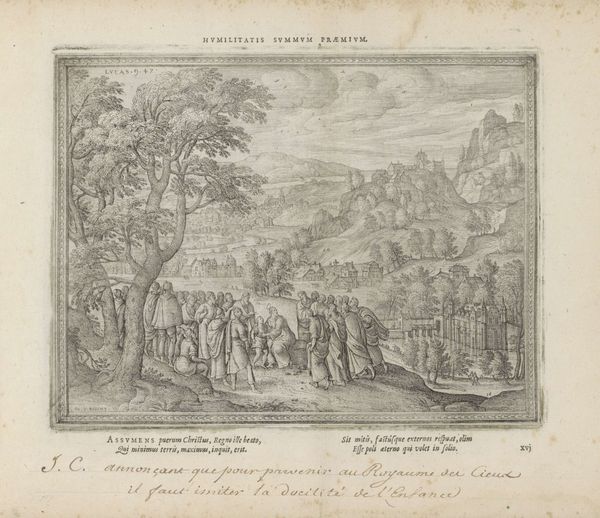
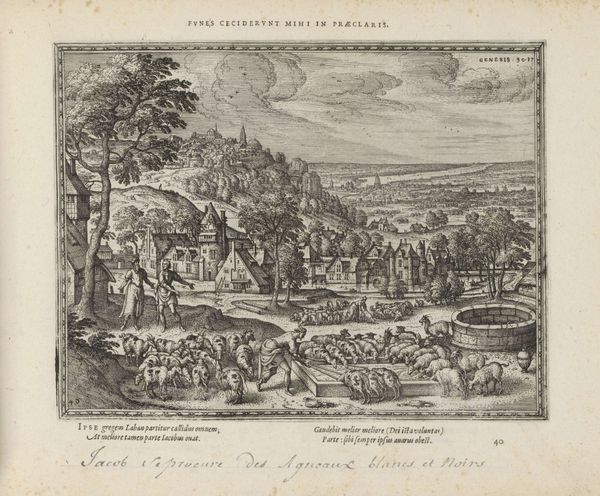
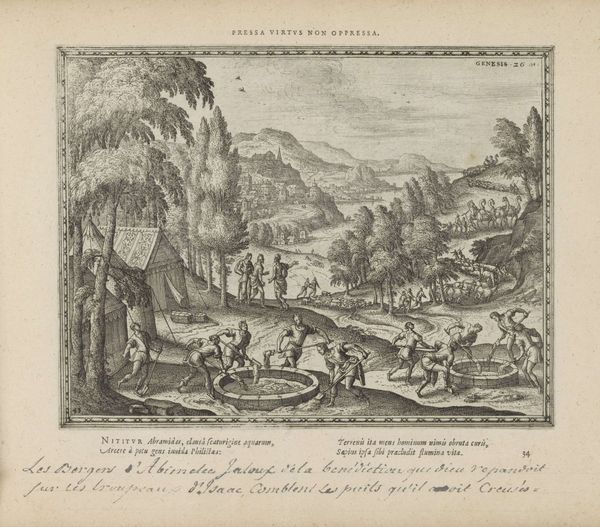
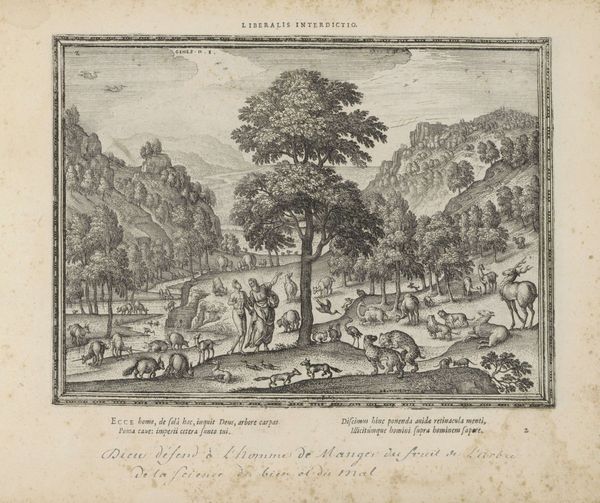
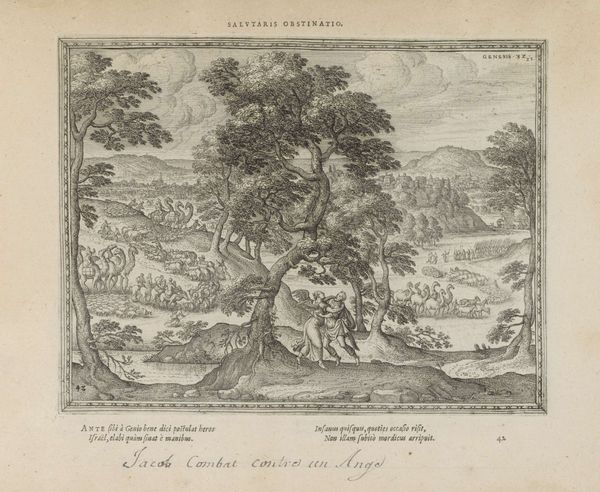
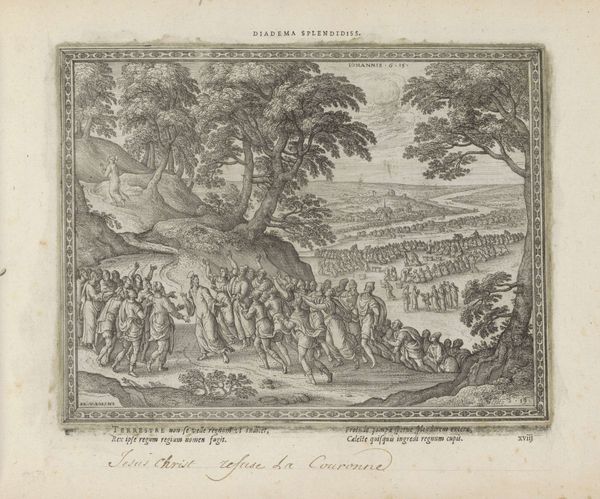
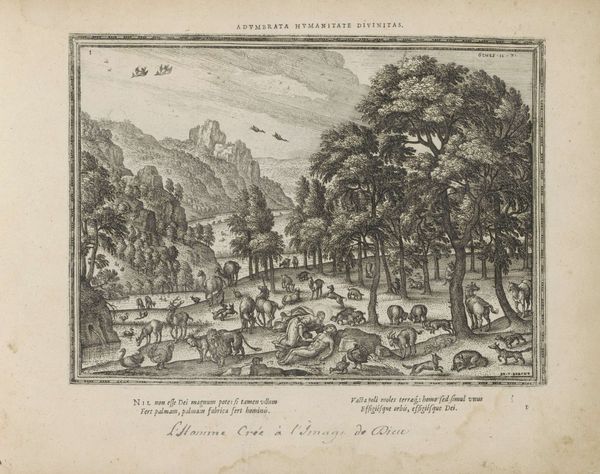
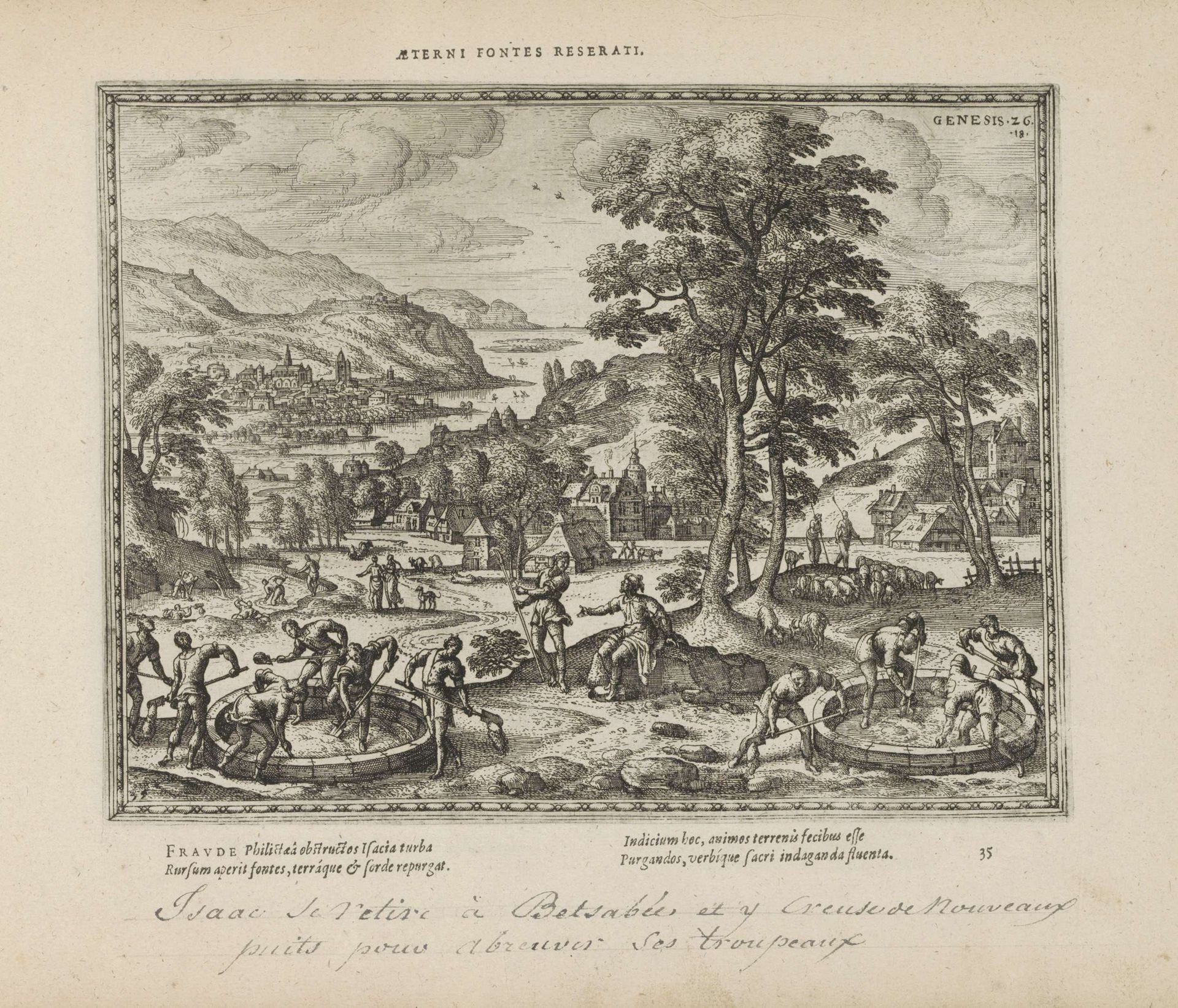
This print, titled "Isaak graaft de putten open," was made by Pieter van der Borcht around the turn of the 17th century, using the technique of engraving. Look closely, and you can see how the design is built up from a dense network of fine lines incised into a metal plate. The act of engraving demands a specific kind of labor, quite different from painting or drawing. It's a slow, deliberate, and physically taxing process. The image becomes a record of the engraver's careful work. Notice how van der Borcht uses this linear language to depict the scene: Isaac, overseeing laborers as they dig and clean wells. There's a tension here, isn't there? A contrast between the relative leisure of the overseer, and the intense labor of the workers, captured through the engraver's own labor. This image, like all works of art, is therefore not just a picture. It's also a product, made by someone, in a specific context. Paying attention to these elements of production helps us understand the image more fully.
Isaak graaft de putten open
1582 - 1613

Pieter van der (I) Borcht
1545 - 1608Location
RijksmuseumArtwork details
- Medium
- print, engraving
- Dimensions
- height 190 mm, width 247 mm
- Location
- Rijksmuseum
- Copyright
- Rijks Museum: Open Domain
Tags
Comments
Share your thoughts
About this artwork
This print, titled "Isaak graaft de putten open," was made by Pieter van der Borcht around the turn of the 17th century, using the technique of engraving. Look closely, and you can see how the design is built up from a dense network of fine lines incised into a metal plate. The act of engraving demands a specific kind of labor, quite different from painting or drawing. It's a slow, deliberate, and physically taxing process. The image becomes a record of the engraver's careful work. Notice how van der Borcht uses this linear language to depict the scene: Isaac, overseeing laborers as they dig and clean wells. There's a tension here, isn't there? A contrast between the relative leisure of the overseer, and the intense labor of the workers, captured through the engraver's own labor. This image, like all works of art, is therefore not just a picture. It's also a product, made by someone, in a specific context. Paying attention to these elements of production helps us understand the image more fully.
Comments
Share your thoughts