About this artwork
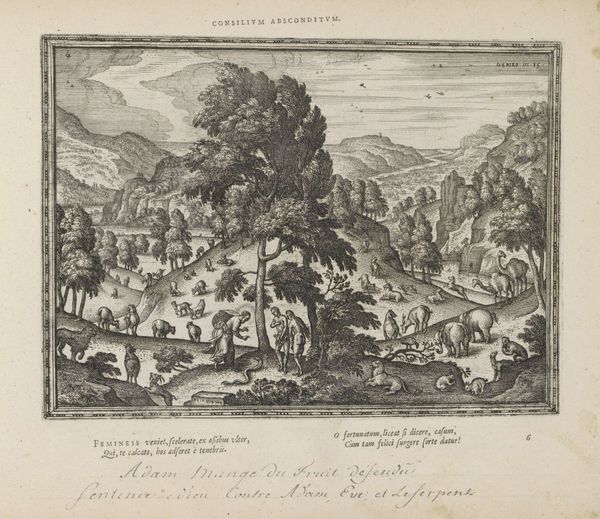
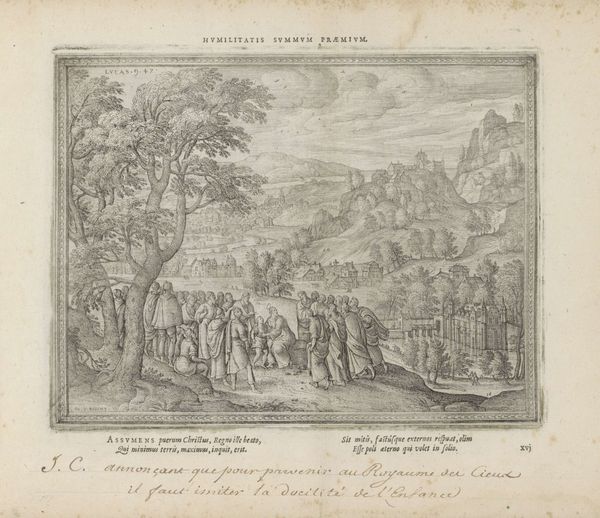
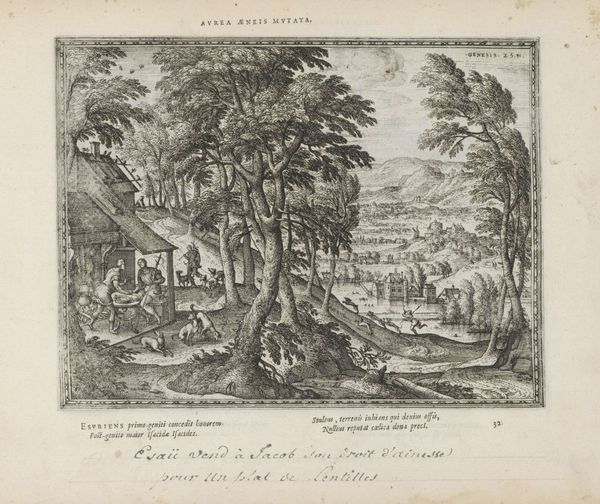
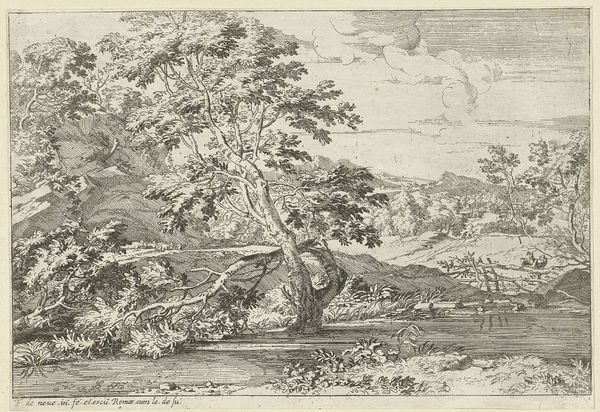
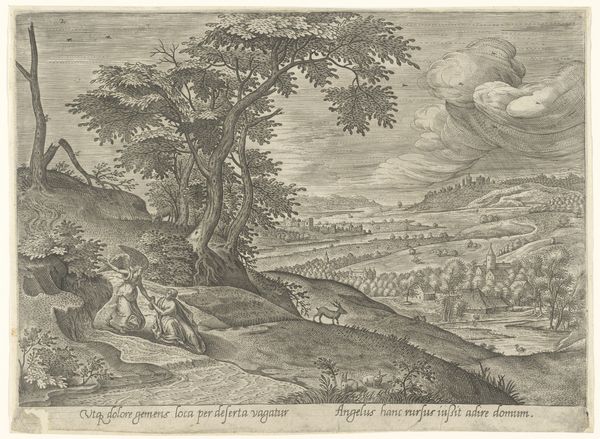
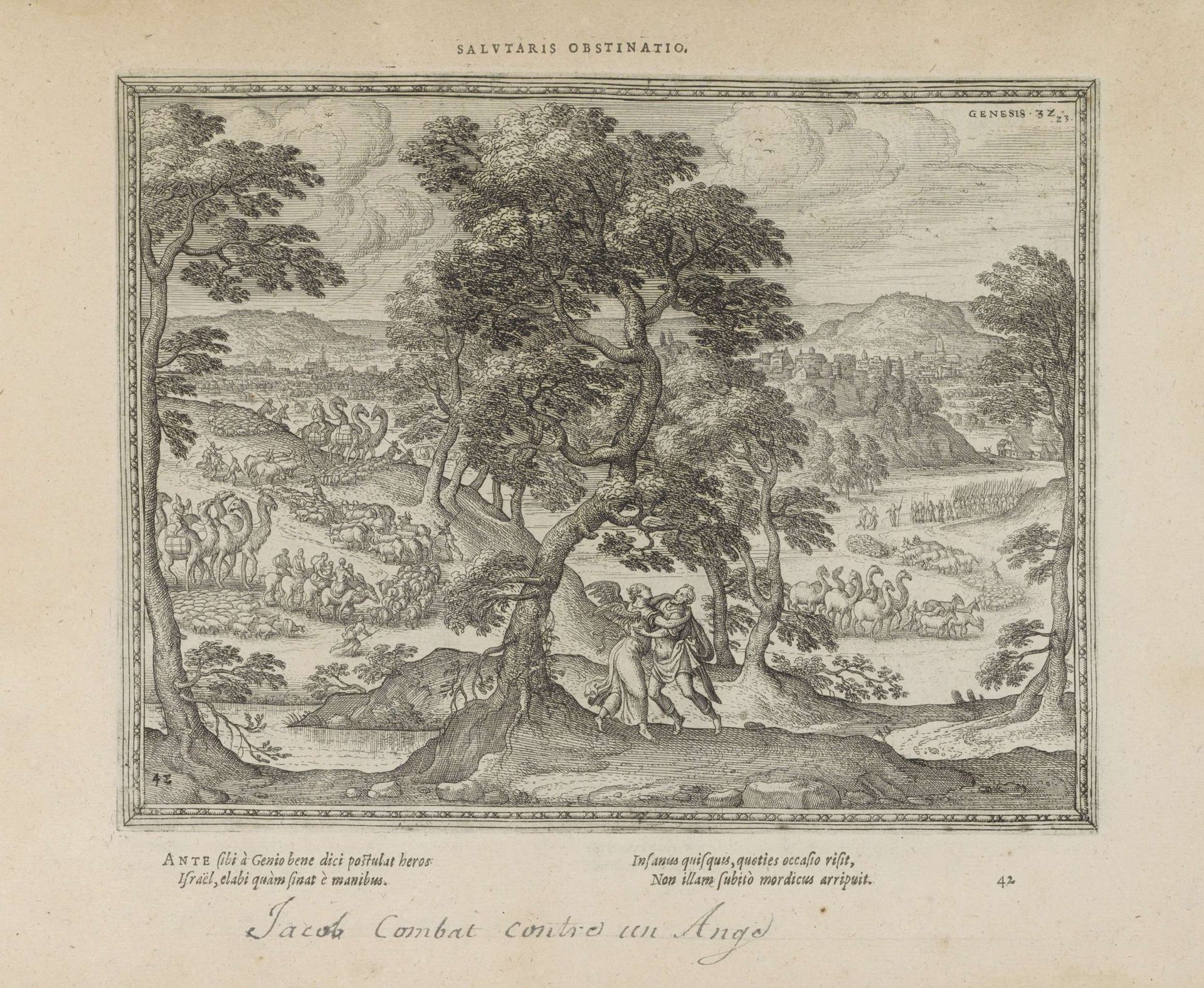
This is Pieter van der Borcht the Elder's engraving, "Jacob Wrestling with the Angel," made around 1600. The composition is organized around a central clearing. Linear precision carves out every detail, the landscape receding into the background. The architecture of the trees frames Jacob's struggle, drawing our eye to the central motif. The lines create a sense of depth, with the distant city rendered with the same care as the foreground figures. This evenness in texture is striking. What does it signify? Perhaps the landscape, both near and far, is equally touched by this divine encounter. The composition has a dreamlike quality. The scene invites us to contemplate the layers of the narrative and its interplay with the broader philosophical questions of divine will. It suggests that every element within the frame is part of a larger semiotic structure.
Jakob worstelt met de engel 1582 - 1613

Pieter van der (I) Borcht
1545 - 1608Location
RijksmuseumArtwork details
- Medium
- print, engraving
- Dimensions
- height 188 mm, width 244 mm
- Location
- Rijksmuseum
- Copyright
- Rijks Museum: Open Domain
Tags
old engraving style
landscape
figuration
genre-painting
history-painting
northern-renaissance
engraving
Comments
No comments
About this artwork
This is Pieter van der Borcht the Elder's engraving, "Jacob Wrestling with the Angel," made around 1600. The composition is organized around a central clearing. Linear precision carves out every detail, the landscape receding into the background. The architecture of the trees frames Jacob's struggle, drawing our eye to the central motif. The lines create a sense of depth, with the distant city rendered with the same care as the foreground figures. This evenness in texture is striking. What does it signify? Perhaps the landscape, both near and far, is equally touched by this divine encounter. The composition has a dreamlike quality. The scene invites us to contemplate the layers of the narrative and its interplay with the broader philosophical questions of divine will. It suggests that every element within the frame is part of a larger semiotic structure.
Comments
No comments