About this artwork
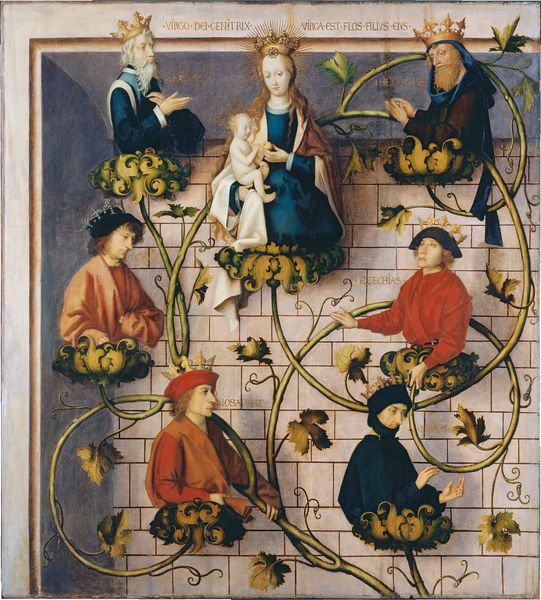
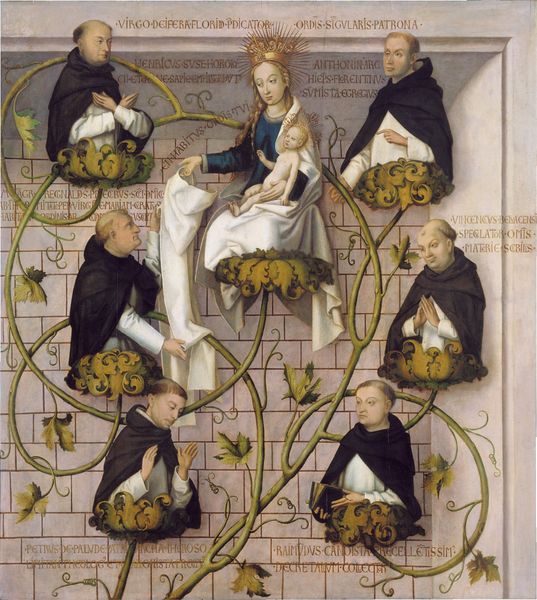
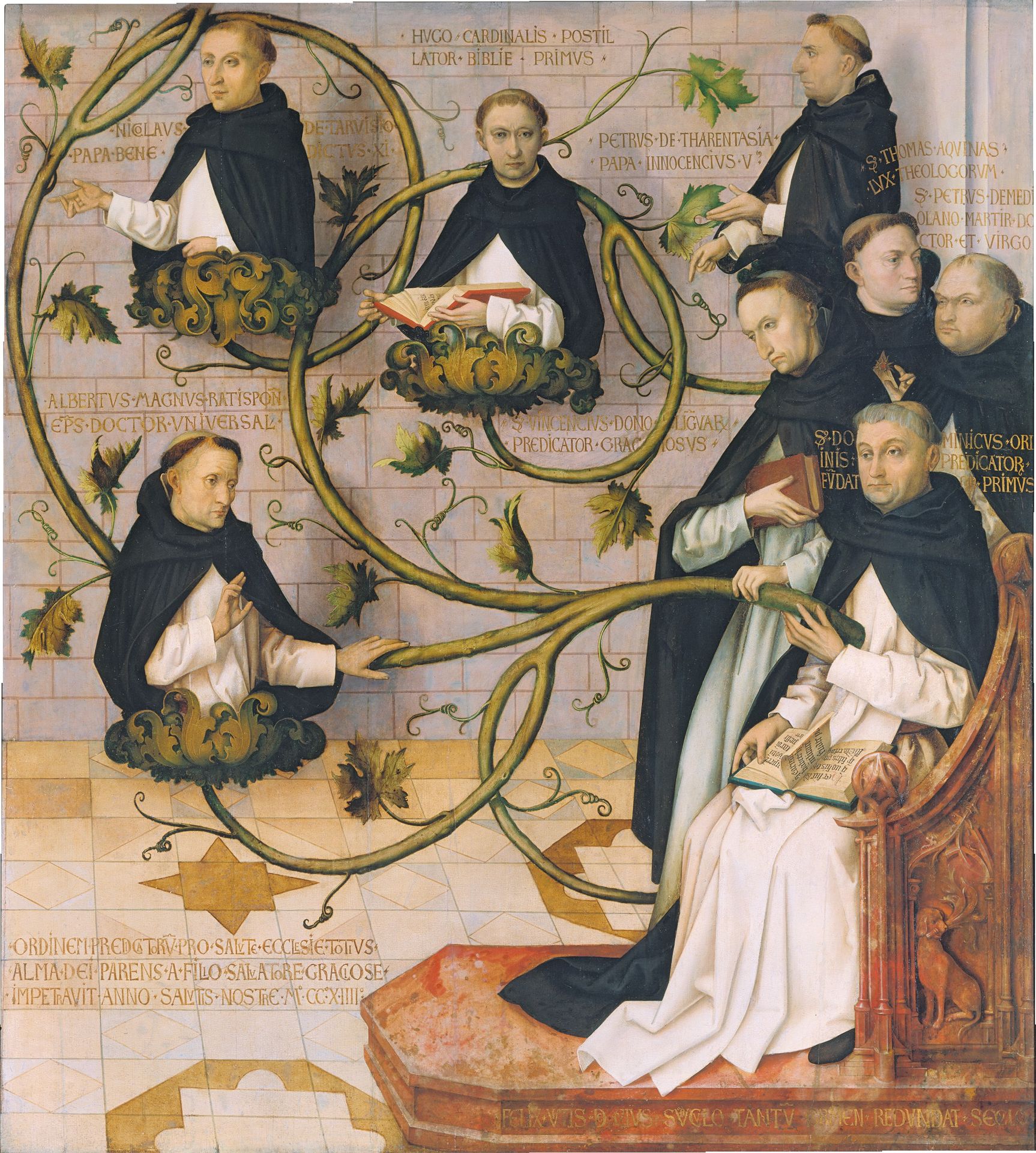
Hans Holbein the Elder created this painting, *Lineage of the Dominican Order*, sometime around the early 16th century. It presents a genealogical tree of prominent figures within the Dominican Order, a Roman Catholic religious order. The painting visualizes power and knowledge through its depiction of lineage, yet it also raises questions about who is included and excluded from this representation. Note that all the figures are men. The painting reflects a patriarchal structure inherent in the church, where power and authority were historically reserved for men. This gendered dynamic has deeply shaped religious institutions and continues to impact conversations about equality. Consider the ways religious institutions influence societal norms and power structures. How might a piece like this, in its time, have reinforced or challenged existing beliefs about gender roles and spiritual authority? I invite you to reflect on the ongoing dialogues around gender, power, and representation within religious contexts and broader society.
Lineage of the Dominican Order
1501


Artwork details
- Medium
- painting, oil-paint
- Dimensions
- 166.5 x 150.2 cm
- Location
- Städel Museum
- Copyright
- Public Domain
Tags
Comments
Share your thoughts
About this artwork
Hans Holbein the Elder created this painting, *Lineage of the Dominican Order*, sometime around the early 16th century. It presents a genealogical tree of prominent figures within the Dominican Order, a Roman Catholic religious order. The painting visualizes power and knowledge through its depiction of lineage, yet it also raises questions about who is included and excluded from this representation. Note that all the figures are men. The painting reflects a patriarchal structure inherent in the church, where power and authority were historically reserved for men. This gendered dynamic has deeply shaped religious institutions and continues to impact conversations about equality. Consider the ways religious institutions influence societal norms and power structures. How might a piece like this, in its time, have reinforced or challenged existing beliefs about gender roles and spiritual authority? I invite you to reflect on the ongoing dialogues around gender, power, and representation within religious contexts and broader society.
Comments
Share your thoughts