About this artwork
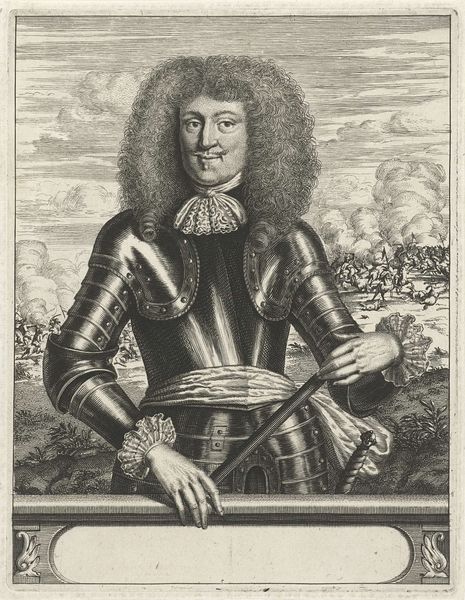
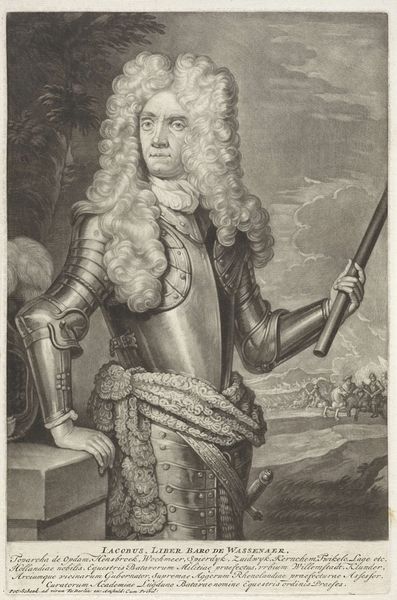
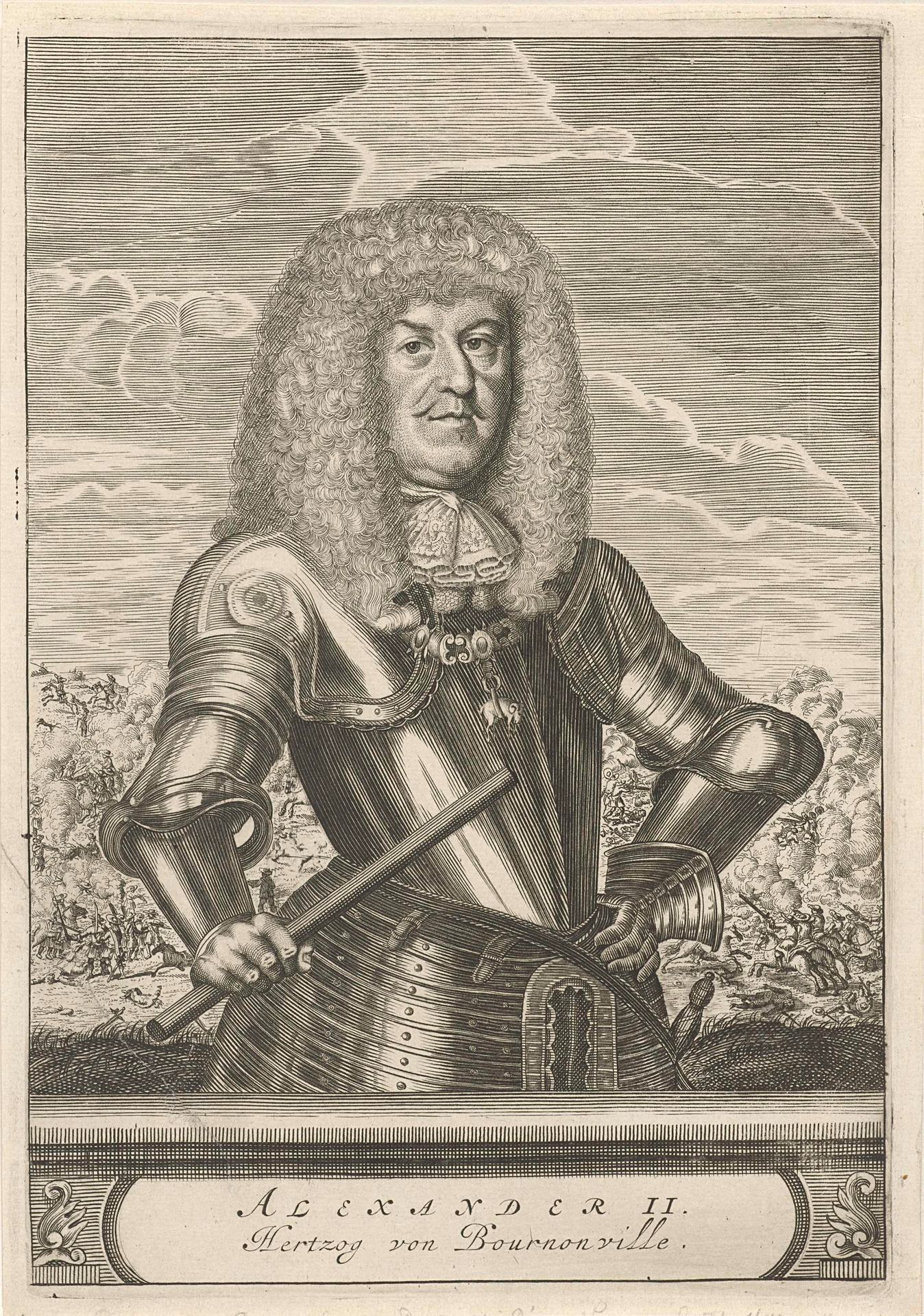
Christiaan Hagen created this print of Alexander Hippolyte II, Herzog von Bournonville. The stark contrast of light and shadow defines its visual structure. The detailed hatching creates textures, from the voluminous wig to the polished armor. At first glance, the portrait presents a figure of authority. Yet, Hagen’s manipulation of line and form subtly destabilizes this image. Note how the wig seems almost too large, dwarfing the face and blurring the lines between artifice and reality. The battle scene in the background, meticulously rendered, positions the Duke within a theater of power. Hagen’s print invites us to question the nature of representation itself. It is not just a record, but a carefully constructed image. It challenges fixed notions of identity and power. As such, the print serves as a reminder that even in the most formal of portraits, the interplay of artistic technique and cultural context reveals the unstable and constructed nature of meaning.
Portret van Alexander Hippolyte II, hertog van Bournonville c. 1635 - 1695

Christiaan Hagen
1635 - 1707Location
RijksmuseumArtwork details
- Medium
- metal, engraving
- Dimensions
- height 232 mm, width 158 mm
- Location
- Rijksmuseum
- Copyright
- Rijks Museum: Open Domain
Tags
portrait
baroque
metal
line
history-painting
engraving
Comments
No comments
About this artwork
Christiaan Hagen created this print of Alexander Hippolyte II, Herzog von Bournonville. The stark contrast of light and shadow defines its visual structure. The detailed hatching creates textures, from the voluminous wig to the polished armor. At first glance, the portrait presents a figure of authority. Yet, Hagen’s manipulation of line and form subtly destabilizes this image. Note how the wig seems almost too large, dwarfing the face and blurring the lines between artifice and reality. The battle scene in the background, meticulously rendered, positions the Duke within a theater of power. Hagen’s print invites us to question the nature of representation itself. It is not just a record, but a carefully constructed image. It challenges fixed notions of identity and power. As such, the print serves as a reminder that even in the most formal of portraits, the interplay of artistic technique and cultural context reveals the unstable and constructed nature of meaning.
Comments
No comments