About this artwork
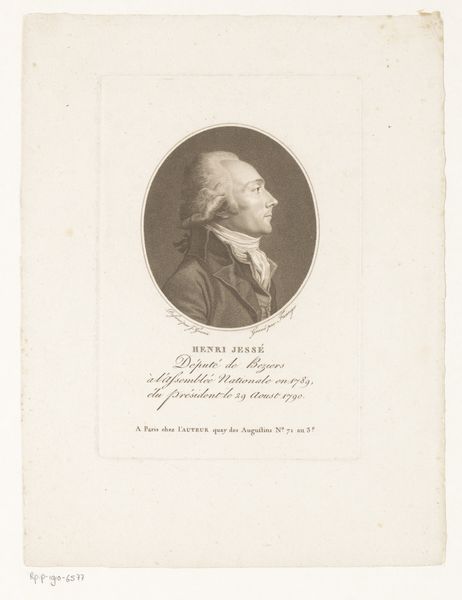
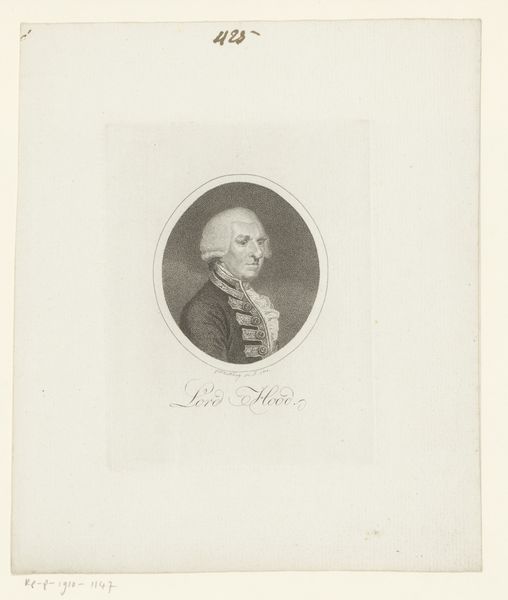
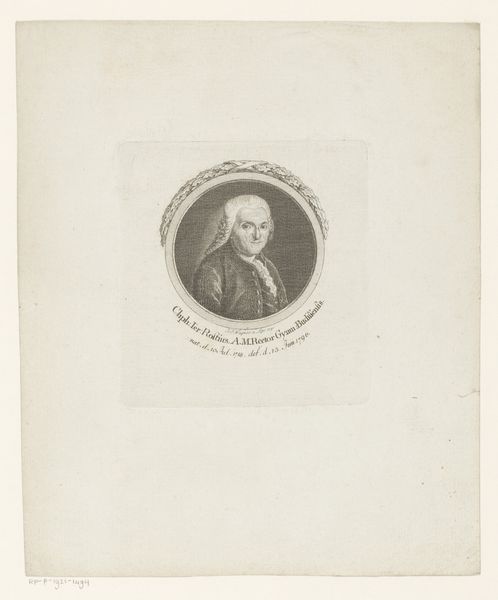
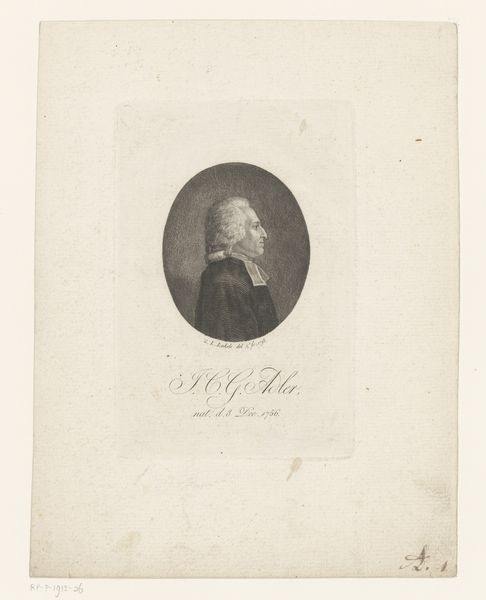
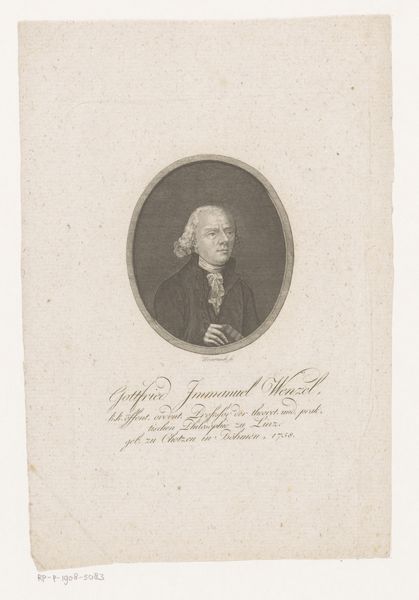
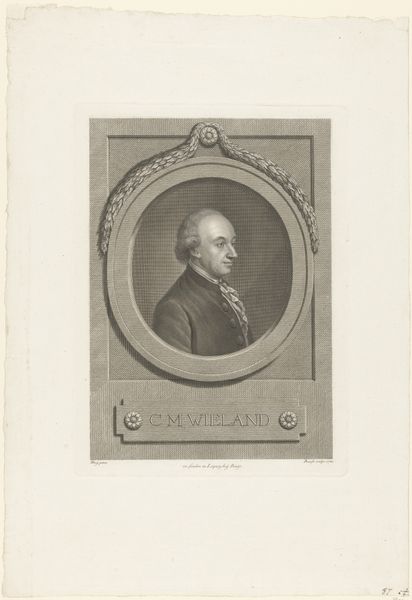
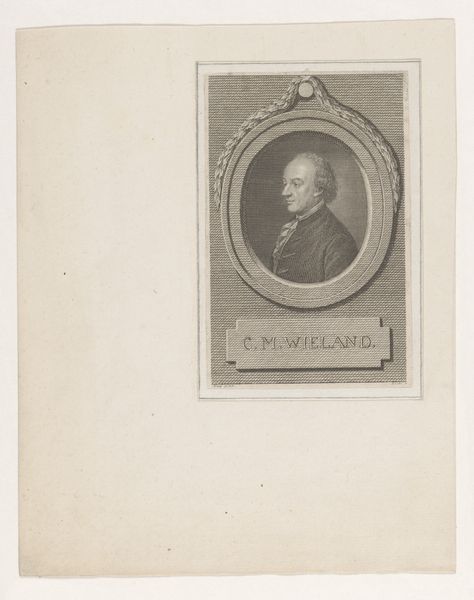
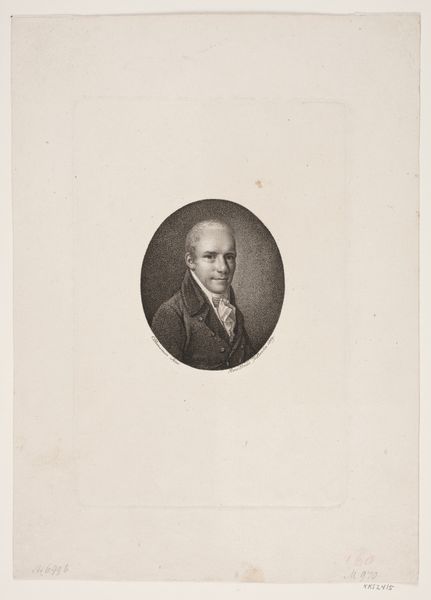
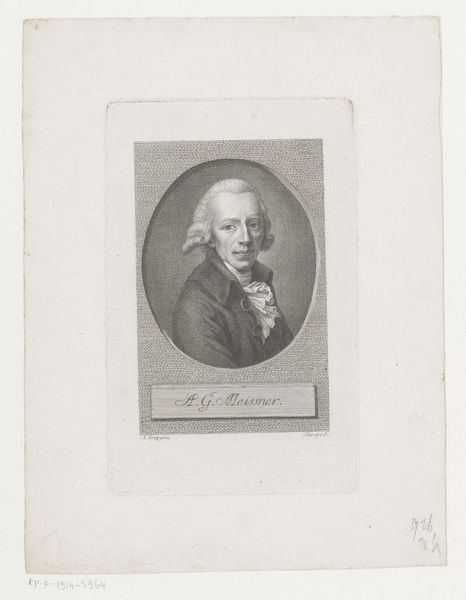
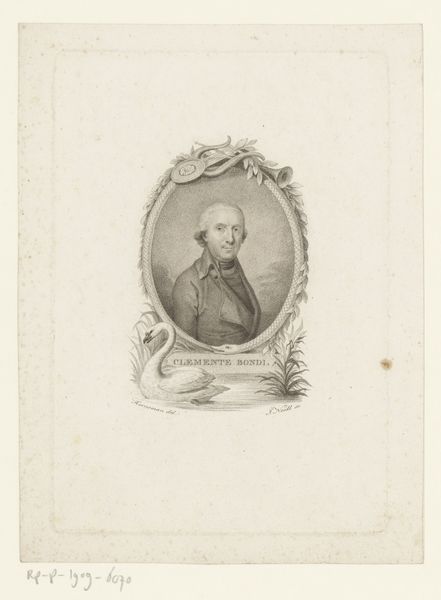
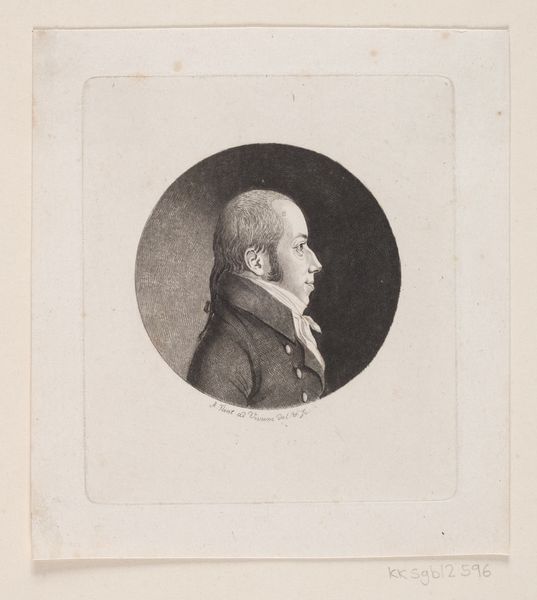
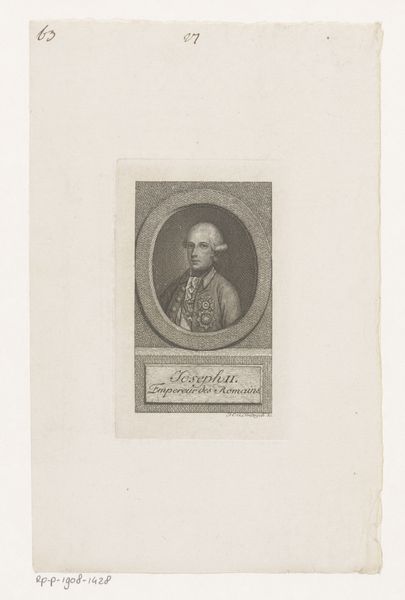
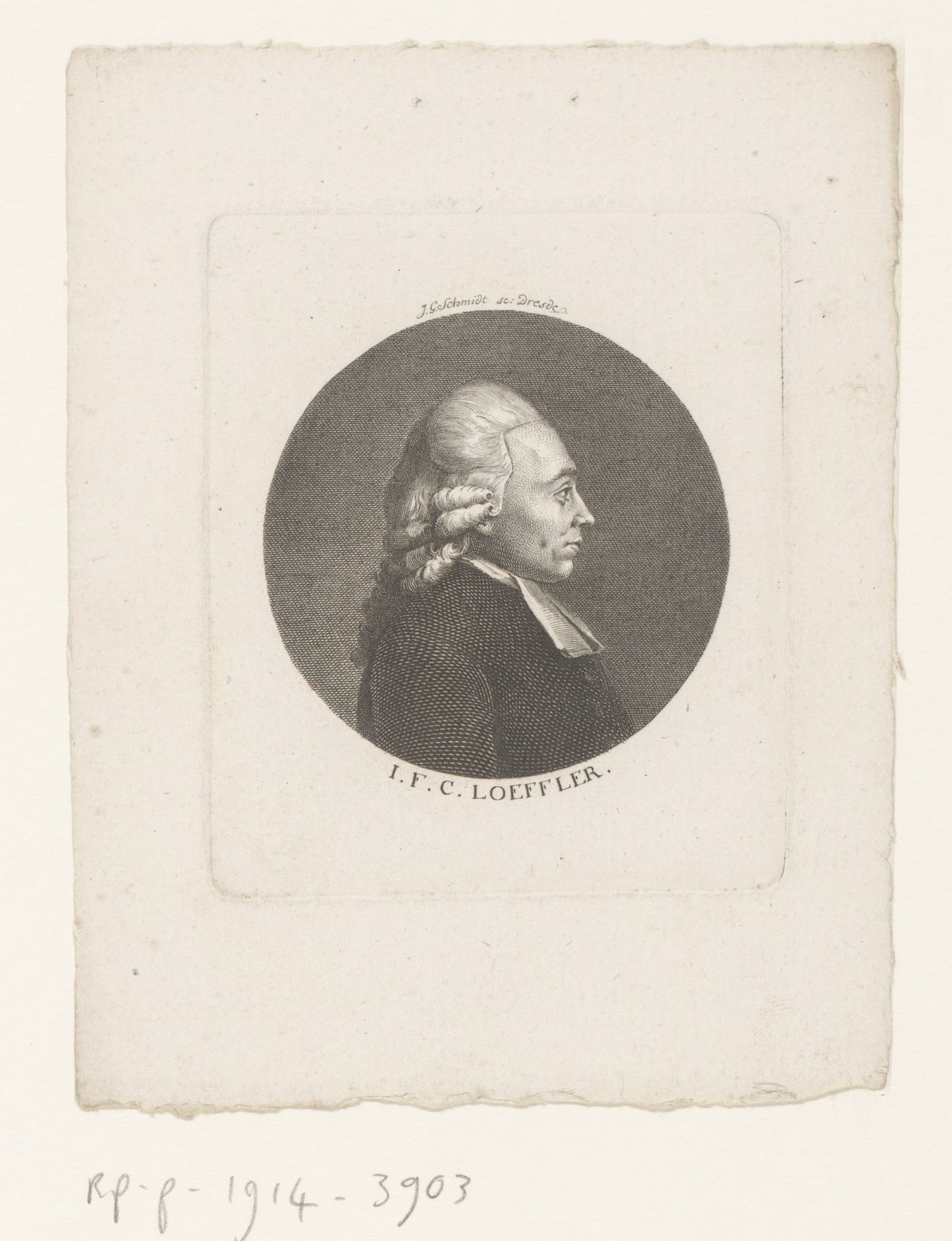
Johann Gottfried Schmidt made this portrait of Josias Friedrich Christian Löffler with etching and engraving techniques. The print’s fine lines speak to the engraver's skill. Notice the tiny, deliberate marks that build up to create tone and shadow, from the delicate rendering of Löffler’s powdered wig to the subtle gradations on his face. Printmaking was a skilled trade, demanding years of apprenticeship to master the use of burins and acids. It’s easy to overlook today, but prints like this were crucial for disseminating images and ideas widely. Consider the social context: this portrait was likely commissioned by or for Löffler himself, a marker of his status and intellectual standing. The act of creating and circulating such an image reinforced social hierarchies. So, next time you see a print, think about the labor and skill involved, and its role in shaping public perception. It’s a reminder that even seemingly simple images carry layers of social and cultural meaning.
Portret van Josias Friedrich Christian Löffler 1774 - 1803

Johann Gottfried Schmidt
1764 - 1803Location
RijksmuseumArtwork details
- Medium
- print, engraving
- Dimensions
- height 89 mm, width 75 mm
- Location
- Rijksmuseum
- Copyright
- Rijks Museum: Open Domain
Tags
portrait
classicism
engraving
Comments
No comments
About this artwork
Johann Gottfried Schmidt made this portrait of Josias Friedrich Christian Löffler with etching and engraving techniques. The print’s fine lines speak to the engraver's skill. Notice the tiny, deliberate marks that build up to create tone and shadow, from the delicate rendering of Löffler’s powdered wig to the subtle gradations on his face. Printmaking was a skilled trade, demanding years of apprenticeship to master the use of burins and acids. It’s easy to overlook today, but prints like this were crucial for disseminating images and ideas widely. Consider the social context: this portrait was likely commissioned by or for Löffler himself, a marker of his status and intellectual standing. The act of creating and circulating such an image reinforced social hierarchies. So, next time you see a print, think about the labor and skill involved, and its role in shaping public perception. It’s a reminder that even seemingly simple images carry layers of social and cultural meaning.
Comments
No comments