About this artwork
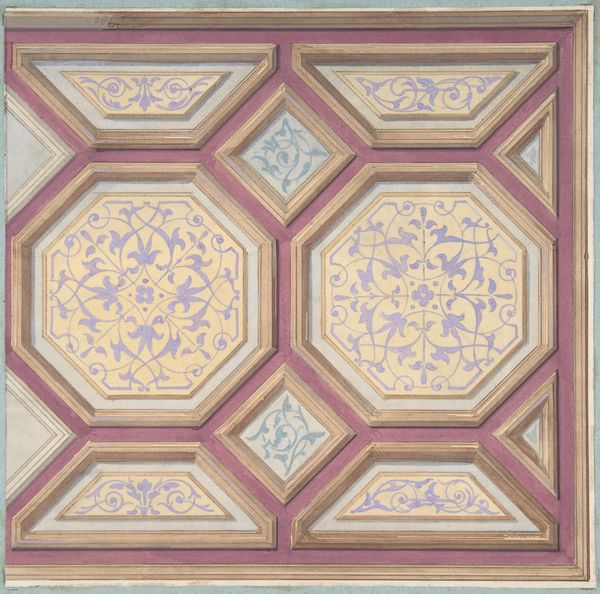
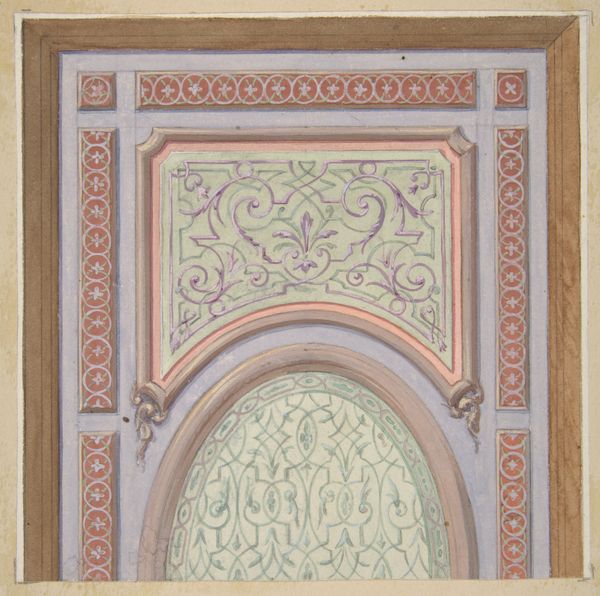
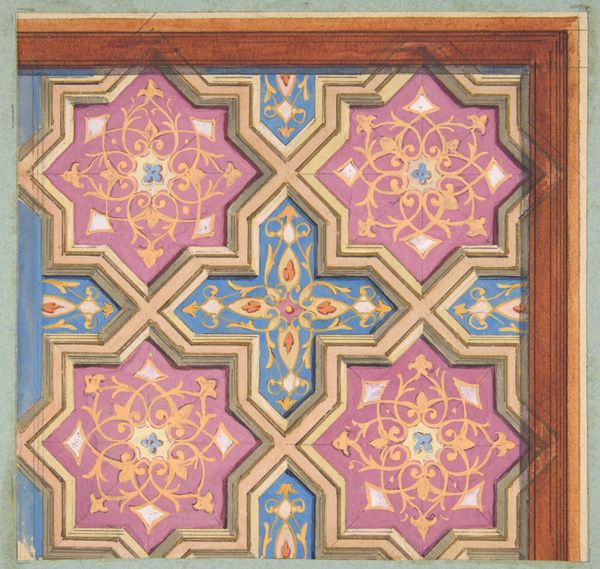
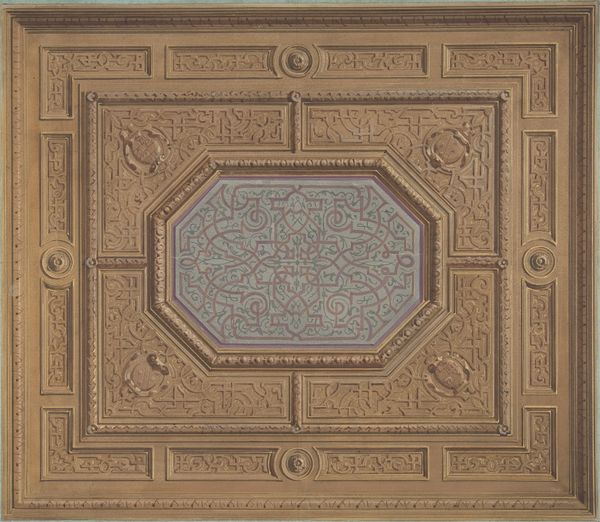
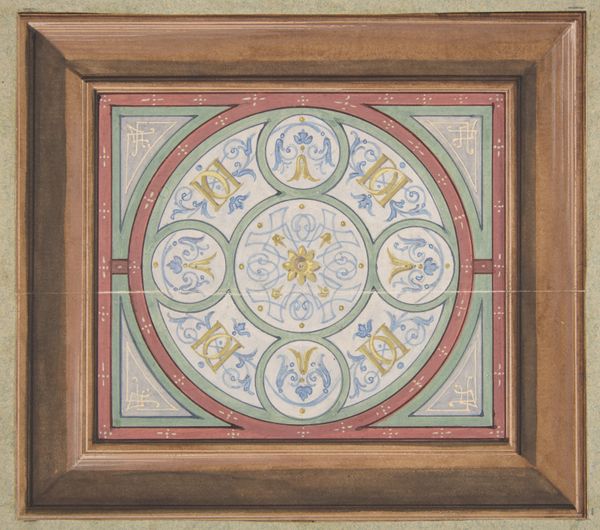
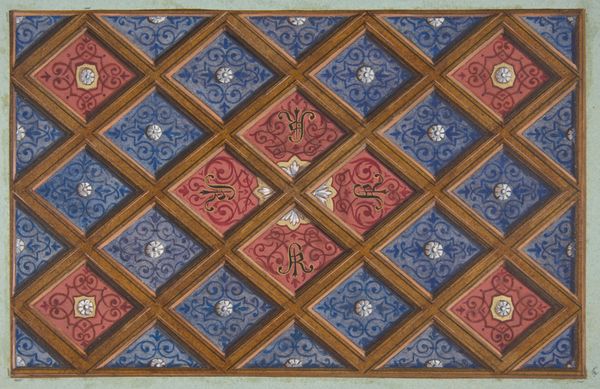
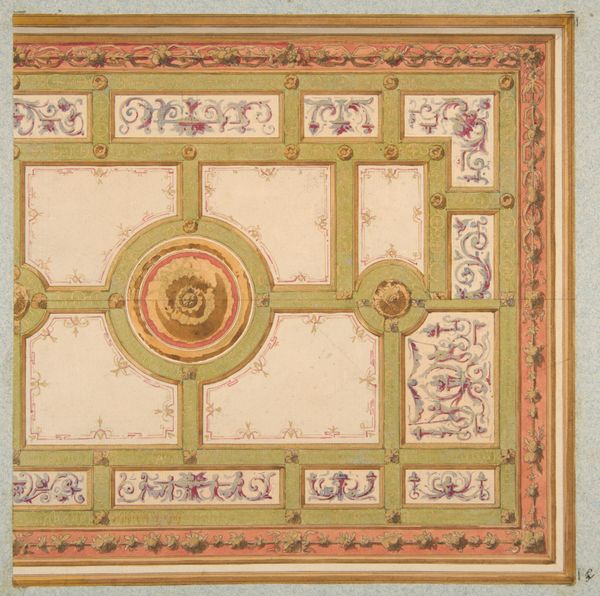
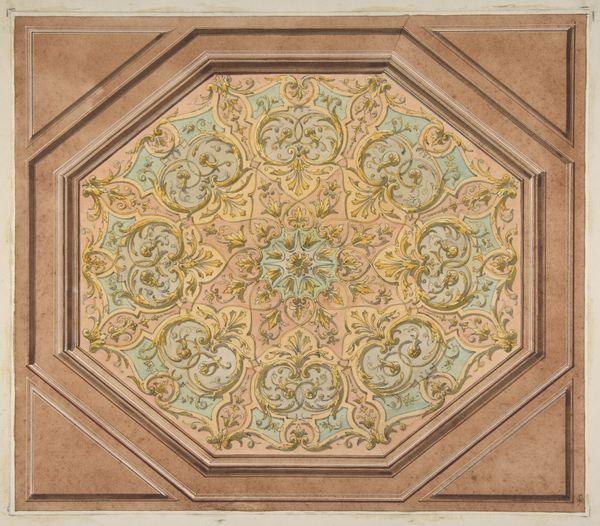
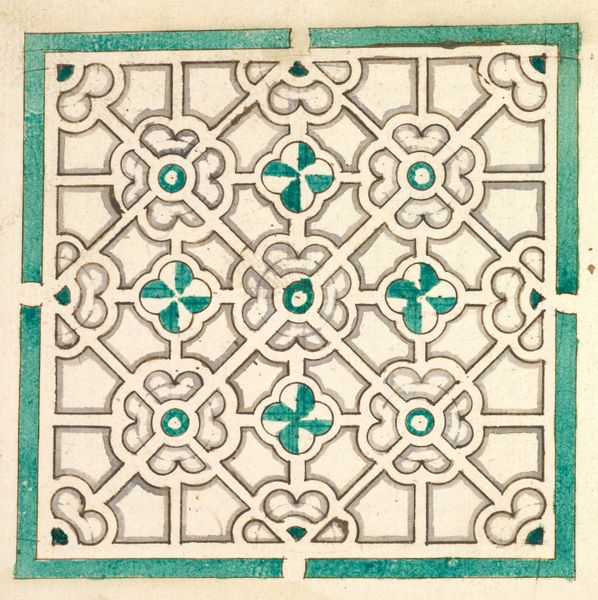
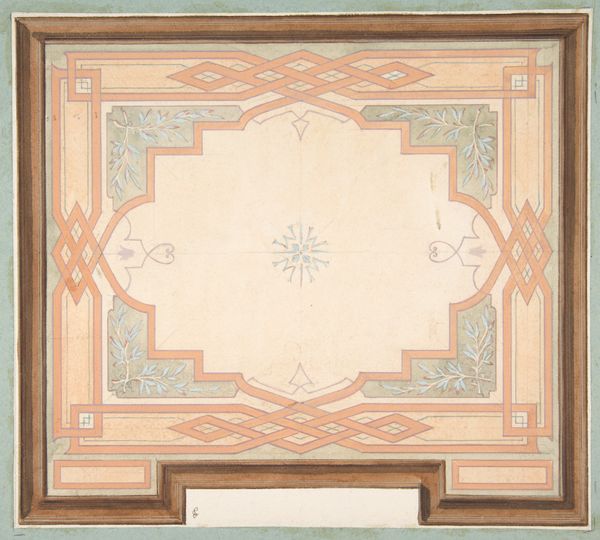
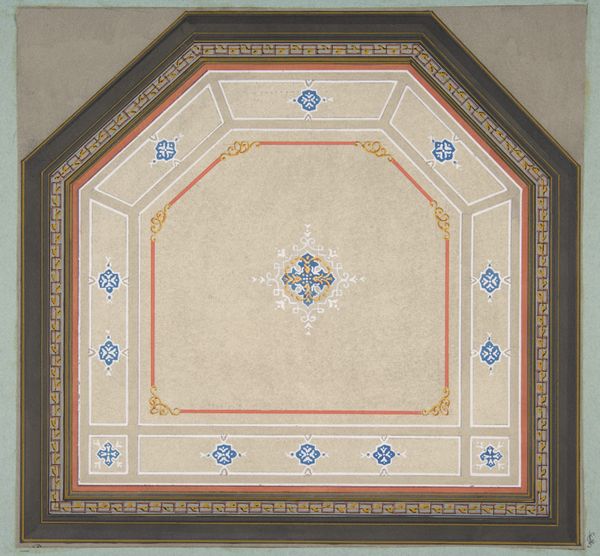
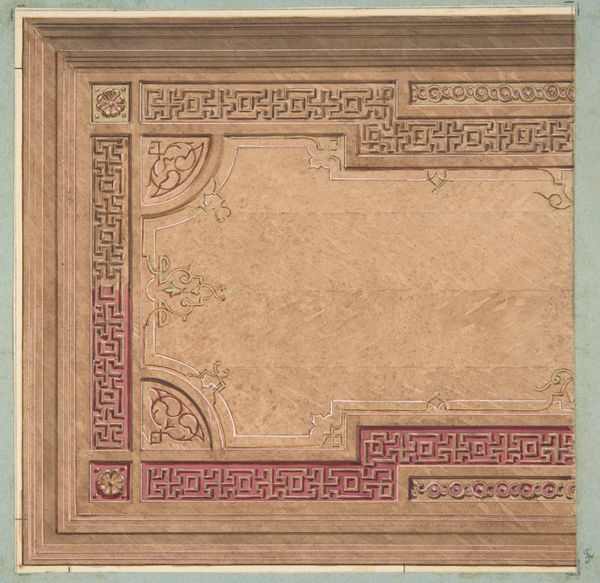
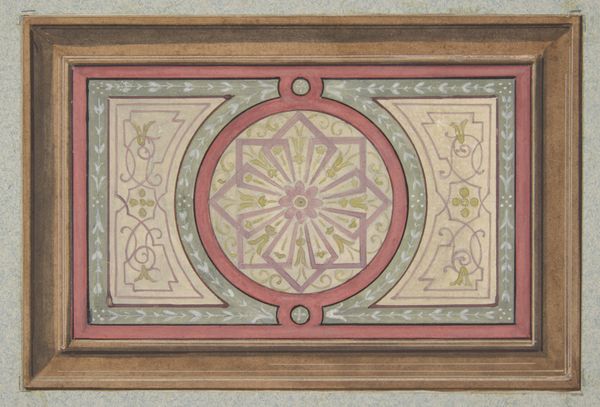
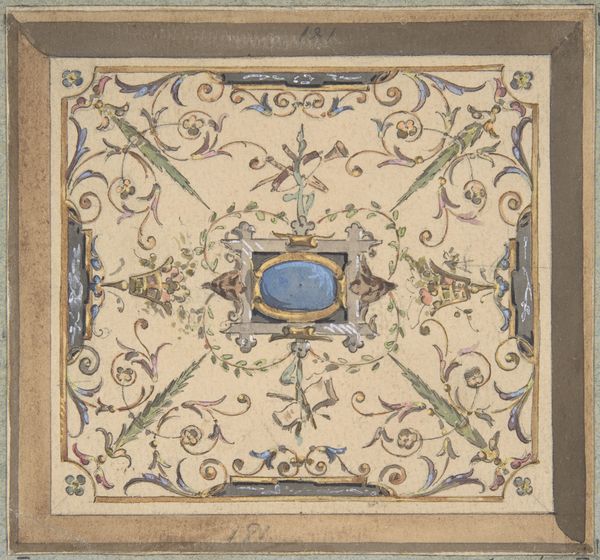
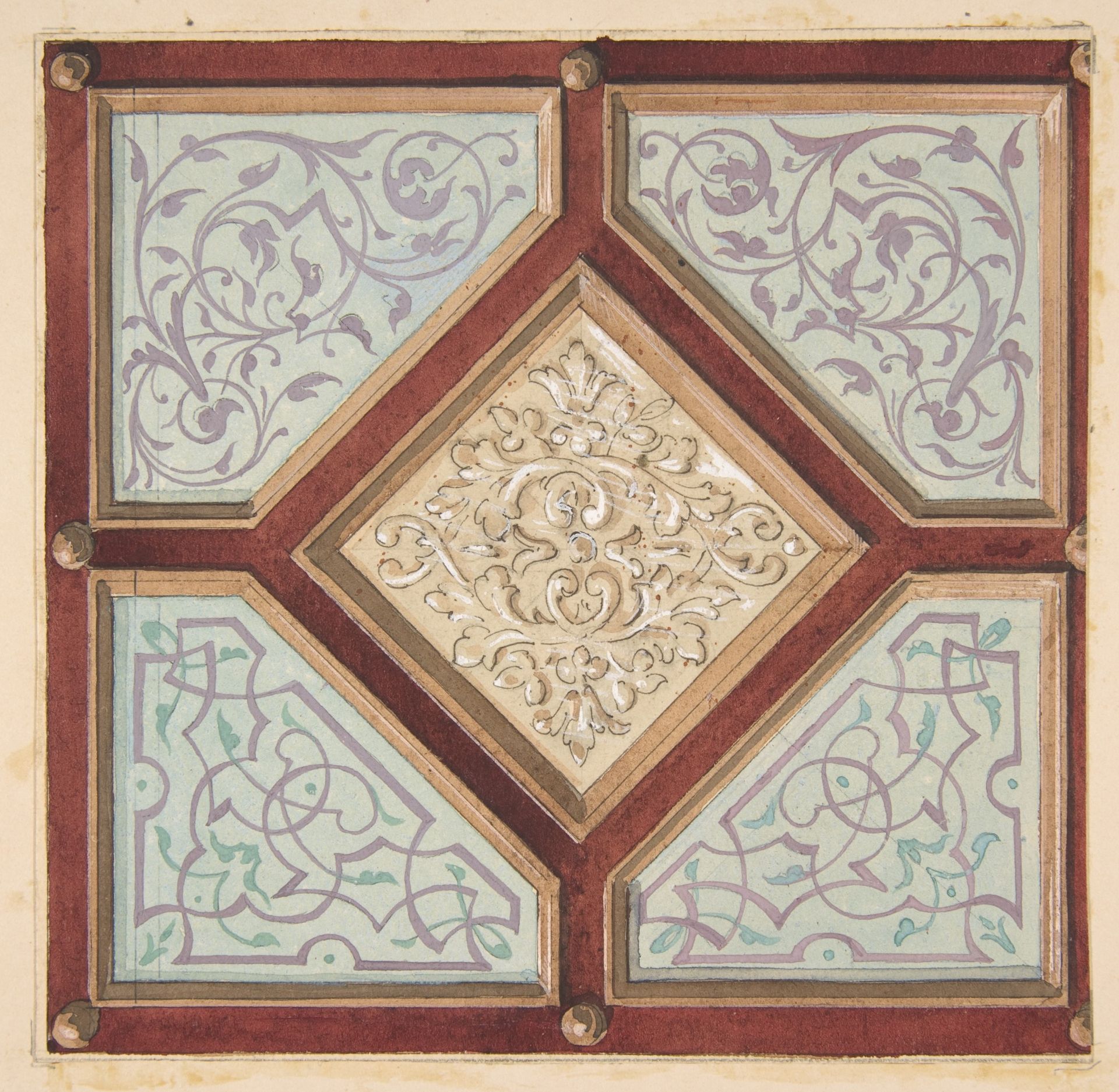
Jules-Edmond-Charles Lachaise created this design for a coffered ceiling, likely in France, drawing on architectural traditions of centuries past. Coffered ceilings, with their recessed panels, were popular in ancient Roman architecture and experienced revivals during the Renaissance and Baroque periods. This design, with its intricate floral patterns and geometric arrangement, reflects a fascination with historical styles and a desire to incorporate classical elements into contemporary interiors. The drawing itself could be a proposal for a wealthy client looking to renovate their home in a historically-informed style. The creation of such designs, with their suggestion of elegant buildings, also relates to the academic institutions that supported architectural training. By studying architectural drawings, historians can explore the cultural values and social aspirations of a particular time and place. We might look to pattern books, architectural treatises, and social histories to understand this artwork and its wider significance.
Design for a coffered ceiling with alternative decorative patterns
1840 - 1897

Jules-Edmond-Charles Lachaise
1897
The Metropolitan Museum of Art
Metropolitan Museum of Art, New York, NYArtwork details
- Medium
- drawing, print
- Location
- Metropolitan Museum of Art, New York, NY
- Copyright
- Public Domain
Tags
Comments
Share your thoughts
About this artwork
Jules-Edmond-Charles Lachaise created this design for a coffered ceiling, likely in France, drawing on architectural traditions of centuries past. Coffered ceilings, with their recessed panels, were popular in ancient Roman architecture and experienced revivals during the Renaissance and Baroque periods. This design, with its intricate floral patterns and geometric arrangement, reflects a fascination with historical styles and a desire to incorporate classical elements into contemporary interiors. The drawing itself could be a proposal for a wealthy client looking to renovate their home in a historically-informed style. The creation of such designs, with their suggestion of elegant buildings, also relates to the academic institutions that supported architectural training. By studying architectural drawings, historians can explore the cultural values and social aspirations of a particular time and place. We might look to pattern books, architectural treatises, and social histories to understand this artwork and its wider significance.
Comments
Share your thoughts