About this artwork
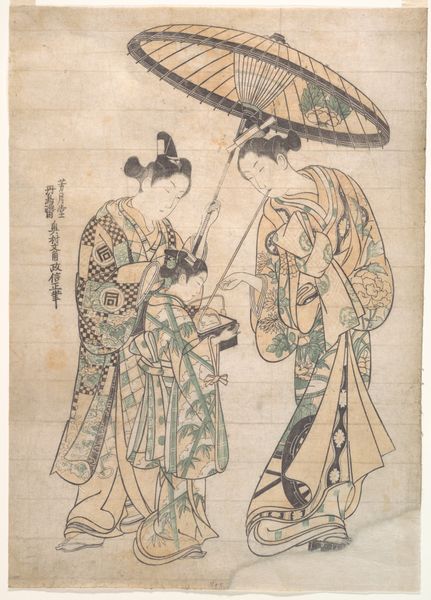
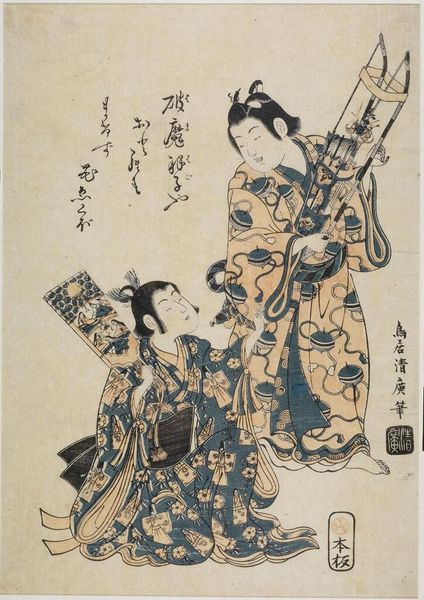
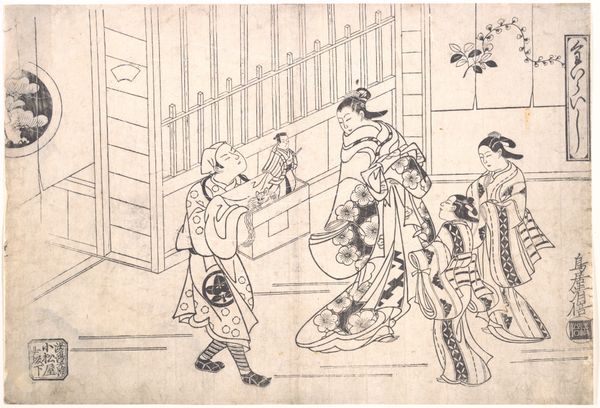
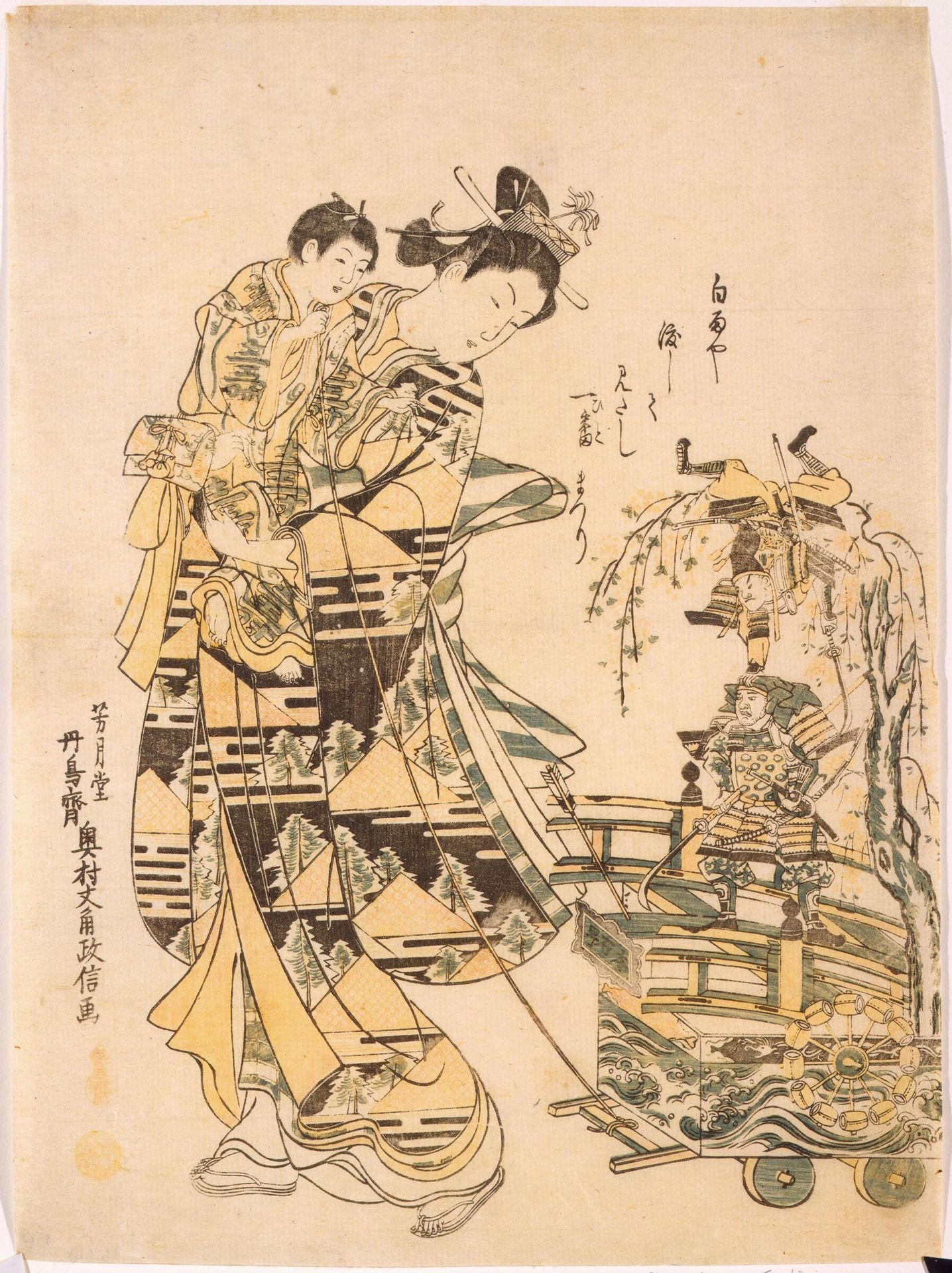
Curator: This intriguing print, residing at the Harvard Art Museums, is by Okumura Masanobu. It depicts a mother and child with a Sannō Festival toy cart representing Yoshitsune and Benkei fighting on Gojo Bridge. Editor: It feels intimate, yet performative. The mother is so elaborately dressed, and that toy cart is like a miniature stage. Curator: Yes, woodblock prints like these, dating perhaps to the early 18th century, were affordable art for urban dwellers, reflecting popular culture and current events. Editor: That fight on Gojo Bridge, between Yoshitsune and Benkei, must have been an iconic image. The cart recreates it perfectly. The story itself signifies loyalty and honor. Curator: Precisely. Masanobu uses the imagery of the festival to tap into feelings of nostalgia and shared cultural understanding. The mother dragging the cart is enacting a cultural tradition. Editor: I see it now, like a visual echo of stories passed down, with the cart becoming a symbol for the preservation of historical narratives. Curator: Exactly. This image tells us much about Edo period society and its cultural values. Editor: To me, it's about how symbols, even in toy form, shape our understanding of history.
Mother and Son with SannÅ Festival Toy Cart Representing Yoshitsune and Benkei Fighting on Gojo Bridge
c. 1750


Artwork details
- Dimensions
- Paper: H. 40.6 cm x W. 29.9 cm (16 x 11 3/4 in.)
- Location
- Harvard Art Museums
- Copyright
- CC0 1.0
Comments
Share your thoughts
About this artwork
Curator: This intriguing print, residing at the Harvard Art Museums, is by Okumura Masanobu. It depicts a mother and child with a Sannō Festival toy cart representing Yoshitsune and Benkei fighting on Gojo Bridge. Editor: It feels intimate, yet performative. The mother is so elaborately dressed, and that toy cart is like a miniature stage. Curator: Yes, woodblock prints like these, dating perhaps to the early 18th century, were affordable art for urban dwellers, reflecting popular culture and current events. Editor: That fight on Gojo Bridge, between Yoshitsune and Benkei, must have been an iconic image. The cart recreates it perfectly. The story itself signifies loyalty and honor. Curator: Precisely. Masanobu uses the imagery of the festival to tap into feelings of nostalgia and shared cultural understanding. The mother dragging the cart is enacting a cultural tradition. Editor: I see it now, like a visual echo of stories passed down, with the cart becoming a symbol for the preservation of historical narratives. Curator: Exactly. This image tells us much about Edo period society and its cultural values. Editor: To me, it's about how symbols, even in toy form, shape our understanding of history.
Comments
Share your thoughts