About this artwork
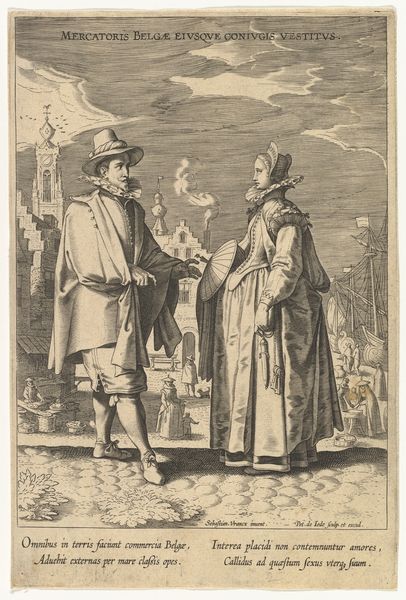
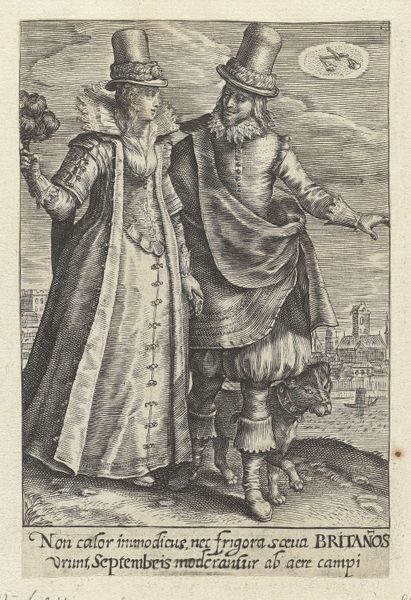
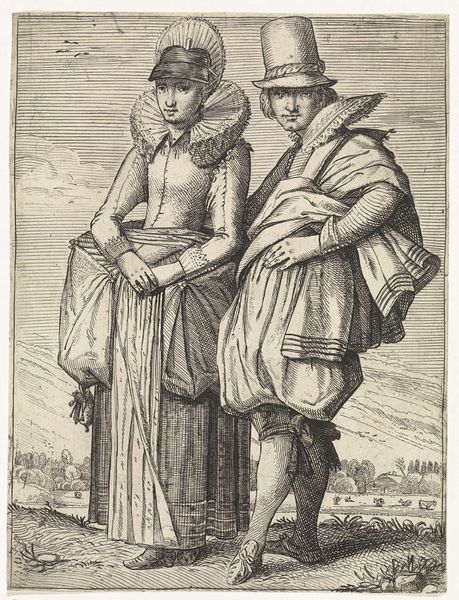
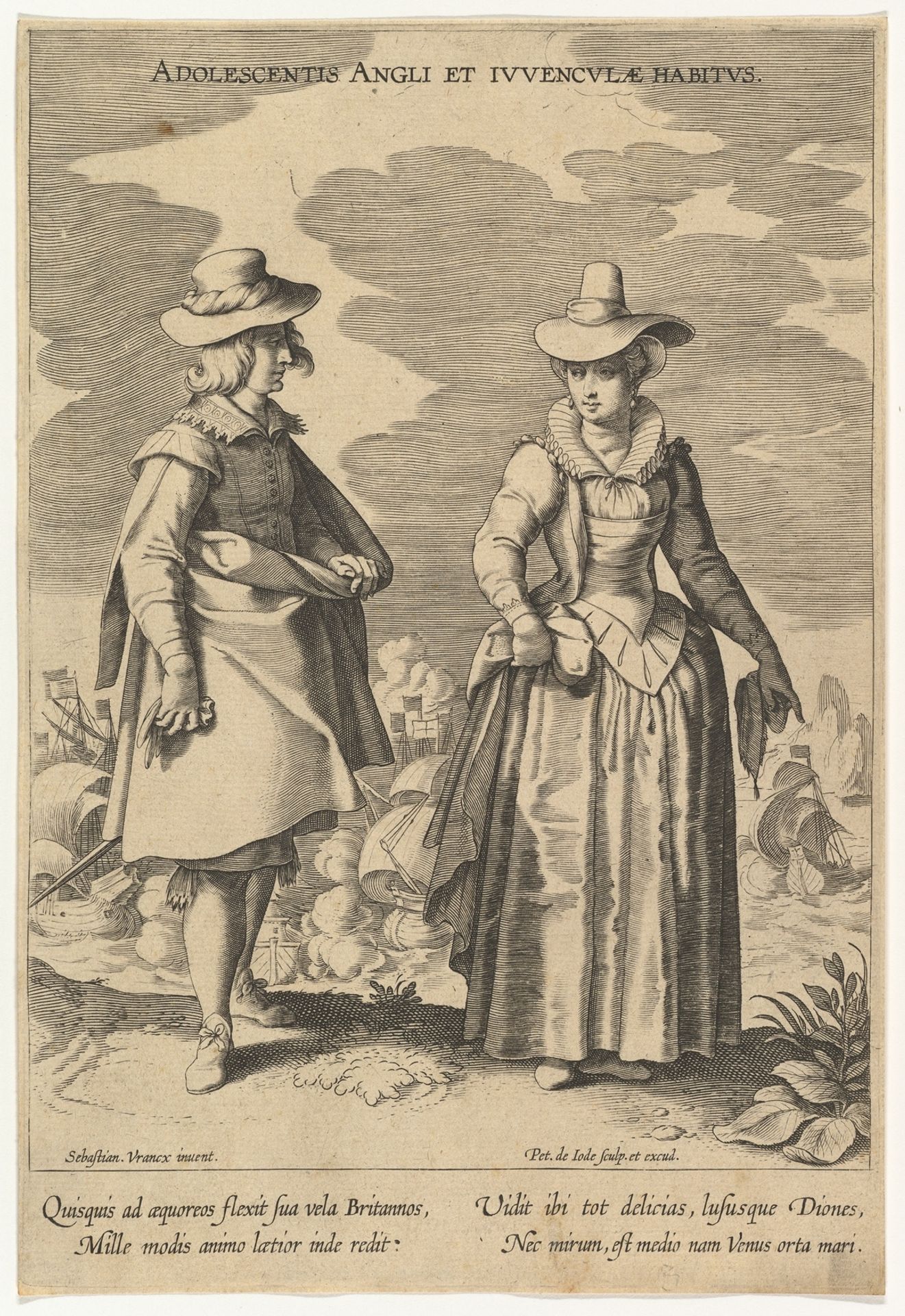
Pieter de Jode I created this print, "Adolescentis Angli et Iuvenculae Habitus," as part of a series called "Fashions of Different Nations." It offers a glimpse into the sartorial choices of young English people, likely from the merchant class. Published in the Netherlands, this print capitalizes on a growing fascination with global cultures and the rise of mercantile capitalism. Note the ships in the background, symbols of trade and England's burgeoning naval power. Fashion, in this context, becomes a visual shorthand for national identity and economic status. The clothing isn't merely functional; it communicates something about England's place in the world. The image is both informative and subtly propagandistic, reflecting the Dutch Republic's complex relationship with England, a rival in trade and naval power. To understand this print fully, historians might consult period travelogues, fashion plates, and trade records. Art, after all, doesn't exist in a vacuum; it's a product of its time, shaped by economic, political, and social forces.
Adolescentis Angli et Iuvenculae Habitus, from Fashions of Different Nations
1580 - 1634


Artwork details
- Medium
- drawing, print, engraving
- Dimensions
- sheet: 8 9/16 x 6 in. (21.8 x 15.2 cm)
- Location
- Metropolitan Museum of Art, New York, NY
- Copyright
- Public Domain
Tags
Comments
Share your thoughts
About this artwork
Pieter de Jode I created this print, "Adolescentis Angli et Iuvenculae Habitus," as part of a series called "Fashions of Different Nations." It offers a glimpse into the sartorial choices of young English people, likely from the merchant class. Published in the Netherlands, this print capitalizes on a growing fascination with global cultures and the rise of mercantile capitalism. Note the ships in the background, symbols of trade and England's burgeoning naval power. Fashion, in this context, becomes a visual shorthand for national identity and economic status. The clothing isn't merely functional; it communicates something about England's place in the world. The image is both informative and subtly propagandistic, reflecting the Dutch Republic's complex relationship with England, a rival in trade and naval power. To understand this print fully, historians might consult period travelogues, fashion plates, and trade records. Art, after all, doesn't exist in a vacuum; it's a product of its time, shaped by economic, political, and social forces.
Comments
Share your thoughts